
Long-Range Missiles and the New Meaning of Defence: Lessons from Ukraine for Germany
Germany is preparing to invest nearly twelve billion euros in a multi-layered arsenal of long-range conventional missiles, a programme that marks one of the most significant shifts in its post-war defence posture. According to internal Defence Ministry documents reported in August 2026, the plan unfolds in four phases spanning the late 2020s into the mid-2030s. It begins with relatively inexpensive, mass-producible cruise missiles intended for fielding as early as 2027, moves through the rapid integration of American Tomahawk missiles launched from mobile Typhon systems with initial capability targeted by the end of 2026, and culminates in advanced high-performance cruise missiles and hypersonic systems developed jointly with the United Kingdom. These later weapons are designed for ranges exceeding two thousand kilometres.
Chancellor Friedrich Merz has framed the effort as closing a critical strategic gap. For decades after 1945, German policy prioritised purely defensive forces and avoided capabilities that could be seen as offensive. The full-scale war in Ukraine has altered that calculus. Russian long-range strikes against Ukrainian cities, energy infrastructure, command centres and logistics nodes far behind the front lines have demonstrated that modern conflict rewards the ability to disrupt an adversary’s capacity to wage war at depth. Ukraine’s own use of long-range drones and missiles against targets inside Russia has further illustrated that such operations can degrade enemy logistics, air bases and missile launchers while remaining within the realm of conventional, non-nuclear warfare.
In this context, the traditional distinction between defence and offence has become less absolute. Striking a military command post, an airfield, a missile launcher or a supply hub two thousand kilometres inside an aggressor’s territory can serve precisely the purposes of defence and prevention. By raising the costs of any potential attack and by threatening the systems an adversary would need to sustain operations against NATO territory, such weapons aim to deter aggression before it begins and, if deterrence fails, to limit the enemy’s ability to continue fighting. The German programme explicitly targets these categories of military objectives with conventional munitions kept below the nuclear threshold.
The first phase focuses on quantity and saturation. Berlin is negotiating with suppliers of lower-cost cruise missiles, among them candidates linked to Ukrainian industry and a US-Israeli venture. The intent is to field systems that can overwhelm air defences through volume rather than exquisite technology alone. This approach draws directly from observations of the Ukrainian battlefield, where massed cheaper munitions have forced adversaries to expend expensive interceptors and have created openings for more precise follow-on strikes.
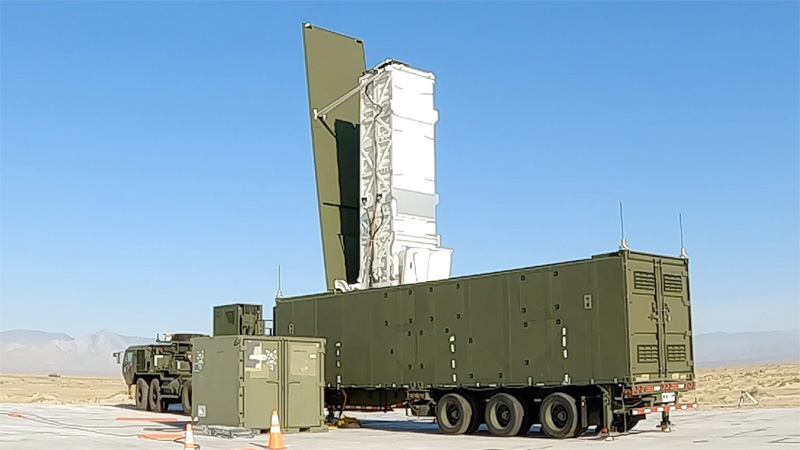
The second phase provides an interim bridge. The acquisition of Typhon launchers and Tomahawk cruise missiles, with ranges beyond sixteen hundred kilometres, gives Germany a proven, already-fielded capability while European programmes mature. These systems can be deployed flexibly across European territory, extending the Alliance’s reach without requiring permanent fixed bases that might become early targets themselves.
The later phases, absorbing the majority of the planned funding – approximately nine billion euros – centre on a German-British partnership. The resulting weapons are expected to combine stealth, high performance and, in some cases, hypersonic speeds above Mach 5. Their projected range of more than two thousand kilometres would place major Russian military infrastructure, including facilities near Moscow and St Petersburg as well as Black Sea naval bases and sites in Belarus, within reach from German territory or forward positions in eastern NATO states. From the perspective of deterrence, this depth transforms geography: an aggressor contemplating operations against the Alliance would have to assume that critical rear-area assets are vulnerable from the outset.
Critics may argue that developing the capacity to strike so far into another country’s territory risks escalation or appears provocative. Yet the Ukrainian experience offers a practical counterpoint. Kyiv’s long-range operations against Russian military targets have been conducted as part of its right to self-defence under international law. They have aimed at degrading the very systems used to attack Ukrainian cities and infrastructure. Far from constituting unprovoked aggression, such strikes have been framed as necessary measures to reduce the intensity and sustainability of the assault on Ukrainian territory. Germany and its partners are drawing a similar lesson: credible deterrence in the current European security environment requires the ability to hold at risk the rear-area enablers of aggression.

The programme also reflects a broader European recognition that reliance on American systems alone is insufficient for long-term strategic autonomy, even while US technology fills immediate gaps. Joint development with the United Kingdom strengthens the European industrial base and improves interoperability within NATO. At the same time, the emphasis on conventional weapons underscores an intent to reinforce the nuclear threshold rather than lower it. By creating robust conventional options for deep strike, planners hope to reduce any pressure to consider nuclear responses in a future crisis.
Implementation still requires parliamentary approval and sustained funding across successive budget cycles. Technical challenges remain, particularly in the hypersonic domain, and industrial capacity must expand to deliver the volumes required. Nevertheless, the direction is clear. Germany is moving from a posture shaped by the constraints of the Cold War and the decades of relative peace that followed, toward one calibrated to the realities revealed by the war in Ukraine. In that conflict, the ability to reach deep into an adversary’s territory has repeatedly proven essential both for limiting the scale of attacks on one’s own population and infrastructure and for preventing an aggressor from consolidating gains.
A reach of two thousand kilometres does not transform a defensive alliance into an aggressive one. It equips that alliance with the means to make aggression prohibitively costly and to disrupt the machinery of attack at its source. In the strategic environment of the mid-2020s, such capability is increasingly understood not as a departure from defence, but as one of its contemporary requirements. Germany’s planned investment seeks to operationalise that understanding, ensuring that any potential adversary understands the full depth of the response that could follow an attack on NATO territory.