
Poland First, Finland Next, Germany on the Line: Europe’s F-35 Year
September 2026 will be remembered as the month when two more European air forces crossed from paper contracts into metal on the ramp. Finland’s first two F-35As landed at Rovaniemi on 18 September after a ferry flight from Fort Worth via the Azores. The same week, Germany formally accepted its first Lightning II at Lockheed Martin’s Texas plant. Poland had already done both things months earlier: its first three Husarz jets touched down at Łask on 22 May, five more followed in late August, and eight aircraft now sit on Polish soil while another eight remain in Arkansas for training. Together the three programmes illustrate how Foreign Military Sales schedules, training pipelines in the United States, and domestic basing work in practice rather than in press releases.
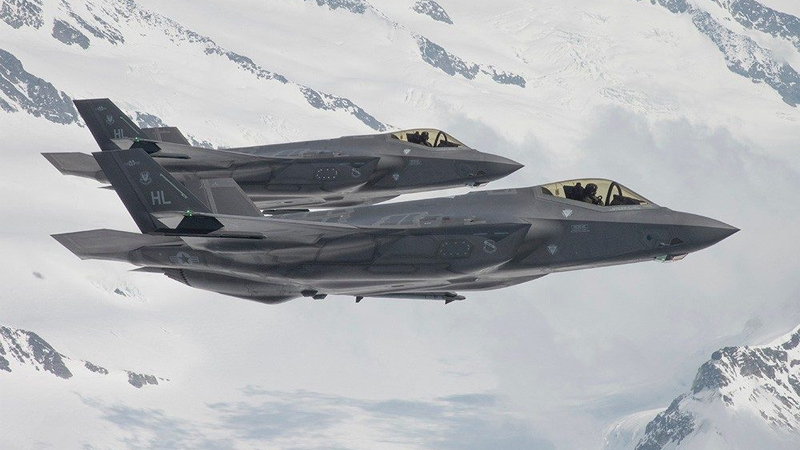
Poland signed the earliest of the three deals. On 31 January 2020 Warsaw accepted a Letter of Offer and Acceptance for 32 F-35A aircraft, training and logistics worth 4.6 billion dollars. The Polish Ministry of National Defence has consistently given the unit figure for airframe plus engine as 87.3 million dollars net. The remainder of the package covers simulators, spare engines, ground equipment and an upgrade path. Eight jets were delivered first to Ebbing Air National Guard Base so that pilots and maintainers could start conversion before any aircraft flew the Atlantic. In-country arrivals began in May 2026; by the end of this year Poland expects thirteen jets at Łask, with twelve more planned for 2027 and the original thirty-two complete around 2029–2030. Officials have already spoken of a possible second batch of thirty-two, which would double the fleet and fill two additional squadrons.
Finland chose the F-35 in December 2021 after the competitive HX programme. The government announced a package of 64 aircraft, weapons and sustainment through 2030 valued at 8.378 billion euros. Contemporary Finnish briefings put the aircraft themselves at roughly 4.7 billion euros, or about 73 million euros apiece at then-prevailing rates. The first eight Finnish jets, JF-501 through JF-508, went to Ebbing in early 2026; Finnish pilots began flying the type there in April. Aircraft from JF-509 onward are earmarked for Finland itself. The two jets (JF-510 and JF-512) that landed at the Lapland Air Wing on 18 September therefore represent the start of the home-based fleet rather than the absolute first delivery. Initial operational capability is planned for early 2028, when the Lapland wing is expected to fly only F-35s, and full operational capability by the end of 2030. Until then Hornets and Lightning IIs will operate in parallel.
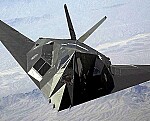
Germany’s path was driven by the need to replace Tornados assigned to NATO nuclear sharing. Berlin ordered 35 F-35As in 2022. Public figures for the complete package have circulated around 8.3–8.4 billion dollars or a comparable euro amount; German commentary has noted that the all-in system cost per aircraft looks far higher than a flyaway price once infrastructure at Büchel, training and support are included. The first German jet, serial 35+01, flew on 8 September and was rolled out to Defence Minister Boris Pistorius on 18 September in Fort Worth. As with Finland and Poland, the opening batch of eight aircraft will stay in the United States for training. The first jets are scheduled to reach Büchel in the third quarter of 2027, with deliveries running through 2029. Initial operational capability is targeted for 2029 and full capability for 2030. Discussion of a follow-on order, possibly taking the total toward fifty, has continued as Germany reassesses its combat-air plans.
Comparing prices is possible only with caveats. The United States flyaway cost for a new F-35A in recent lots has risen to around 92 million dollars, reflecting inflation and Block 4 content. Poland’s 87.3 million dollar airframe-plus-engine figure dates from an earlier lot and excludes most of the training and support wrap. Finland’s published aircraft-only number from 2021 was lower still. Germany’s and the Czech Republic’s headline packages look more expensive per jet because they fold in weapons, infrastructure, multi-year support and, in the Czech case, a long industrial-participation programme. Unit flyaway cost and programme cost are therefore different numbers answering different questions.
The Czech Republic signed its Letter of Offer and Acceptance on 29 January 2024 for 24 F-35A Block 4 aircraft and associated services at 4.554 billion dollars. Czech officials describe the broader acquisition through 2034, including infrastructure at Čáslav, training and initial sustainment, as approximately 150 billion Czech koruna; lifetime operating costs to 2069 have been estimated at 322 billion koruna. Production for Czech airframes is due to begin in 2027. The delivery plan remains six aircraft in 2029 and two more in 2030, all retained in the United States for the first years of pilot and maintainer training, followed by four aircraft a year arriving in the Czech Republic from 2031 through 2034.
The first twelve jets will be built in Fort Worth; the second twelve are planned at the Cameri final assembly line in Italy. There has been discussion that reduced U.S. Air Force offtake could pull some export slots forward by several months, potentially bringing the first Czech-flagged aircraft into the training pipeline in late 2028 rather than 2029 and advancing the first landing at Čáslav, but the official Ministry of Defence schedule published in 2025 still lists 2029 for the training batch and 2031 for the first jets on Czech soil. To cover the gap, Prague extended its JAS 39 Gripen lease until 2035, matching the year set for full operational capability on the F-35.
What 2026 has demonstrated is the standard F-35 export choreography: first metal appears in Texas, a training cadre forms at Ebbing, then a smaller number of aircraft make the Atlantic crossing while the rest of the order continues down the line. Poland is already operating from home bases. Finland has just joined that group. Germany has taken title but will wait another year before the first Luftwaffe Lightning II lands at Büchel. The Czech Republic remains in the industrial and payment phase, with metal not expected until the end of the decade. The four contracts, signed between 2020 and 2024, now sit at different points on the same conveyor. The interesting question for the rest of the decade is not whether the jets will arrive, but how quickly each air force can turn arrivals into a coherent fifth-generation force on NATO’s northern and eastern flanks.