
Poland to Allow Faster Decisions on Shooting Down Suspicious Air Targets
The Polish Ministry of Defense announced that in the coming days it will change the rules of engagement for fighter jets and helicopters against objects entering Polish airspace from the direction of Russia. Deputy Minister of Defense Cezary Tomczyk made the announcement on September 28, 2026, in Dęblin and elaborated on it on X. The core of the change is the transition from visual identification to so-called positive identification. Until now, under peacetime conditions, a pilot had to fly close enough to a target to confirm it visually. Under the new rules, a combination of radar data, IFF data, direction of approach, speed, altitude, and trajectory will suffice. The decision to open fire may be made by the pilot or the operations commander without waiting for visual contact. Tomczyk explicitly stated that such an option had previously been reserved primarily for wartime or a state of emergency, but he believes that the daily risk of drone incursions necessitates this adjustment – both for national security and to assure crews that the state stands behind them. The change was recommended by the Armed Forces’ Chief of Operations, General Ireneusz Nowak, based on experiences from recent weeks and from the war in Ukraine.
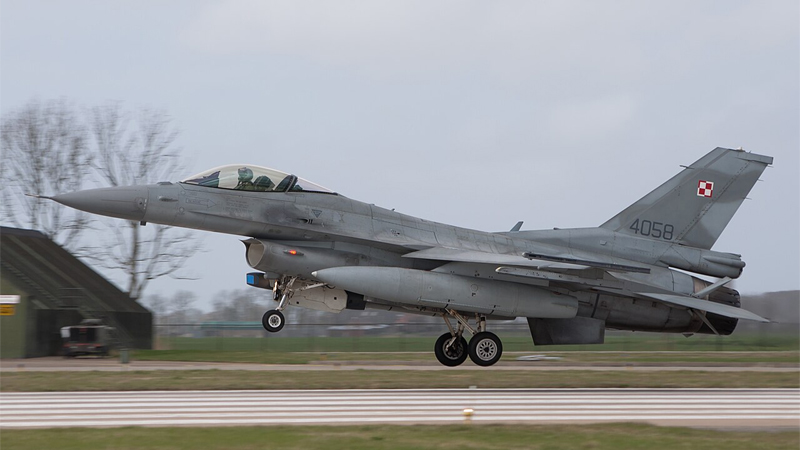
The difference is not merely procedural. With slow-moving targets, visual confirmation is manageable. With high-speed drones and cruise missiles, however, there is often no time. Expert Piotr Abraszek noted that the new rules will allow targets to be engaged even with medium-range missiles with a range of tens of kilometers, rather than requiring a fighter jet to approach within one or two kilometers. At the same time, the Polish system now includes the option to pre-authorize the use of Patriot systems as soon as a report of an enemy missile launch is received, and to suspend civilian air traffic in the event of a threat, so that the air force has a freer hand. Warsaw is thus essentially applying some of the logic of warfare to the day-to-day defense of NATO’s eastern flank.
Since the start of the Russian invasion of Ukraine, Polish airspace has repeatedly been the target of both mistakes and deliberate provocations. In November 2022, a missile struck near Przewodów, killing two civilians. A subsequent investigation revealed that it was a Ukrainian S-300 air defense missile that had gone out of control while repelling a massive Russian strike. A month later, a Russian Kh-55 missile flew over Poland; its debris was not found until the spring of 2023 in a forest near Zamość, not far from Bydgoszcz. In December 2023 and March 2024, Russian cruise missiles briefly violated Polish airspace near the Ukrainian border; in the second instance, the violation lasted 39 seconds near Oserdów. On the night of July 29–30, 2026, a Russian Kh-101 struck a field near Tarnawa-Kolonia, roughly 100 kilometers from the border, leaving a crater without being shot down and without the local population receiving a timely warning. Then, on September 23, 2026, a Russian Mi-8 military helicopter from Kaliningrad flew about three hundred meters across the border near Braniewo and returned after 42 seconds. Tomczyk cited this very incident as an example of why the existing rules are insufficient.
The biggest turning point came on the night of September 9–10, 2025. According to official data, at least 19 Russian drones – and up to 23 according to other estimates – penetrated Polish airspace, some from Belarus. Some were unarmed Gerbera drones with larger fuel tanks; others were Shaheds. The incident lasted seven hours; airports in Warsaw, Modlin, Rzeszów, and Lublin were closed, and NATO shot down Russian drones over alliance territory for the first time. Some of the targets were shot down by the Dutch Air Force, others by Polish forces. Drones and debris were found from the eastern border all the way to the center of the country. Poland and its allies called it a deliberate provocation, while Moscow and Minsk claimed the drones were strays caused by electronic jamming. Subsequently, NATO launched Operation Eastern Sentry. In September 2026, Geran-5 jet drones joined the fray, striking in western Ukraine just hundreds of meters to two kilometers from the Polish border, at the Dorohusk–Jahodyn crossing, and targeting a locomotive on the Kyiv–Warsaw train. Polish F-16s, helicopters, and an early warning aircraft took off; this time, NATO airspace was not violated. Prime Minister Donald Tusk said at the time that Russian escalation was a fact and that worse-case scenarios – including attacks on Polish territory – could not be ruled out.
Poland is building a multi-layered defense against these threats. At medium range, the Wisła program features Patriot batteries and the IBCS network, which achieved full operational capability by the end of 2025. Below that is the Narew program and the close-in layers Pilica and Pilica+, combining 23 mm cannons, Piorun systems, CAMM guided missiles, and SkyCtrl electronic jamming. For drones, the San program is being developed at a cost of approximately 3.5 billion euros, funded in part by the EU’s SAFE instrument: eighteen mobile batteries equipped with radars, electronic warfare systems, 30 mm and 35 mm cannons, APKWS guided missiles, and interceptor drones. In the air, the fleet includes F-16s, the new F-35A Husarz – which began arriving at the Łask base in 2026 – light FA-50s, and helicopters. The goal is to ensure that expensive missiles fired from fighter jets are not the only response to cheap kamikaze drones.
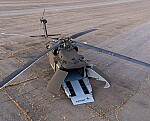
The Czech Army is also part of the defense shield. Following the September 2025 incursion, Prague deployed a helicopter unit to Poland as part of the reinforcement of the eastern flank. Initially, these were Mi-171Š helicopters, later UH-1Y Venom helicopters, and, beginning in the summer of 2026, AH-1Z Viper attack helicopters equipped with laser-guided APKWS missiles, designed specifically to engage low-flying targets. The unit from the 22nd Air Base in Náměšť nad Oslavou trained in C-UAS mode and underwent the NATO TACEVAL assessment. These rotations involve dozens to around a hundred of soldiers, building on earlier operations in Poland and the Enhanced Forward Presence mandate. Furthermore, in September 2026, Czech JAS-39 Gripen fighters took off from Pardubice at the direction of NATO command to monitor the area near Poland’s eastern border during a Russian drone wave in western Ukraine – intervention was not necessary.
The new Polish rules are a response to the fact that hybrid pressure from the east is no longer merely theoretical and that the time between detecting a target on radar and its impact is measured in tens of seconds. Whether positive identification will reduce the risk of error or, conversely, increase the chance of a swift and accurate response will become clear in the coming nights over the Lublin, Podlasie, and Masuria regions. What is certain is that Warsaw, its allies, and the Czech unit on the ground expect the number of such tests to increase.