Pyongyang’s Ammo Boom Could Change the Pace of the War in Ukraine
North Korea appears to be sharply expanding its military production base as it continues supplying ammunition and weapons to Russia for use in the war against Ukraine. New claims from state media say the country is now producing artillery shells at a rate far above its normal output, underlining the growing importance of Pyongyang as a source of wartime resupply for Moscow.
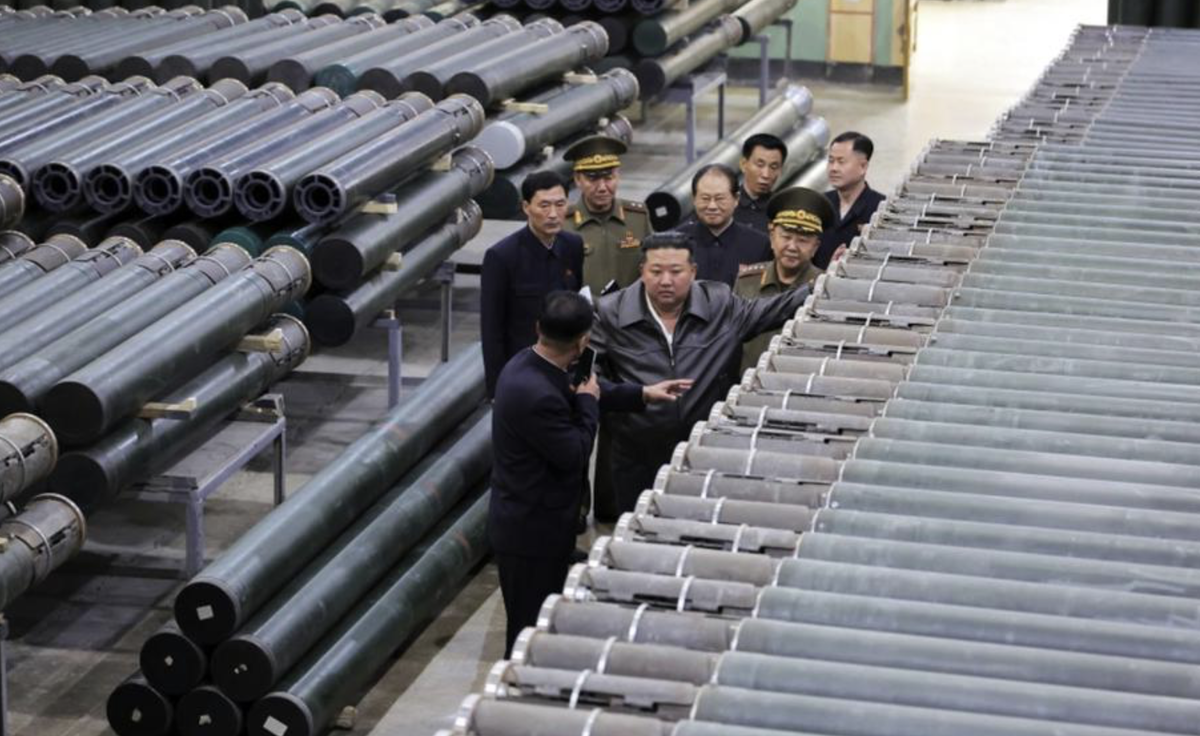
The Korean Central News Agency described a visit by Kim Jong-un to a military industrial enterprise in Pyongyang, where it highlighted both the pace of modernization and a dramatic rise in output. According to that account, the production of artillery ammunition has doubled compared with the plant’s previous record and now stands at four times the country’s average production volume.
Such statements should be treated carefully. KCNA is a state propaganda outlet, and reports of exceptional industrial achievements are often designed as much for political messaging as for factual disclosure. Even so, the broader context makes the claim difficult to dismiss outright.
North Korea has already emerged as a major supplier of military goods to Russia, particularly artillery ammunition. If its factories are genuinely operating at a significantly higher tempo, that would directly affect Russia’s ability to sustain long-range firepower in Ukraine. More North Korean production means more shells available for transfer, especially as Moscow continues to consume vast amounts of ammunition in a grinding war of attrition.
There is already a substantial record of such deliveries. Between September 2023 and April 2025, North Korea is known to have transferred between 1 million and 6 million shells and missiles to Russia. A large share of those shipments reportedly came from existing Korean People’s Army stockpiles. That matters because once reserve ammunition is sent abroad, Pyongyang must refill its own depots — creating a strong incentive to raise production levels at home.
In that light, claims of surging output become more plausible. Analytical estimates suggest North Korea may have as many as 300 defense factories employing roughly 500,000 workers. With an industrial base of that size, a major push to double shell production is not outside the realm of possibility, especially if the regime is prioritizing military manufacturing over civilian sectors.
The significance of this cooperation goes beyond artillery rounds. North Korea has also supplied Russia with a broader range of weapons, including M-1989 self-propelled howitzers, domestically produced multiple launch rocket systems, ballistic missiles, and anti-tank guided missiles. This points to a relationship that is no longer limited to opportunistic ammunition transfers, but one that increasingly resembles a deeper and more structured wartime supply partnership.
For Ukraine, that poses a clear challenge. Russian forces benefit not only from domestic production, but also from external suppliers willing to help replenish stocks and widen the range of available weapons. For North Korea, the arrangement offers strategic value of its own: stronger ties with Moscow, potential access to technology or political backing, and a way to convert military stockpiles into geopolitical leverage.
Whether KCNA’s exact production figures are accurate or exaggerated, the main takeaway is hard to ignore. North Korea is not acting as a passive observer of the war. It is playing an active role in sustaining Russia’s military effort — and its expanding shell production may be one of the clearest signs yet of how that support is growing.