
Reviving the Battleship Era: The Nuclear-Powered Trump-Class and America’s Quest for Naval Supremacy
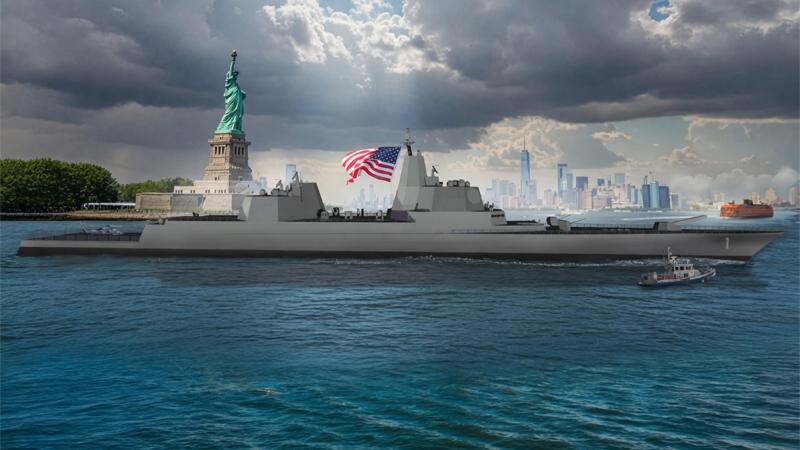
In the waning days of 2025, President Donald Trump stood at his Mar-a-Lago estate and unveiled a vision that harked back to the golden age of American naval might while thrusting it firmly into the 21st century. With characteristic flourish, he announced plans for a new class of warships dubbed the Trump-class battleships, the cornerstone of what he termed a “Golden Fleet.” The first vessel, USS Defiant (BBG-1), would symbolize an unambiguous return to large, heavily armed surface combatants designed not merely to deter but to dominate in an era of hypersonic missiles, drone swarms, and great-power competition. By May 2026, the U.S. Navy’s annual 30-year shipbuilding blueprint had crystallized these ambitions, confirming the ships would be nuclear-powered and explicitly not a replacement for the workhorse Arleigh Burke-class destroyers. This revelation marked a pivotal evolution from conceptual announcement to structured program, promising vessels of unprecedented scale and capability.
The roots of this project trace back to longstanding frustrations within naval strategy circles and Trump’s own repeated critiques of the fleet’s perceived vulnerabilities. For decades, the U.S. Navy had shifted away from traditional battleships after the Iowa-class vessels were decommissioned in the early 1990s. Those giants of World War II and the Cold War, with their massive 16-inch guns, had become symbols of a bygone era as missile technology and aircraft carriers redefined naval warfare. Yet concerns persisted about the limitations of smaller surface combatants in high-intensity conflicts. Arleigh Burke destroyers, while versatile and numerous, were increasingly strained by the demands of missile defense, power projection, and sustained operations far from friendly bases. Trump, drawing on his emphasis on American strength and industrial revival, framed the new battleships as a necessary leap to restore overwhelming firepower and endurance.
Early conceptual work likely benefited from studies into large surface combatants, echoing programs like the Zumwalt-class destroyers, which highlighted both the potential and pitfalls of ambitious designs. The Trump announcement in December 2025 specified an initial pair of ships, with ambitions scaling to 10, then potentially 20 to 25 vessels as part of a broader fleet expansion. Construction was eyed at facilities including the Hanwha Philly Shipyard, signaling efforts to bolster domestic capacity through partnerships. The Navy’s May 2026 plan refined this trajectory, projecting 15 ships through 2055, with the first three funded in the near-term Future Years Defense Program and procurement ramping up from fiscal year 2028. Lead-ship costs are estimated between $17 and $19 billion, with follow-ons potentially dropping to around $12-13 billion as production matures.

At the heart of the Trump-class design is nuclear propulsion, a choice that dramatically enhances operational potential. Unlike gas-turbine powered destroyers, these BBGN vessels— the “N” denoting nuclear—will offer virtually unlimited range and high sustained speeds without frequent refueling. This endurance is critical in vast theaters like the Indo-Pacific, where Chinese anti-access strategies could isolate forward forces. The ships, displacing an estimated 30,000 to 40,000 tons, dwarf most modern surface combatants and approach the scale of legacy battleships, though optimized for guided-missile warfare rather than broadside gunnery. Armament concepts include extensive vertical launch system cells for hypersonic missiles like Conventional Prompt Strike, potential nuclear-capable cruise missiles, electromagnetic railguns, high-energy lasers for drone defense, and traditional five-inch guns. Advanced radars such as the AN/SPY-6 family, coupled with modular architecture, ensure the platforms can integrate future technologies over decades of service.
The potential of these ships extends beyond raw firepower. In an age of distributed lethality, where the Navy emphasizes networked operations with unmanned systems, the Trump-class could serve as command nodes and floating arsenals. Their nuclear power plants free up internal volume for massive magazines and energy-intensive weapons, addressing the magazine-depth limitations that plague current fleets. Proponents argue they will deter adversaries by presenting targets that are difficult to neutralize while delivering devastating strikes across hundreds of miles. Integration with carrier strike groups or independent operations in contested waters could reshape battleforce architecture, providing the “unmistakable signal of American resolve” highlighted in official documents. Economically, the program promises thousands of jobs in shipyards and supply chains, aligning with broader goals of revitalizing American manufacturing. Challenges remain, however: ballooning costs, technical risks in railgun and laser maturation, and the sheer time required for design and construction, with the lead ship potentially entering service in the early 2030s.
Skeptics question whether such massive, expensive platforms align with evolving concepts of operations that favor smaller, more numerous, and attritable assets. Historical precedents, from the costly Zumwalt program to delays in other ambitious builds, underscore the risks of concurrency between design and production. Maintenance of nuclear surface ships, absent from the fleet since the retirement of older cruisers, demands specialized infrastructure and expertise. Yet the Navy’s blueprint frames the class as complementary to existing forces, not a wholesale successor, preserving the Arleigh Burkes for multi-mission roles while the new battleships handle high-end, sustained combat power.
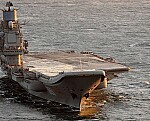
Comparisons across the globe reveal both parallels and contrasts that underscore the Trump-class’s unique positioning. China’s People’s Liberation Army Navy has pursued its own large combatants, including Type 055 cruisers that approach 13,000 tons and feature advanced missile systems, though they rely on conventional power. These vessels emphasize quantity and area-denial capabilities, with plans for significant fleet growth. Russia’s Kirov-class nuclear battlecruisers, though aging, remain among the largest surface warships afloat, armed with heavy anti-ship missiles and reflecting Soviet-era emphasis on firepower. Modernization efforts have kept one/two operational, but resource constraints limit their numbers and readiness.
In Europe, navies have trended toward multipurpose frigates and destroyers, with programs like the UK’s Type 26 or France’s FREMM focusing on versatility and coalition interoperability rather than sheer size. No peer currently matches the envisioned scale and nuclear propulsion of the Trump-class for surface combatants. India’s emerging carrier and destroyer programs aim for blue-water reach but operate on more constrained budgets. Collectively, these international efforts highlight a global resurgence in naval investment driven by tensions in the South China Sea, Arctic, and elsewhere, yet few nations possess the industrial depth or political will for nuclear-powered surface giants. The U.S. program, by reviving this capability, could restore a qualitative edge, forcing adversaries to recalculate risks in any potential conflict. Allies might view it as a stabilizing force multiplier, while competitors could accelerate their own asymmetric responses, such as hypersonic or underwater drone developments.
As the USS Defiant takes shape on the drawing boards and eventually in drydock, the Trump-class battleship embodies more than hardware. It reflects a strategic bet on visible, enduring American power projection amid shifting global dynamics. Whether the full Golden Fleet materializes depends on sustained congressional support, technological breakthroughs, and the evolving threat landscape. For now, it stands as a bold declaration: in an uncertain world, the United States intends not just to sail but to command the seas with vessels that echo the might of the past while harnessing the innovations of the future. The coming years will test whether this vision delivers the deterrence and combat effectiveness its architects promise, potentially reshaping naval warfare for generations.