Beyond the Attack Submarine: Building Persistent Awareness on the Seabed
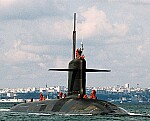
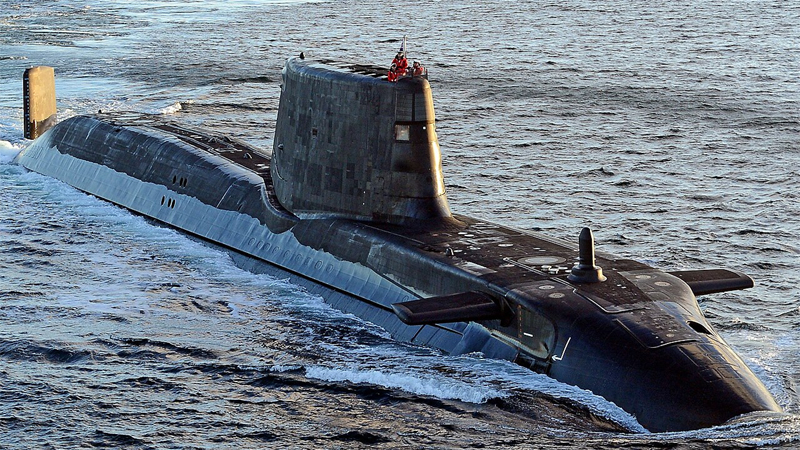
The undersea domain has long been dominated by nuclear-powered attack submarines, the most capable platforms for both hunting and hiding beneath the surface. Yet the strategic importance of the seabed itself has grown dramatically. Submarine telecommunications cables carry the overwhelming majority of global data traffic, energy interconnectors and pipelines sustain national economies, and fixed sensor arrays form the backbone of maritime surveillance. Incidents of suspicious activity near these assets, combined with the proliferation of sophisticated unmanned underwater vehicles, have forced navies and alliances to expand their focus from platform-centric anti-submarine warfare to a broader concept of undersea domain awareness that prioritizes persistent monitoring and rapid response.
Traditional fixed surveillance systems, such as the U.S. Navy’s Integrated Undersea Surveillance System and its successors, remain essential for monitoring chokepoints and approaches. These networks of seabed hydrophones and associated processing centers provide continuous passive listening across vast ocean areas. Modernization efforts continue, yet staffing challenges and the need to adapt to quieter threats and changing oceanographic conditions have underscored the limits of relying solely on legacy arrays. Complementary mobile and expendable sensors are therefore being fielded at an accelerating pace. Compact, modular sonars designed for deployment on unmanned platforms or as standalone seabed nodes can be positioned where fixed infrastructure is sparse or vulnerable, offering scalable coverage without the cost and permanence of traditional systems.
Unmanned underwater vehicles have become the most dynamic element of this expanding architecture. Large-displacement and extra-large UUVs now offer multi-thousand-nautical-mile endurance, significant payload capacity, and the ability to conduct long-duration missions without risking crewed submarines. These vehicles perform seabed mapping, intelligence collection, mine countermeasures, and direct monitoring of critical infrastructure. Smaller autonomous systems provide high-resolution inspection of cables and pipelines, detect anomalies, and investigate potential threats. In recent exercises, including NATO’s BALTOPS series, specialized UUV units have demonstrated coordinated search, classification, and monitoring operations in contested waters, reducing the exposure of manned platforms while extending the reach of surveillance.
The United Kingdom’s Atlantic Bastion concept illustrates the shift toward layered, uncrewed-centric sensing. Its initial phase, Atlantic Net, deploys networks of UUVs and associated sensors across key North Atlantic areas to create persistent presence. Subsequent integration with crewed assets – including attack submarines, maritime patrol aircraft, and advanced frigates – aims to create a denser, more resilient surveillance web capable of detecting both submarines and threats to undersea infrastructure. Allied efforts under NATO frameworks seek common standards for data exchange and interoperability among uncrewed systems, ensuring that national contributions can feed into a shared operational picture.
Protection of critical undersea infrastructure requires more than detection. Ports, naval bases, and offshore energy facilities face risks from divers, swimmer delivery vehicles, and increasingly capable autonomous systems that can approach at depth with low acoustic signatures. Intruder detection systems employing high-frequency active sonar, often combined with passive processing, create protective perimeters around harbors and key assets. Imaging sonars and autonomous inspection vehicles enable routine surveys and rapid response to incidents. The same commercial technologies used for offshore surveys can be adapted for military purposes, creating both opportunity and risk as the barrier to entry for sophisticated undersea operations continues to fall.
The ocean is an opaque and dynamic environment; acoustic conditions vary with temperature, salinity, and depth, complicating detection and classification. Communication with submerged platforms is limited, requiring careful management of data latency and autonomy. Power, endurance, and reliability of long-duration UUVs continue to improve but still constrain continuous coverage over the largest ocean basins. Attribution of incidents near infrastructure is often difficult, and the dual-use nature of many commercial systems complicates rules of engagement and legal frameworks. Command architectures must evolve to fuse data from fixed sensors, mobile platforms, surface relays, and space-based assets into actionable intelligence at the speed required for effective response.
Despite these obstacles, the trajectory is clear. Undersea domain awareness is moving from episodic, platform-dependent operations toward persistent, distributed networks in which seabed sensors and unmanned vehicles provide the foundational layer. Attack submarines retain their unique value for high-end combat and strategic deterrence, yet they are increasingly supported – and in some missions relieved – by systems that can remain on station for weeks or months at far lower cost and risk. As competition intensifies on and beneath the seabed, the ability to maintain continuous awareness of both military threats and critical civilian infrastructure will determine whether nations can secure the invisible foundation of modern connectivity and energy supply. The investments and operational concepts emerging in 2025 and 2026 mark a decisive step toward that capability.