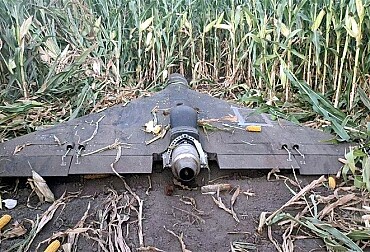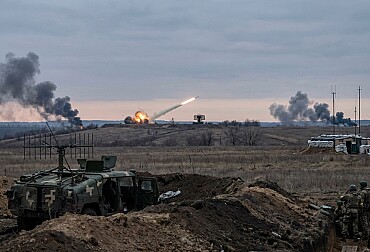

Russia Admits It: Ukrainian Drones Can Now Hit the Urals
Russia has now said out loud what modern long-range drone warfare has been implying for months: geographic depth is losing its protective power.
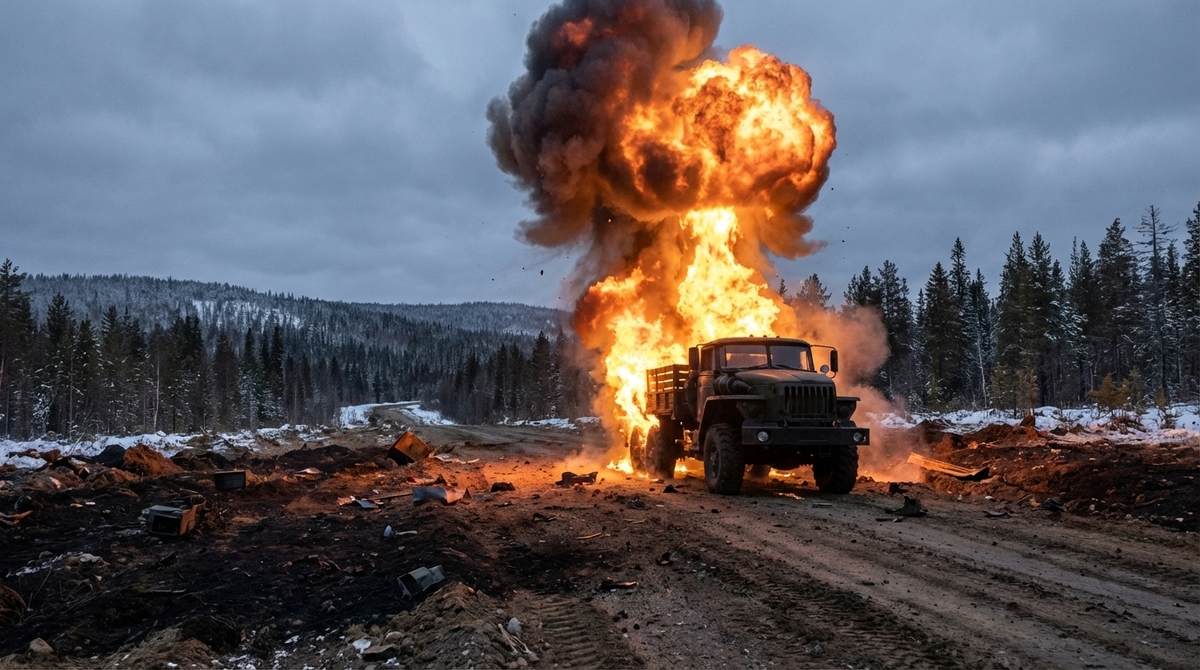
At an off-site meeting of Russia’s Security Council in Yekaterinburg, Security Council Secretary Sergei Shoigu acknowledged that Ukrainian long-range unmanned systems now pose a direct threat to regions far from the front line—specifically including the Ural industrial area. His message was blunt: what was recently out of reach is no longer out of danger.

“Thus, until recently, the Urals were out of reach for strikes from Ukrainian territory, and today they are already in the zone of immediate threat,” Shoigu said, framing the change as a consequence of the accelerating development and use of Ukrainian unmanned systems.
Why the Urals matter more than a map suggests
The Urals are not just “deep Russia.” They are a dense cluster of assets that connect economic output to military endurance.
Shoigu pointed to the region’s concentration of defense and economic infrastructure: defense-industrial enterprises, energy facilities, chemical industry assets, and major oil and gas fields. In practical terms, that mix represents production capacity, fuel and power supply, and industrial inputs—exactly the kind of backbone a state relies on to sustain long-term operations and domestic stability.
He also highlighted the region’s extensive transport infrastructure, including key railway corridors, major road networks, and logistics hubs. Those networks matter because they do double duty: they support civilian commerce, and they support military logistics. If a war becomes a contest of throughput—how quickly equipment, materials, and repairs can move—then rail lines and hubs become strategic assets, not just economic ones.

In other words, the Urals are valuable not only for what they produce, but for what they enable.
The security shift: from “front line defense” to “whole-country defense”
Shoigu’s remarks reflect a broader concern inside Russia: Ukrainian strike capabilities are expanding in both range and effectiveness, increasingly targeting infrastructure far from the front line. The ongoing reports of long-range, one-way attack drones striking deep inside Russian territory have steadily eroded the assumption that distance equals safety.
He also noted that drones are not the only long-range tool in play. Ukrainian forces have employed longer-range strike systems, including cruise-type weapons, to target infrastructure and military assets. The combined effect is a wider geographic scope of risk—more potential targets, more possible routes of approach, and more pressure on defensive coverage.
This is where the Urals become a symbol as much as a location. If an area historically treated as “rear” is now described as being in an “immediate threat” zone, then defensive planning has to change from protecting a band near the conflict to protecting a sprawling set of nodes across a vast territory.
What changes when drones can reach “secure” regions
Shoigu’s acknowledgment implies a shift in how Russia will have to think about air defense.
Covering a broader set of potential targets is not simply a matter of adding more systems; it’s a problem of scale and prioritization. Large territories contain countless points that matter—energy sites, industrial facilities, rail junctions, depots, and logistics hubs. Mobile and dispersed threats like drones complicate the picture further because they can be launched in volume, approach along varied paths, and pressure defenses through persistence rather than single decisive strikes.
That forces hard choices:
- Which sites become “must-defend” nodes when the threat radius expands?
- How do you protect transport corridors that stretch across regions, not just single facilities?
- How do defenses adapt when the threat is not a small number of high-end aircraft but potentially many low-cost, one-way systems?
Shoigu’s comments suggest that regions such as the Urals—previously treated as secure due to distance—are now being incorporated into those calculations.
A war of technology stretches the battlefield
The most revealing part of Shoigu’s statement is not the geography; it’s the admission of a changed security environment. The expanding reach of Ukrainian unmanned systems—and the use of longer-range strike weapons—shows how technological development can redraw what “deep rear” means in a modern conflict.
Defending a large country against dispersed, mobile threats is a different kind of challenge than defending a front line. By publicly naming the Urals as being within an “immediate threat” zone, Russia is signaling that the conflict’s operational map is no longer confined to border regions or occupied territories. It is becoming a contest over infrastructure, logistics, and industrial capacity—where distance buys less time, and “safe” is increasingly a planning assumption rather than a reality.