

Russia Turns Power Lines Into Drone Ambush Points - Creating a New Threat on Ukraine’s Front Line
Russian forces are reportedly using high-voltage power lines as concealed positions for ambush drones, adding another layer of danger for Ukrainian troops operating near critical infrastructure.
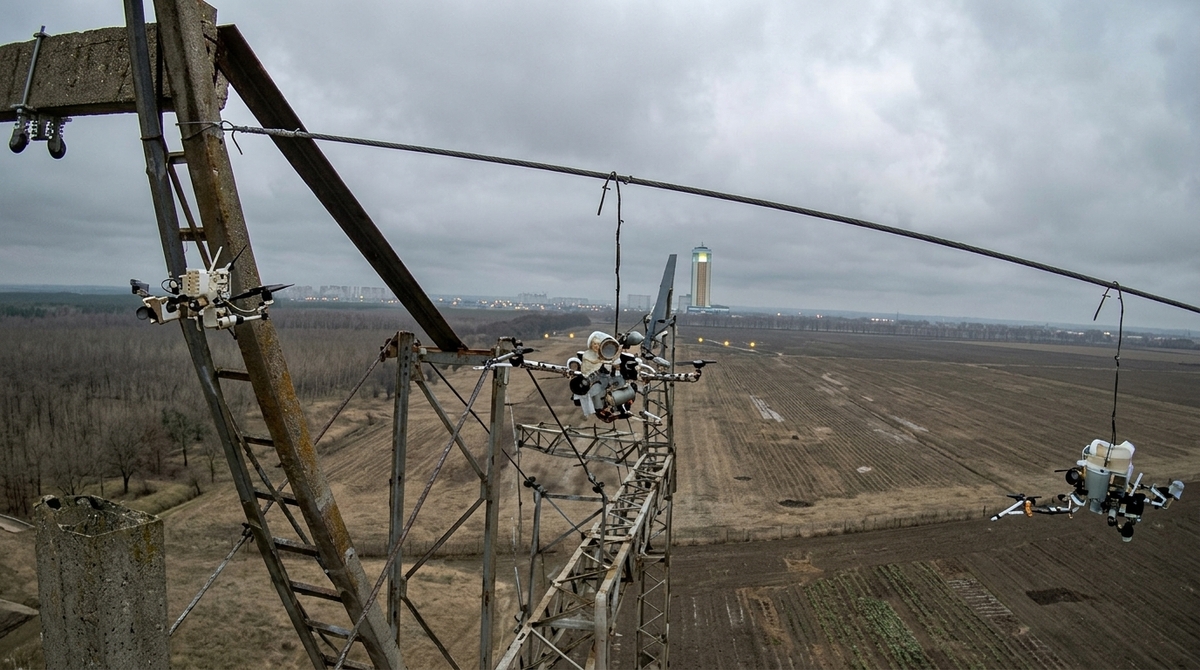
The tactic was highlighted by Ukrainian military radio and drone warfare specialist Serhii “Flash” Beskrestnov, who warned frontline personnel to take the new threat into account during combat missions. According to the report, Russian units have begun placing drones directly on high-voltage electrical wires, allowing them to remain above ground level while waiting for potential targets.
It is a small tactical adaptation, but one with serious implications. In a war where drones already dominate the battlefield, even power lines can become part of the kill chain.
A tactic borrowed from Ukraine
The reported Russian method is not entirely new. Ukrainian forces had previously used similar ambush-style drone tactics, positioning unmanned systems in concealed locations rather than keeping them constantly airborne.
Now, according to Beskrestnov, Russian forces appear to have adopted the same idea.
Instead of flying continuously and exposing themselves to detection, ambush drones can remain in place until a suitable target appears. This makes them harder to notice and potentially more efficient, especially in areas where soldiers or vehicles are moving through predictable routes.

By using high-voltage power lines, Russian operators gain one key advantage: elevation. A drone placed above ground level may be less visible to troops moving below, while still being positioned to observe, strike, or support other unmanned systems.
Why power lines matter
Power infrastructure is already a dangerous environment in wartime. It offers long stretches of elevated structures, open visibility, and routes that often cross fields, roads, and settlements. For drones, those same features can be useful.
A drone hidden on or near high-voltage lines can potentially wait in silence, reduce its exposure, and become active only when needed. That changes the threat picture for soldiers who may normally scan tree lines, rooftops, trenches, or damaged buildings — but not always the wires above them.
The warning is especially relevant for Ukrainian units operating close to power infrastructure near the front. What once looked like ordinary battlefield terrain may now conceal unmanned systems placed in unexpected locations.
Ambush drones are changing the rhythm of the battlefield
Traditional drone operations often involve constant flight: searching, tracking, correcting artillery fire, or striking targets directly. Ambush drones work differently.
They are designed to remain in a fixed or concealed position until a target enters the area. This can save battery power, reduce noise, and limit the chance of early detection. It also allows operators to prepare traps in advance.
In practice, this means the battlefield becomes less predictable. A drone threat may no longer come only from the sky in motion. It may already be waiting — attached to infrastructure, hidden above a road, or positioned where troops least expect it.
This is part of a broader trend in the war: both sides are rapidly adapting commercial and military drone technology into increasingly creative battlefield roles. What begins as an improvised solution can quickly become a repeated tactic once it proves useful.
More than a weapon: a possible signal relay
The danger may not be limited to direct attacks. Depending on their configuration, such drones can also serve as communication relays.
That role is important because electronic warfare and terrain can limit drone control ranges. A drone placed in an elevated position may help extend communications coverage for other unmanned platforms, making it part of a wider drone network rather than a single isolated threat.
In other words, a concealed drone on a power line may not only be waiting to attack. It could also help other drones operate more effectively in the area.
A warning for modern warfare
The reported use of power lines as drone ambush points underlines a central lesson of the war in Ukraine: almost any object on the battlefield can become part of a drone system.
Power lines, poles, abandoned buildings, civilian infrastructure, tree belts, and wrecked vehicles can all be repurposed into observation points, relay nodes, hiding places, or launch positions. The boundary between infrastructure and battlefield equipment continues to blur.
For Ukrainian forces, the immediate message is caution. Areas around power infrastructure may require closer inspection, new movement routines, and greater awareness of threats from above.
For outside observers, the development shows how fast drone warfare evolves. Tactics spread quickly. Once one side finds a useful method, the other studies it, copies it, and modifies it.
Russia’s reported use of high-voltage power lines for ambush drones is not a technological revolution. But it is a reminder that in this war, danger often comes from the most ordinary places — including the wires overhead.