
One Strike, Big Consequences: Why Ukraine Targeted This Key Russian Complex
More than 2,200 kilometers from the front line, Ukrainian forces struck ZapSibNeftekhim in Tobolsk, the country’s largest petrochemical complex. The attack sparked a fire at the facility and highlighted a growing pattern in the war: long-range strikes aimed not only at military hardware, but at the industrial systems that help sustain Russia’s broader war effort.
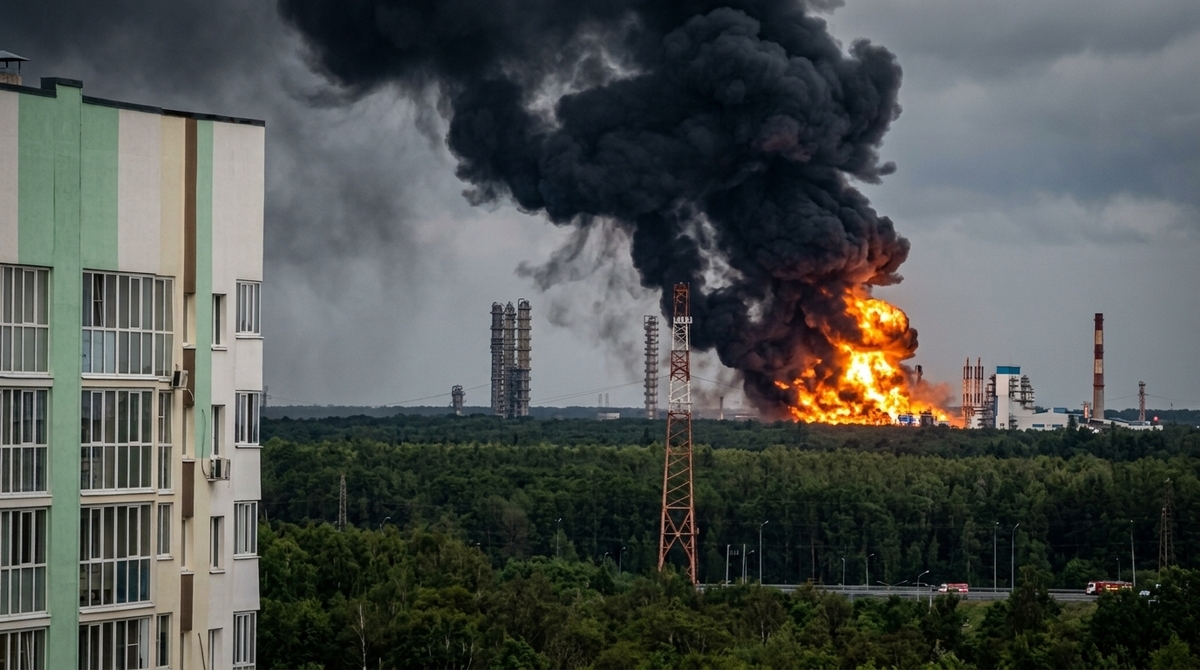
The strike was confirmed by Tyumen Region Governor Alexander Moor, who said a fire broke out at an industrial site after several drones crashed. Images and video from the scene showed flames rising from the complex, one of the most important petrochemical assets in Russia.
The reported target was the Central Gas Fractionation Unit, a crucial part of the plant’s production chain. That unit is where the facility begins processing broad fractions of light hydrocarbons derived from associated petroleum gas and gas condensate. In practical terms, it is the gateway through which raw hydrocarbon feedstock is separated and prepared for use in the rest of the plant.
Inside the unit, the materials are split in distillation columns based on the boiling points of their components. The resulting liquefied gases then move further into production, where they are turned into polymer materials and chemical-industry feedstocks. The system includes two separate processing lines, GF-1 and GF-2, and after modernization in 2016, its annual processing capacity reached 8 million metric tons.
That makes the choice of target especially significant.
ZapSibNeftekhim is not just another industrial site. It is Russia’s biggest producer of base polymers and one of the largest integrated petrochemical complexes in the world. Owned by Sibur, the Tobolsk facility plays an outsized role in the country’s chemical output. The site accounts for roughly half of Russia’s total production of polyethylene and polypropylene, making it central not only to civilian industry, but also to sectors tied to logistics, manufacturing, and defense-linked supply chains.
Its relevance goes beyond plastics.
In 2022, the complex launched Russia’s only maleic anhydride production facility, with capacity exceeding 45,000 metric tons per year. Maleic anhydride is used in the production of unsaturated polyester resins, which are a foundation for fiberglass composites. Those composites are widely used in aircraft and drone manufacturing, giving the petrochemical plant an indirect but important role in Russia’s defense ecosystem.
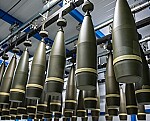
That connection matters because Sibur has supplied raw materials to enterprises serving the Russian military industry. Among them is the Kamensk Plant, which produces solid rocket propellant, solid-fuel charges, and rocket engines used in Grad, Smerch, and Uragan multiple launch rocket systems. Raw materials were also supplied to the Perm Powder Plant, which manufactures charges for multiple launch rocket systems and air defense systems, engine charges for air-to-surface missiles, launch and acceleration systems for cruise missiles, and spherical gunpowder for small arms.
The supply network extends further to explosives manufacturers, including the Sverdlov Plant and the Biysk Oleum Plant.
That means the strike on ZapSibNeftekhim carries weight beyond the immediate images of fire. Even limited disruption at such a facility can create ripple effects across interconnected industrial chains, especially when the damaged segment sits near the beginning of production. A hit on an upstream processing unit can slow or complicate the flow of materials needed far beyond a single factory perimeter.
Just as importantly, the location of the strike sends a message. Tobolsk lies far from the active combat zone, in territory long considered relatively secure from regular battlefield pressure. Reaching a site at that distance underscores both the expanding range of Ukrainian strike capability and the increasing vulnerability of strategic infrastructure deep inside Russia.
Whether the damage will have a lasting operational impact remains unclear. But the target itself is revealing. This was not merely an attack on a refinery or fuel depot. It was a strike on a major node in the industrial architecture that supports polymer production, chemical processing, and, by extension, parts of the defense supply chain.
In modern war, distance alone no longer guarantees safety. And when a critical petrochemical complex more than 2,200 kilometers from the front can be set ablaze, the map of what counts as the rear is changing fast.