
“Weeks” of War? Kaine Moves to Handcuff Trump as Iran Fight Escalates
Senator Tim Kaine is forcing a Senate vote this week that could become Congress’s first direct test of President Donald Trump’s expanding military campaign in Iran—an operation Trump has warned could last “weeks.”
Kaine, a Democrat, said he will move a war powers resolution designed to restrict Trump’s ability to use military force in Iran without congressional authorization. The vote, he told reporters, is most likely Tuesday but could slip to Wednesday. Even if it fails, Kaine argues the act of voting can still matter: it can pressure the administration to change course, narrow the operation, or provide more information to the public about what is being done in Americans’ name.
A vote that may not pass—but could still bite
Kaine’s resolution faces steep odds in a Congress led by Republicans. A parallel House measure is being advanced by Reps. Ro Khanna (D-Calif.) and Thomas Massie (R-Ky.), but both efforts confront the same political math: even if a bill reached Trump’s desk, overriding a veto would require two-thirds majorities in both chambers—an outcome Kaine’s camp is not counting on.

Instead, Kaine is betting on leverage.
He pointed to an earlier Venezuela war powers push that did not succeed but, in his telling, still helped shape White House behavior once it started drawing some Republican support—leading to a canceled “second invasion” and eventually the first public hearing about that operation.
Kaine framed the Iran vote as part of a broader pattern. He accused Trump—who campaigned on ending wars—of using the military without congressional authorization “in multiple locations,” including Iran twice, plus the Pacific, the Caribbean, Venezuela, and Nigeria, while also threatening military action against Cuba, Mexico, Colombia, and possibly Greenland. “And where next?” Kaine asked. “We don’t know.”
The House moves too—and a cross-party crack shows
In the House, Khanna urged members to return to Washington Monday to vote on his war powers resolution. Massie, a Republican, said he would work with Khanna to force a vote once the House reconvenes, arguing that “The Constitution requires a vote,” and that representatives should be on the record supporting or opposing the war.

That cooperation highlights a key dynamic: while lawmakers are largely split along party lines—Republicans rallying behind the operation and Democrats calling it illegal without congressional approval—there are notable exceptions.
On the Republican side, Massie, Ohio Rep. Warren Davidson, and Kentucky Sen. Rand Paul have questioned the attacks and signaled openness to a war powers vote. On the Democratic side, Pennsylvania Sen. John Fetterman broke with his party to back the strikes.
Briefings promised, but Kaine worries they’ll be too thin
Kaine said lawmakers will likely receive a classified briefing on the operation this week, but he also pushed for public testimony from the administration.
He expressed concern about how briefings often play out: many briefers, limited time, and too many unanswered questions. He said he had not yet received details on when senators would be briefed, despite serving on Armed Services and Foreign Relations, and described himself as “a little nervous” about the administration’s briefing strategy.
That anxiety is sharpened by what has not happened publicly. Nearly 48 hours after the operation began, there have been no formal press briefings from the White House, Pentagon, or State Department. White House officials largely avoided the Sunday talk show circuit—an approach that contrasts with earlier operations, including the Venezuela operation and last year’s “Midnight Hammer” effort, which featured long statements from senior officials early on.
First US deaths announced as Trump signals more may come
As Congress prepares to debate authority, the human cost is already landing.
US Central Command announced Sunday that three US servicemembers were killed and five others seriously wounded in connection with the operation. Reports indicate the servicemembers were in Kuwait.
In a social video released Sunday afternoon, Trump acknowledged the losses, offered condolences, and appeared to brace the public for additional casualties.
“We pray for the full recovery of the wounded and send our immense love and eternal gratitude to the families of the fallen,” Trump said. “And sadly, there will likely be more before it ends. That’s the way it is, likely be more.”
He also promised retaliation: “America will avenge their deaths and deliver the most punishing blow to the terrorists who have waged war against, basically, civilization.”
Earlier Sunday, Trump told The Daily Mail the conflict could last as long as four weeks—an estimate that, combined with the casualty announcement, raises the stakes for lawmakers arguing that Congress must have a formal say.
What the US says it’s using—and what it won’t confirm
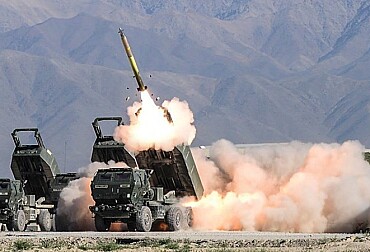
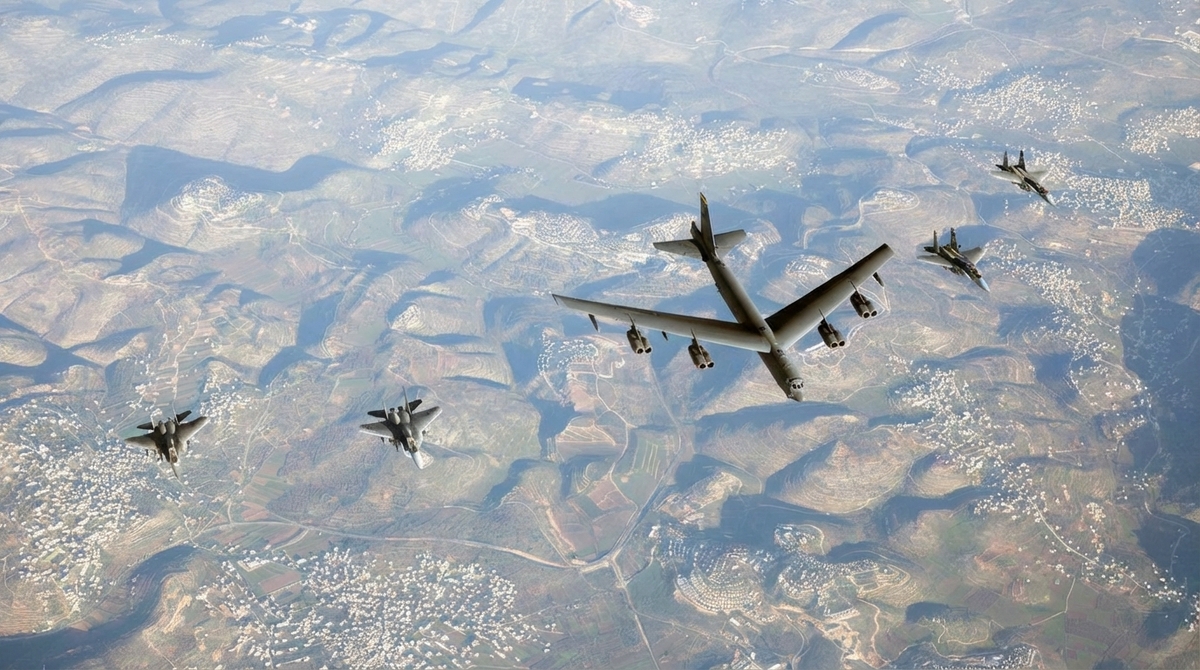
With few public briefings, much of the operational detail has come through CENTCOM’s social media channels. On Sunday, CENTCOM published a broad list of weapons used, including B-2 bombers, F-35 Lightning II fighter jets, and a new one-way attack drone called the Low-cost Unmanned Combat Attack System (LUCAS), described as a copy of Iran’s Shahed-136. CENTCOM also listed missile defense systems involved, including Patriot and Terminal High Altitude Area Defense (THAAD).
CENTCOM said targets ranged from command-and-control centers and ballistic missile sites to Iranian ships.
Trump claimed in his video that nine Iranian naval vessels had been sunk, but the claim has not been corroborated.
A maximalist campaign—or the opening of something bigger?
Mick Mulroy, a former Pentagon official from Trump’s first administration and now president of Fogbow, said the US-Israeli strikes appear “maximalist”—not only targeting nuclear and ballistic programs, but also “regime targets,” and calling for regime change “specifically.”
Mulroy warned the campaign is likely to continue “for weeks if not longer,” describing it as an existential threat to Iran’s regime and saying “nothing will be off limits.” His conclusion was blunt: “The region is now engulfed in a war.”
Why the Kaine vote matters now
Kaine’s push is less about a single roll call and more about forcing a public moment: a recorded decision by elected officials while a president signals a weeks-long war, casualties are confirmed, and the administration’s public explanation remains limited.
Even if the resolution fails, Kaine believes it can still change incentives—drawing out information, prompting hearings, and making it harder for the White House to treat a sustained military campaign as something Congress merely watches rather than authorizes.