Shaping Tomorrow’s Battlefield: Key Trends and Czech Innovations at Eurosatory 2026
As Paris prepares to host the world’s premier land and air defence exhibition from 15 to 19 June 2026 at the Paris Nord Villepinte Exhibition Centre, Eurosatory 2026 arrives at a pivotal moment for global security. With over 2,100 exhibitors from more than 60 countries, hundreds of official delegations, and tens of thousands of professional visitors expected, the event promises to be one of the most ambitious editions yet. Organisers have expanded the footprint into additional halls, creating more than 185,000 square metres of display space, while the demonstration zone has been completely redesigned to mirror contemporary combat realities, including trench warfare, three-dimensional drone manoeuvres, and close-quarters battle scenarios.
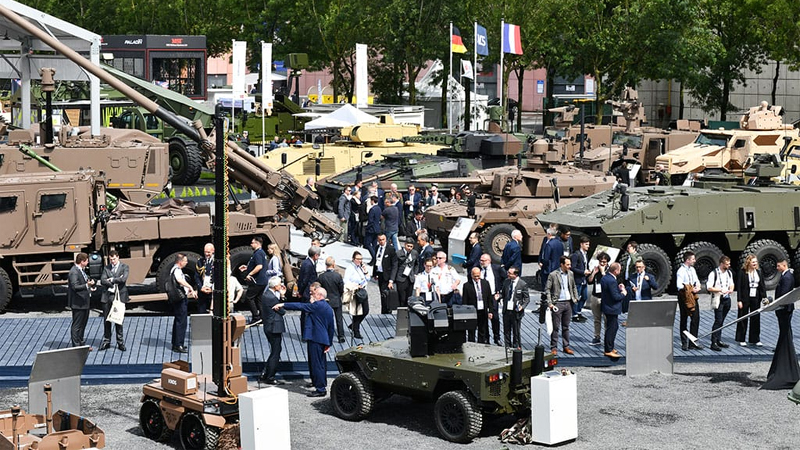
The strategic context could hardly be more urgent. Ongoing conflicts, particularly the war in Ukraine, have exposed vulnerabilities in supply chains, air defence, and force mobility while accelerating demand for autonomous systems, counter-drone capabilities, and multi-domain integration. European nations continue to ramp up defence spending, driven by NATO commitments and the need for greater strategic autonomy. Eurosatory 2026 will serve as a critical marketplace for solutions addressing these challenges, bringing together manufacturers, start-ups, military leaders, and policymakers to discuss not only hardware but also the broader industrial and technological shifts reshaping defence.
Central themes for 2026 include multi-domain superiority encompassing cyber, space, artificial intelligence, and emerging digital technologies. Remote engagement, land manoeuvre, and air mobility will feature prominently, with live demonstrations highlighting helicopters, uncrewed aerial vehicles, loitering munitions, uncrewed ground vehicles, and manned-unmanned teaming. Comprehensive security, risk prevention, crisis management, and industrial resilience round out the programme, reflecting a holistic view that extends beyond traditional platforms to encompass the full spectrum of hybrid threats and war-economy considerations.
Industry observers anticipate strong emphasis on counter-unmanned aerial systems, electronic warfare, AI-enabled command and control, and enhanced protection for ground forces. The integration of space-based assets with terrestrial operations, secure communications resilient to jamming, and rapid munitions replenishment will likely draw significant attention. National pavilions from the United States, United Kingdom, and other allies will showcase interoperability-focused technologies, while European efforts to strengthen indigenous capabilities will be on full display.
Against this backdrop, participation from Central European countries, particularly the Czech Republic, stands out as a notable feature. Czech companies and their partners are set to make one of the strongest national showings, highlighting the country’s growing role as a reliable supplier of robust, battle-proven systems tailored to high-intensity operations on NATO’s eastern flank. This presence underscores Czech industry’s deep integration into European and transatlantic supply chains and its focus on practical, export-oriented solutions developed in response to real-world lessons from regional security challenges.
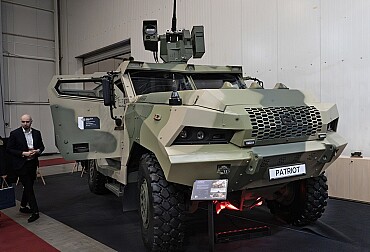
A major highlight will be the collective display by Czech firms, many collaborating within broader European projects. This strong national presence underscores the Czech Republic’s growing role as a reliable supplier of robust, battle-proven systems tailored to high-intensity operations on NATO’s eastern flank. Beyond the prominent CSG Group exhibit, which features multiple Czech and partner companies showcasing vehicles, ammunition, air defence integration, and related capabilities and forms one of the largest joint exhibits at the fair (see the dedicated preview for details).
Many Czech companies, supported through initiatives by the Defence and Security Industry Association of the Czech Republic (AOBP) and CzechTrade, will present niche technologies ranging from precision optics, protective materials, electronics, communication systems, firearms and vehicles to simulation and training solutions. These participants often focus on dual-use innovations and supply-chain components that enhance the performance of larger platforms, reflecting the country’s integrated approach to defence industrial development. Many of these systems incorporate lessons from recent conflicts, prioritising modularity, rapid deployment, and cost-effective maintenance in prolonged operations.
This diverse Czech showing reflects broader national strategy. The Czech Republic has consistently increased defence investment, modernising its armed forces while positioning domestic industry as a key contributor to NATO and EU initiatives. Companies benefit from close cooperation with the Ministry of Defence and AOBP, which actively promotes international partnerships. Many systems on display draw directly from operational feedback, emphasising reliability, ease of maintenance, and interoperability – qualities essential for sustained high-tempo operations.
Beyond hardware, Czech participation at Eurosatory 2026 will likely extend to discussions on supply chain resilience and joint development. With European nations seeking to reduce dependency on single sources and accelerate production of critical munitions and components, Czech firms are well-placed to offer scalable manufacturing capacity and proven integration expertise. Collaborations on multinational projects further demonstrate how Czech technologies combine with international partners to deliver flexible solutions for emerging threats.
This strong Czech showing reflects broader national strategy. The Czech Republic has consistently increased defence investment, modernising its armed forces while positioning domestic industry as a key contributor to NATO and EU initiatives. Companies benefit from close cooperation with the Ministry of Defence and the Defence and Security Industry Association of the Czech Republic (AOBP), which actively promotes international partnerships. Many systems on display draw directly from operational feedback, emphasising reliability, ease of maintenance, and interoperability – qualities essential for sustained high-tempo operations.
Beyond hardware, Czech participation at Eurosatory 2026 will likely extend to discussions on supply chain resilience and joint development. With European nations seeking to reduce dependency on single sources and accelerate production of critical munitions and components, Czech firms are well-placed to offer scalable manufacturing capacity and proven integration expertise. Collaborations on projects like the Trident air defence system further demonstrate how Czech radar, command-and-control, and chassis technologies combine with international partners to deliver flexible, modular solutions for short- to long-range threats.
Eurosatory 2026 will not only showcase equipment but also facilitate high-level policy dialogue. Speakers including French ministers, European commissioners, and senior military commanders will address topics ranging from the war economy to AI ethics in defence. For industry professionals and defence planners alike, the event offers unmatched opportunities to evaluate emerging technologies in context, forge new partnerships, and align national requirements with available solutions.
In an era defined by rapid technological change and persistent geopolitical tension, Eurosatory 2026 promises to illuminate pathways toward more capable, resilient, and integrated defence postures. The significant Czech presence adds a practical, combat-informed dimension to the global conversation, reinforcing the country’s reputation as an innovative and dependable partner in European security architecture. Attendees seeking insights into both cutting-edge trends and field-ready Central European solutions will find ample material across the exhibition halls and demonstration areas in June.