
Two Russian Su-30 Fighters Damaged in Kaliningrad Incident
Two Russian Su-30 fighter jets were reportedly damaged during an aviation incident over the Kaliningrad region on October 21, according to new information published by the OSINT community OSINT Bees and reported by Militarnyi.
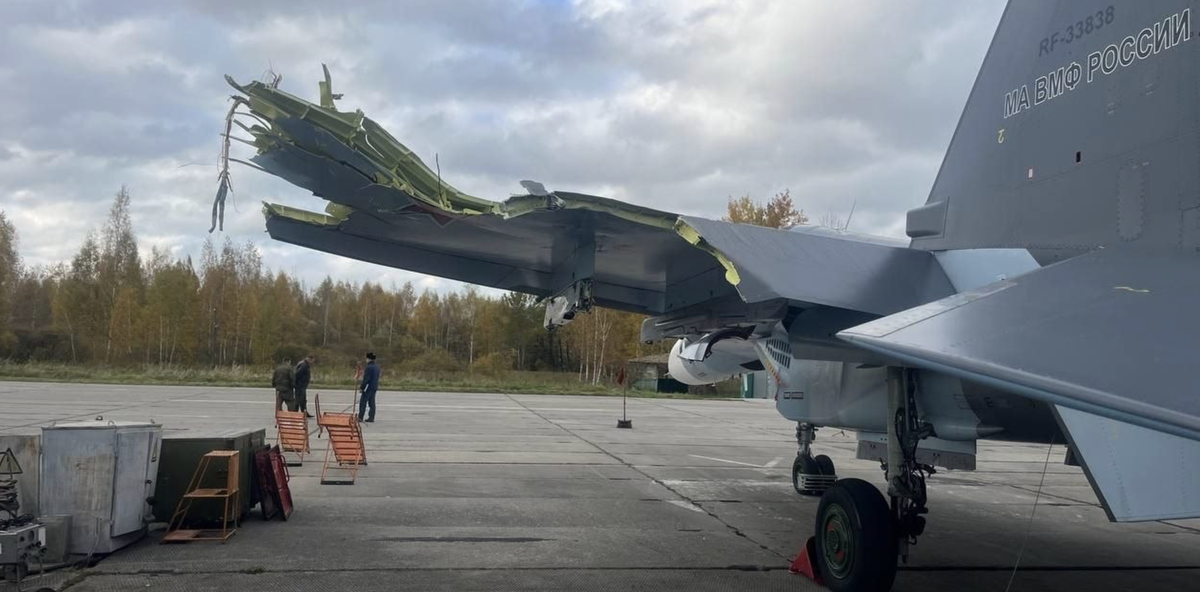
Initial reports suggested that only one Su-30SM aircraft had crashed near Chernyakhovsk. However, newly released photos indicate that a second fighter, identified as a Su-30SM2, also suffered serious damage, particularly to one of its wings.

The incident took place in Russia’s Kaliningrad exclave, a heavily militarized region located between Poland and Lithuania. The area is strategically important for Russia because it hosts Baltic Fleet aviation units and sits close to NATO territory.
One Su-30 Crashed, Another Was Badly Damaged
On October 21, a Russian Su-30SM crashed in the Chernyakhovsky District, reportedly between the settlements of Timofeyevka and Zeleny Bor. The crash was said to have occurred at around 12:53 p.m. local time. Both pilots ejected from the aircraft but were injured.
At the time, the incident was reported as the loss of a single fighter jet. The new OSINT material, however, suggests the situation was more serious. Photos published by OSINT Bees show another Su-30 with extensive damage to the outer section of its wing.
According to Militarnyi, the damaged aircraft carried the serial number RF-33838 and the tactical number “89 Blue.” These markings allowed analysts to identify it as a Su-30SM2, a modernized version of the Su-30 family used by Russian naval aviation.

Possible Midair Collision
The nature of the damage has led analysts to suggest that the two aircraft may have collided in the air. The wing of the surviving Su-30SM2 appears heavily torn, with part of the structure missing and internal components exposed.
Such damage is consistent with a serious impact rather than a minor technical malfunction. While no official Russian explanation has confirmed a midair collision, OSINT analysts believe the aircraft may have been performing a joint demonstration maneuver when the incident occurred.
If confirmed, this would mean that the October 21 event was not simply a single-aircraft crash, but a more complex aviation accident involving two advanced Russian fighters.
Why the Damaged Su-30SM2 Matters
The damaged aircraft is not an old or obsolete platform. The Su-30SM2 is one of Russia’s upgraded multirole fighters and is used by the Russian Navy’s aviation forces.
The aircraft identified as “89 Blue” was reportedly delivered to Russian naval aviation in November 2025, together with another Su-30SM2 marked “90 Blue.” Both aircraft were later observed flying toward Kaliningrad over the Gulf of Finland.
That makes the damage especially significant. If the aircraft requires major structural repair, it may need to be sent back to the manufacturer rather than repaired locally. Damage to the wing structure of a high-performance fighter is not a simple field repair and could remove the aircraft from service for a long period.
Chernyakhovsk Air Base and Russia’s Baltic Fleet Aviation
The incident is linked to the Chernyakhovsk military airfield in Kaliningrad. The base hosts the 4th Guards Naval Attack Aviation Regiment, part of the 34th Mixed Aviation Division of the Baltic Fleet’s naval aviation.
This regiment operates Su-30SM and Su-30SM2 fighters. These aircraft have been gradually replacing older Su-24M bombers, giving the Baltic Fleet a more modern aviation component.
Russia began supplying Su-30SM aircraft to the regiment in 2016–2018, when the unit received its first eight fighters. The first Su-30SM2 aircraft arrived in January 2022, with further deliveries following in later years.
Because Kaliningrad is one of Russia’s most sensitive military regions, any loss or serious damage to combat aircraft there carries operational and symbolic weight.
A Costly Month for Russian Aviation
Militarnyi reported that, based on confirmed data, Russia irretrievably lost 11 aircraft and two Mi-8 helicopters in October alone. In addition, two Su-34 bombers and one Su-30SM2 were damaged.
The reported damage to the second Su-30 in Kaliningrad adds to a wider pattern of losses and accidents affecting Russian aviation. Even when an aircraft is not completely destroyed, major structural damage can still have a serious impact. Repairs may take months, require specialized facilities, and reduce the number of available aircraft in active units.
For an air force operating under wartime pressure, every advanced fighter removed from service creates additional strain on maintenance crews, pilots, and operational planning.
Strategic Implications
The Kaliningrad incident is important for several reasons.
First, it shows that Russian aviation losses are not limited to combat operations near Ukraine. Accidents, training incidents, and possible maneuvering errors can also reduce fleet strength.
Second, the aircraft involved belonged to a strategically important region. Kaliningrad is central to Russia’s military posture in the Baltic Sea, and its air assets are closely watched by NATO members nearby.
Third, the involvement of a relatively new Su-30SM2 highlights the difficulty of sustaining advanced aircraft fleets. Modern fighters are expensive, complex, and dependent on highly specialized maintenance and repair infrastructure.
If the second aircraft cannot be quickly restored to service, the October 21 incident may represent both the loss of one aircraft and the long-term disabling of another.
Conclusion
New OSINT evidence suggests that the October 21 aviation incident in Russia’s Kaliningrad region was more serious than initially reported. Instead of a single Su-30 crash, the event appears to have involved two Russian fighters: one that crashed and another Su-30SM2 that suffered major wing damage.
The damaged aircraft, identified as “89 Blue,” was a relatively new Su-30SM2 assigned to Russian naval aviation. Its condition may require extensive repair at a manufacturing facility, potentially keeping it out of service for a long period.
While the exact cause remains unconfirmed, the visible damage has raised the possibility of a midair collision during a joint maneuver. If accurate, the incident would mark another costly setback for Russian military aviation in a month already marked by multiple aircraft losses.