
Putin’s Warship Enters the Channel - Britain’s New Drone Was Already Watching
The Royal Air Force’s Protector RG1 has carried out its first operational missions in UK airspace, marking a significant step in Britain’s use of remotely piloted aircraft for homeland security and maritime surveillance.
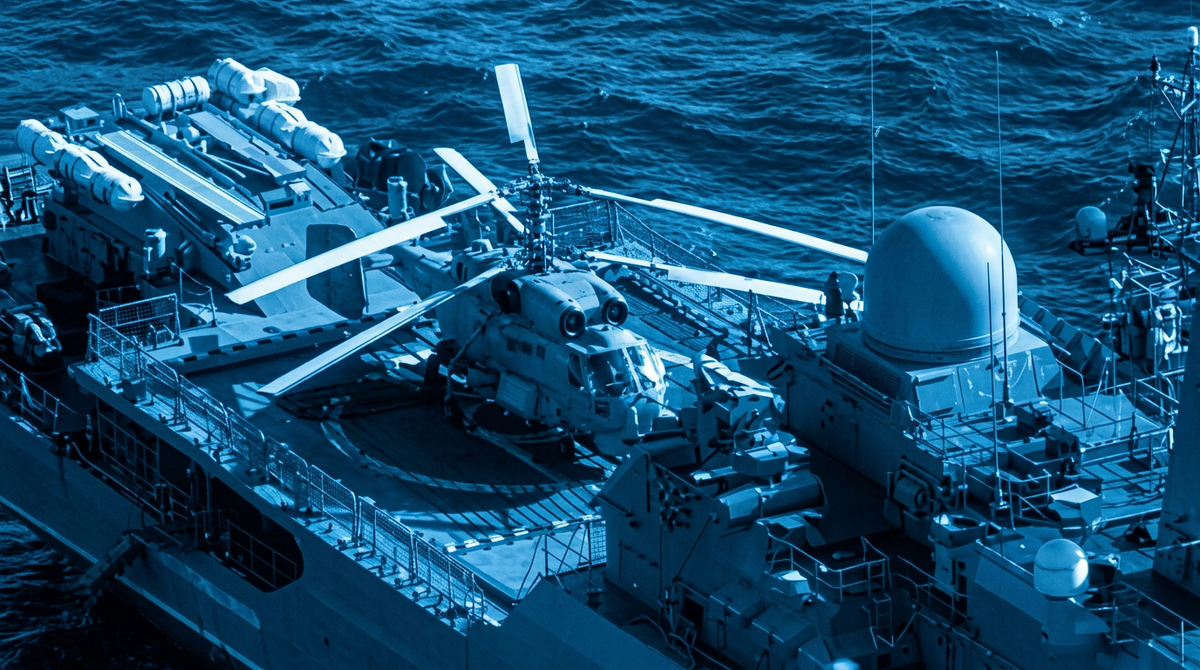
The aircraft was deployed over the English Channel to support Royal Navy units monitoring the Russian frigate Neustrashimy during its transit through waters close to the United Kingdom. According to the UK Ministry of Defence, the Protector provided more than 10 hours of surveillance coverage, working alongside HMS Dauntless and HMS Tyne as part of a wider operation to track Russian naval activity.

The mission is notable not only because of the Russian warship involved, but because it represents the first time the RAF has used the Protector operationally over the UK. The aircraft flew in shared airspace with both military and civilian traffic, demonstrating a capability that its predecessor, the MQ-9A Reaper, never achieved during RAF service.
Protector RG1 is the British version of General Atomics’ MQ-9B SkyGuardian. Unlike earlier remotely piloted systems, it has been certified to operate in UK airspace without geographic restrictions. That approval, granted by the UK Military Aviation Authority in April 2025, opened the door for the aircraft to support domestic defence tasks from RAF Waddington in Lincolnshire.
The RAF says Protector can remain airborne for more than 30 hours and operate at altitudes of up to 40,000 feet. Its sensor package includes full-motion video, infrared imagery, synthetic aperture radar and ground target tracking systems. For maritime surveillance, those capabilities give commanders a persistent view of activity at sea without relying solely on ships or crewed aircraft.
Wing Commander Sam Haley, officer commanding XIII Squadron, described the first operational sorties as proof of the aircraft’s value to UK defence. He said Protector provided persistent intelligence, surveillance and reconnaissance coverage while operating across both military and civilian airspace in support of maritime security, NATO commitments and wider UK tasking.

The Russian frigate Neustrashimy was monitored as it moved through the English Channel with accompanying merchant vessels. HMS Dauntless, a Type 45 destroyer, and HMS Tyne, an offshore patrol vessel, were involved in tracking the movement. The Ministry of Defence did not disclose how many sorties the Protector flew, what specific sensors were used, or how much of the frigate’s passage was covered by the drone.
Commander Neil Skinner, commanding officer of HMS Dauntless, said the destroyer’s monitoring of Neustrashimycontributed to the wider maritime picture and supported UK maritime security.
The operation came amid a broader pattern of Royal Navy activity around Russian vessels near UK waters. Between late September and mid-October, British forces tracked several Russian-linked ships, including the Vishnya-class intelligence-gathering ship Viktor Leonov near the Outer Hebrides. Merlin helicopters from Royal Naval Air Station Culdrose were deployed to Glasgow Prestwick Airport under Operation Iceblast, a test of how rapidly the Merlin force can operate away from its home base.
The timing coincided with NATO’s Exercise Strike Warrior, which involved more than 2,000 personnel from six nations. The presence of a Russian intelligence ship near the exercise area underlined the continuing importance of surveillance and rapid response around UK waters.
In another operation from October 11 to October 14, HMS Tyne and a Wildcat helicopter from 815 Naval Air Squadron followed the Ropucha-class landing ship Aleksandr Shabalin, the cargo ship MV Energy-2 and the tug Proton as they moved through the Channel toward the Baltic.
According to the Ministry of Defence, Royal Navy activity monitoring Russian movements increased by 25% in the first seven months of 2026 compared with the same period in 2025. Much of that work has traditionally been handled by patrol vessels, frigates, destroyers and helicopters. The introduction of Protector adds a new layer of endurance and flexibility to that mission set.
Defence Secretary Wes Streeting said the deployment showed how the UK is “constantly innovating” to monitor and deter threats and irresponsible provocation. The government has linked such operations to broader defence investment plans, including £298 billion in defence spending over the next four years and a commitment to reach 3% of GDP on defence by 2030.
The Ministry of Defence has also pointed to £330 million over four years for the protection of undersea infrastructure, as well as Atlantic Bastion, a Royal Navy initiative combining warships, patrol aircraft and autonomous systems to counter Russian submarine activity in the North Atlantic.
The Protector’s first UK-based operational mission is therefore more than a routine surveillance flight. It signals a shift in how Britain intends to watch its surrounding waters, combining traditional naval presence with long-endurance unmanned aircraft capable of maintaining a persistent watch from above.
For the RAF, it validates years of work to bring the MQ-9B-based system into regular UK operations. For the Royal Navy, it adds another tool to build a clearer maritime picture. And for Moscow, it sends a simple message: Russian naval movements near the UK are being watched by an increasingly integrated network of ships, helicopters, patrol aircraft and remotely piloted systems.
As Russian activity around European waters continues, the Protector RG1 is likely to become a more visible part of Britain’s surveillance and deterrence posture.