
U.S. Army Activates First Dark Eagle Unit: Hypersonic Milestone Bolsters Indo-Pacific Deterrence
The U.S. Army has advanced its hypersonic capabilities with the recent activation of a dedicated unit for the Dark Eagle system, officially known as the Long-Range Hypersonic Weapon (LRHW). This milestone occurred in mid-December 2025, when Bravo Battery, 1st Battalion, 17th Field Artillery Regiment, part of the 3rd Multi-Domain Task Force, was formally activated during a ceremony at Joint Base Lewis-McChord, Washington. The event was led by unit leadership, including remarks emphasizing the challenges of the evolving security environment. As Lieutenant Colonel Jeffrey M. Orban highlighted, allies, partners, and the nation rely on the U.S. military’s ability to deter aggression amid complex and rapidly changing threats.
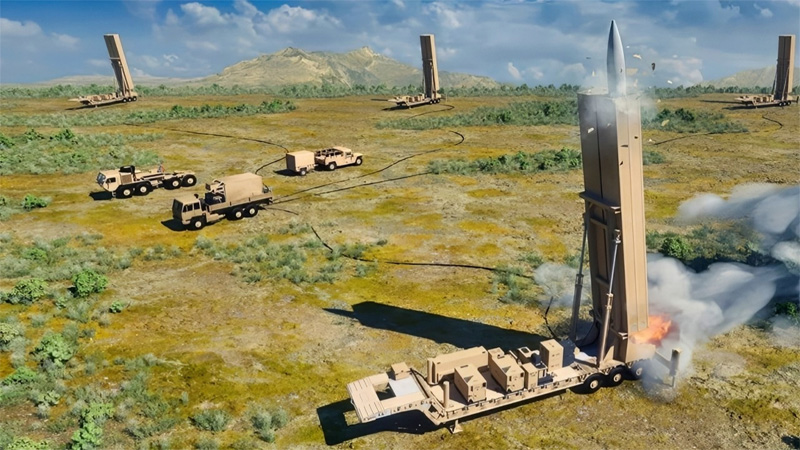
This activation marks a key step in fielding one of the world’s most advanced conventional strike systems, positioning it as a mobile, ground-based asset to support multi-domain operations. Bravo Battery is poised to become the first fully equipped unit with the Dark Eagle, enhancing the Army’s long-range precision fires in contested environments.
The Dark Eagle/LRHW represents a breakthrough in hypersonic technology, featuring a boost-glide design. It uses a two-stage solid rocket booster to propel the Common-Hypersonic Glide Body (C-HGB) to extreme altitudes and speeds exceeding Mach 5 (over 6,100 km/h or approximately 3,800 mph). Once released, the glide vehicle maneuvers unpredictably along a depressed trajectory, making it extremely difficult for traditional air and missile defense systems to intercept. Official reports indicate a range exceeding 2,775 km (1,725 miles), with some sources citing up to 3,500 km (2,175 miles), enabling strikes against time-sensitive, high-value, or heavily defended targets far beyond conventional artillery or cruise missiles.

Development of the system, a joint Army-Navy effort led by Lockheed Martin for integration and production elements, has involved rigorous testing since the late 2010s. Successful end-to-end tests of the all-up round occurred as recently as 2024, validating key components. The program has seen significant investment from the Pentagon, with estimates exceeding $10–12 billion across development, testing, and production phases. Each missile carries a high per-unit cost—reports vary from around $41 million to over $100 million depending on configuration and production scale—reflecting the advanced materials, guidance systems, and thermal protections required for sustained hypersonic flight.
The Dark Eagle fits into the ongoing global hypersonic arms race, where the U.S. seeks to counter rapid advancements by adversaries like China and Russia, who have already fielded operational hypersonic systems. This capability strengthens deterrence by complicating enemy planning and providing commanders with flexible, survivable options to penetrate anti-access/area-denial (A2/AD) environments.
A notable demonstration came during Exercise Talisman Sabre 2025 in July 2025, hosted primarily in Australia’s Northern Territory. Elements of the 3rd Multi-Domain Task Force deployed the Dark Eagle overseas for the first time, marking its initial operational employment outside the continental United States (and west of the International Date Line). This deployment showcased the system’s mobility, command-and-control integration in allied settings, and interoperability with partners. Admiral Samuel J. Paparo, commander of U.S. Indo-Pacific Command (INDOPACOM), has underscored such exercises as proof of the U.S. military’s ability to project and manage advanced long-range fires in complex, forward environments—directly supporting allies amid regional tensions.
The activation aligns with broader U.S. strategy to bolster presence and deterrence in the Indo-Pacific, particularly against potential threats from mainland China, while also offering relevance in other theaters (e.g., Middle East contingencies involving Iran or protection of assets like Guam). Originally targeted for initial operational capability around 2023, the program encountered multiple delays due to technical integration, testing requirements, and safety validations. The Army aimed for fielding by the end of 2025 but confirmed in early 2026 that full deployment—ensuring reliable, sustainable, and effective missiles for soldiers—is now on track for early 2026. Despite the unit being trained and equipped with launchers and support systems, comprehensive operational effectiveness assessments continue.

Overall, the Dark Eagle stands as a potential cornerstone of U.S. conventional deterrence, blending speed, range, and maneuverability to reshape strategic calculations and provide decisive advantages in future conflicts.