What a Chinese Attack on Taiwan Would Mean – and Why It’s No Longer Just an Asian Issue
If anyone were looking for another place where ambitions, technology, the psychology of power, and the limits of deterrence are increasingly coming together, it would be Taiwan. Not because war is inevitable, but because it is around this island that the willingness of the superpowers to take risks and what they still consider a "acceptable price" is being tested. While the war in Ukraine has fundamentally changed European and global thinking about power, and Venezuela provides a certain precedent, Taiwan represents another – and in many ways even more challenging – test of the world order.
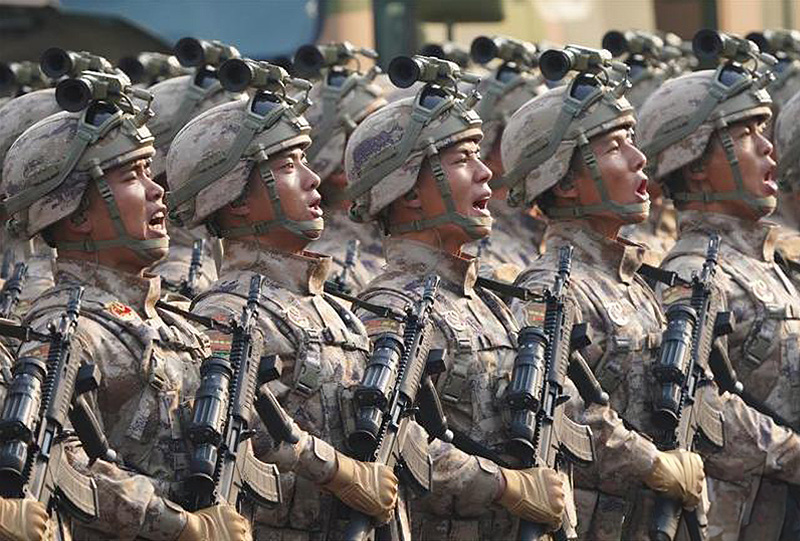
Taiwan is not just a question of Chinese national identity or an unfinished civil war. It is primarily a geopolitical and geoeconomic hub that connects the military balance in the Indo-Pacific, global trade, technology chains, and the credibility of US security guarantees. This is precisely why Beijing sees it not only as a "lost province," but as a strategic key that opens or closes the path to full-fledged global maritime power and the vision of "one China."
Parallels with Ukraine have long been drawn in debates. However, this is misleading if used mechanically. Ukraine is a vast continental battlefield with shared borders, while Taiwan is an island about 200 kilometers from the Chinese coast, but more than 10,000 kilometers from the continental United States. It is this asymmetry of distance that fundamentally influences strategic calculations.
While in Europe, the US and NATO can operate from relative proximity, in the case of Taiwan, Washington would have to project power across the ocean, under the threat of Chinese missile and naval capabilities. This is why Taiwan is closely linked in Chinese thinking to the concept of the so-called first island chain. This is a system of US and allied bases that Beijing has long perceived as a form of strategic encirclement.
This logic is not new. Already during the third Taiwan Strait crisis in 1995–1996, when the United States sent two aircraft carriers to the region, the Chinese leadership realized that without its own power projection capabilities, its ambitions would always be limited by the American presence. It was this experience that gave rise to China's long-term efforts to build a modern navy, symbolized today by the aircraft carrier Fujian, which we wrote about last time.
From an international policy perspective, Taiwan is also unique in its legal status. The United States is bound by the Taiwan Relations Act of 1979, which obliges it to provide the island with the means to defend itself. At the same time, however, Washington has long maintained a policy of "strategic ambiguity," deliberately leaving unclear whether it would intervene militarily in the event of a Chinese attack.
This ambiguity is intended to deter both sides: Beijing from attacking and Taipei from unilaterally declaring independence. The problem is that in recent years, this balance has been disrupted by political statements, including repeated statements by President Joe Biden that the US would help Taiwan if it were attacked. For China, this means only one thing: the window of strategic uncertainty is narrowing.
What are the possible scenarios?
The US deterrence strategy within the first island chain makes any Chinese invasion extremely risky. Japan also plays an important role, having renewed its armament in recent years and with its leaders indicating a willingness to support Taiwan alongside the US. Given the high risk of a naval landing, the likelihood of a successful invasion would be low with the involvement of one superpower and one regional power.
If the invasion were unsuccessful, it would mean unimaginable losses for Beijing, primarily the loss of legitimacy of the Chinese communist regime among its own population, which has already shown signs of discontent during the COVID-19 pandemic, and, last but not least, among the international community. China has long sought to become the center of the world system and oust the United States from its position as the dominant global power.
The failure of an invasion of Taiwan would fundamentally jeopardize China's strategic ambitions. A conflict with the US would be highly risky, and a possible naval blockade would deal a severe blow to the Chinese economy. A direct invasion of the island therefore presents more risks than rewards.
Furthermore, China finds itself in a completely different position than Vladimir Putin did before the invasion of Ukraine. Putin felt cornered, with Russia's power status stagnating rather than growing, and the invasion is therefore seen in the Kremlin as an attempt to return to former power ambitions. China has no such need, as its best days may still be ahead.
A fundamental shift in current thinking is that an open amphibious invasion is no longer seen as the only, or even the most likely, option. Analyses agree that it would be an extremely risky operation, logistically demanding and politically devastating if it failed. China has more options than just invasion.
Other forms of pressure are now being discussed as much more realistic:
- naval and air blockade,
- gradual occupation of smaller adjacent islands,
- massive missile and cyber attacks on infrastructure,
- combination of military pressure with economic and information blackmail.
Taiwan is vulnerable in this regard. It is highly dependent on energy and raw material imports, undersea cables, and the uninterrupted functioning of its ports. A blockade could have a faster and cheaper effect than an invasion, while allowing Beijing to test the response of the US and its allies without immediately escalating into all-out war.
A blockade would allow Beijing to achieve its goals without "crossing the Rubicon." It would be a typical game of chicken. Imagine a situation where two cars are driving toward each other at full speed. The race is lost by the one who swerves first, because he will be labeled a coward. The other does not swerve and wins the race. If neither of them swerves, there will be a collision at full speed.
A similar situation could arise in the blockade of Taiwan. China would initiate the blockade and wait to see if Washington would "swerve," which in practice would mean the end of Taiwan's sovereignty. However, the United States could respond by sending its fleet. At that point, the game of who would back down first would be in full swing. If neither side backed down, the world would face the most serious conflict since the end of World War II.
However, China is not striving for such an outcome. The regime would risk its own existence, and decades of Chinese strategy aimed at strengthening its global position would come to naught.
Rather than taking direct action, Beijing's most appropriate strategy at the moment is to wait and see, focusing on strengthening its own capabilities and soft power. Soft power means the ability to influence Taiwan as an actor so that China achieves the desired results without the use of coercion (hard power), but through its own appeal.
Beijing is trying to influence the perceptions of young Taiwanese, weaken their nationalist attitudes, and build a positive image of mainland China, which could lead people to ask questions such as, "Why is one nation divided into two states?"
Beijing uses tools such as internships in China, study at Chinese universities, and start-up grants for young entrepreneurs. Young people are then expected to return to Taiwan with positive experiences gained in mainland China.
The most important element of China's soft power towards Taiwan is the use of social networks such as TikTok and Instagram. Taiwanese influencers are invited to China, where they create content presenting life in big cities and build an emotional connection to China among young Taiwanese people. Although the strategy seems simple, given the influence of social media, it poses a serious risk to Taiwan, which requires countermeasures.
China's advantage is that while some actors perceive the Taiwan issue as a sprint, Beijing sees it more as a marathon and is strengthening its power in the long term. For example, it already has three aircraft carriers and has long talked about acquiring up to six.
What does this mean? If the soft power strategy fails, forceful instruments may follow, ranging from a blockade in the most risky scenario, through limited attacks on strategic targets, to a direct military invasion in the worst-case scenario. However, as China is taking a long-term approach, the world may change significantly during the escalation process. In a few years, US power may be weakened and China may be willing to risk conflict.
What would this mean for Europe and NATO?
It is often argued that Taiwan is "too far away" to concern Europe. This is an illusion. Any serious conflict in the Taiwan Strait would have immediate global repercussions. The island is a key link in global technology chains, particularly in the field of semiconductors and chips. Any disruption to their production would quickly affect European industry, defense, and the civilian economy.
Taiwan produces approximately 60% of the world's semiconductors and over 90% of the most advanced ones, which even China is currently unable to produce. However, China is investing heavily in this sector as part of its "Chinese Manhattan Project" with the aim of achieving chip self-sufficiency. If China achieves this goal, the blockade of Taiwan would have a major impact primarily on the West, not on Beijing.
At the same time, the conflict would engage (if the current administration so decided) US capabilities in the Indo-Pacific, reducing the US's ability to respond simultaneously to crises in Europe. For the European wing of NATO, this would mean another tough test of its autonomy and ability to deter Russia without full US involvement. Taiwan is thus an indirect but very real factor in European security.
The war in Ukraine has shown that force has once again become a legitimate tool of politics. At the same time, however, it has revealed its limitations: logistics, industrial capacity, social resilience. It is these lessons that are shaping the debate on Taiwan today. It is no longer a question of "if," but how and under what conditions a conflict could take place, and whether its cost would be unacceptable to all parties.
Taiwan is thus becoming another litmus test in the new, transforming world order. Not only because it tests China's ambitions, but because it reveals how far the United States and its allies are willing to go to defend the status quo. And also because it shows that future conflicts may not begin with tanks and paratroopers, but with blockades, drones, cyberattacks, and economic pressure.
If Ukraine has taught us that peace cannot be taken for granted, then Taiwan reminds us that global security is more interconnected than ever before. And that war "somewhere else" can have consequences that we will all feel.
The US intervention in Venezuela and Trump's pressure to annex Greenland show that the world is returning to an era of power politics, in which international law will not play a key role, but rather the ability to assert one's own interests by any means necessary. In a way, we find ourselves in a more dangerous world than we did, say, fifteen years ago.