
When Heat Becomes a Security Threat: How Extreme Temperatures Are Reshaping European Defense
Just a few years ago, extreme heat was primarily a problem for the healthcare and energy sectors. Today, however, it is increasingly becoming a factor affecting the defense capabilities of European nations. Soldier training, the operation of aircraft, the functioning of military infrastructure, and the resilience of critical networks – all of these are becoming increasingly vulnerable to climate extremes. NATO and the European Union are therefore beginning to view climate change not as an environmental issue, but as a security factor that could significantly affect Europe’s ability to respond to future crises.
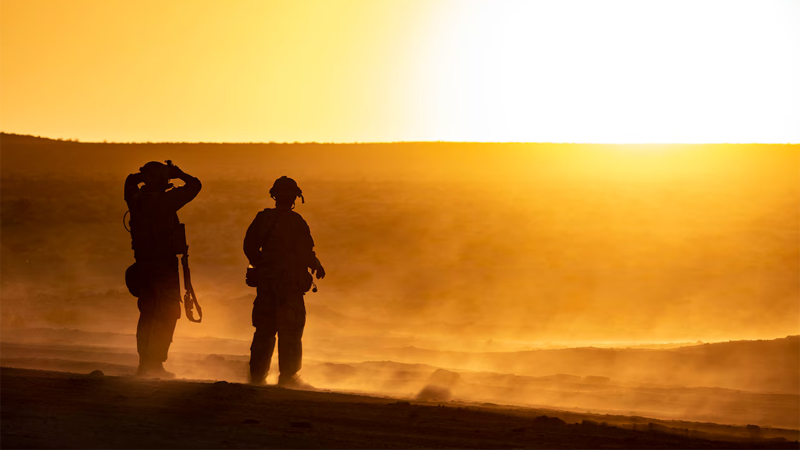
This June’s heat wave broke records in a number of European countries. According to an analysis by Politico and preliminary mortality data, it may have caused approximately 14,000 excess deaths over the course of a few weeks in the six hardest-hit countries in Western Europe.
Although such events are typically associated primarily with public health impacts, their significance is considerably broader. The European Environment Agency (EEA) points out that Europe is currently the fastest-warming continent in the world, and climate risks are increasingly threatening energy, transportation, water supply, food security, and critical infrastructure. These very areas, however, represent the fundamental prerequisites for the functioning of modern armed forces.
NATO also reflects this trend. In its Climate Change and Security Action Plan, it identifies climate change as a “threat multiplier” – that is, a factor that amplifies existing security threats. It is not merely about the weather itself, but about its impacts on military operations, logistics, societal resilience, and geopolitical stability.
The most visible impacts are evident directly during the training of European armies. Higher temperatures reduce soldiers’ physical performance, prolong recovery times, increase the risk of heat exhaustion, and limit the duration of intensive training. In its latest assessment report, NATO notes that climate change will increasingly affect all operational domains – land, air, sea, space, and cyberspace.
The technical impacts are no less important. High temperatures deform asphalt runways, increase wear and tear on infrastructure, and complicate the maintenance of military facilities. Hot air has a lower density, which reduces the lift of aircraft and helicopters. Transport aircraft can carry less cargo, require longer runways, and become more difficult to operate. The same physical conditions also affect unmanned systems and the performance of certain sensor systems. NATO is already factoring these impacts into its planning for future capabilities.
For the European part of the Alliance, however, another aspect may be even more important – military mobility. The ability to rapidly move troops across Europe is one of the fundamental pillars of collective defense. However, if extreme heat restricts rail transport, damages road infrastructure, or increases the risk of large-scale wildfires, it can complicate the movement of military equipment just as much as any other logistical disruption. In a context where NATO is planning to rapidly reinforce its eastern flank, the resilience of European infrastructure thus becomes a matter of defense capability, not just transportation.
Another dimension is energy security. Heat waves increase electricity consumption, strain transmission grids, and raise the likelihood of local outages. During a security crisis, such events could simultaneously affect the operations of military bases, data centers, communication networks, and industrial facilities involved in the production of defense technologies. NATO is therefore increasingly linking climate resilience to civil preparedness and the protection of critical infrastructure.
At the same time, climate extremes can exacerbate security instability in Europe’s neighborhood. Prolonged droughts, water shortages, or declines in agricultural production can contribute to migration, social unrest, or regional conflicts, which in turn affect the security of European states. The European External Action Service therefore identifies the link between climate and security as one of the key strategic challenges of the coming decades.
Although the Czech Republic is neither a coastal country nor located in an area of chronic water scarcity, it nevertheless serves as an important logistical hub for NATO’s European component. In the event of a crisis, major rail and road corridors for the movement of Alliance troops toward the eastern flank would pass through Czech territory. The resilience of transportation infrastructure is therefore not merely an economic issue, but also a matter of the defense capability of the entire Alliance.
The Czech Ministry of Defense is aware of this trend. In a strategic document dedicated to the ministry’s adaptation to climate change, it notes that extreme weather events can affect soldier training, the operation of military facilities, logistics, and the overall resilience of the defense system. In addition to modernizing equipment, infrastructure adaptation, water management, energy self-sufficiency of military facilities, and adjustments to training procedures will thus become increasingly important.
European security is currently changing in two distinct ways. On the one hand, it faces the resurgence of traditional military threats linked to Russia’s aggressive policies; on the other hand, the very environment in which European armies will operate is changing. It is precisely this combination of factors that is creating new operational conditions that were still a rather marginal issue just ten years ago.
This is not to say that climate change is replacing traditional security threats. Rather, it is amplifying their impacts. An army that must simultaneously deal with large-scale wildfires, infrastructure failures, or logistical complications caused by extreme weather has fewer resources available to address security crises. This is the true significance of the term “threat multiplier,” which was explained earlier.
Europe is currently investing hundreds of billions of euros in modernizing its armed forces. It is acquiring new tanks, fifth-generation aircraft, air defense systems, and extensive ammunition stockpiles. An equally important question, however, will be whether it will be able to rapidly deploy, operate, and maintain this equipment in an environment that is increasingly exposed to extreme weather events.
For the European part of NATO, therefore, future defense will not depend solely on the number of troops or the size of defense budgets. To an ever-greater extent, it will also be determined by the resilience of infrastructure, energy systems, logistics, and society as a whole. Climate change is not becoming a new adversary for the Alliance. However, it is becoming a factor that can significantly affect its ability to confront existing ones.