
Who ordered the strike on Sumy? Ukraine publishes names of Russian commanders
Ukraine’s Defence Intelligence has identified the Russian military personnel it says were involved in the deadly missile strike on Sumy carried out on April 13, 2025, Palm Sunday, in an attack that killed 35 people and injured 125 others. The findings were released as part of a joint investigation conducted with the Security Service of Ukraine.
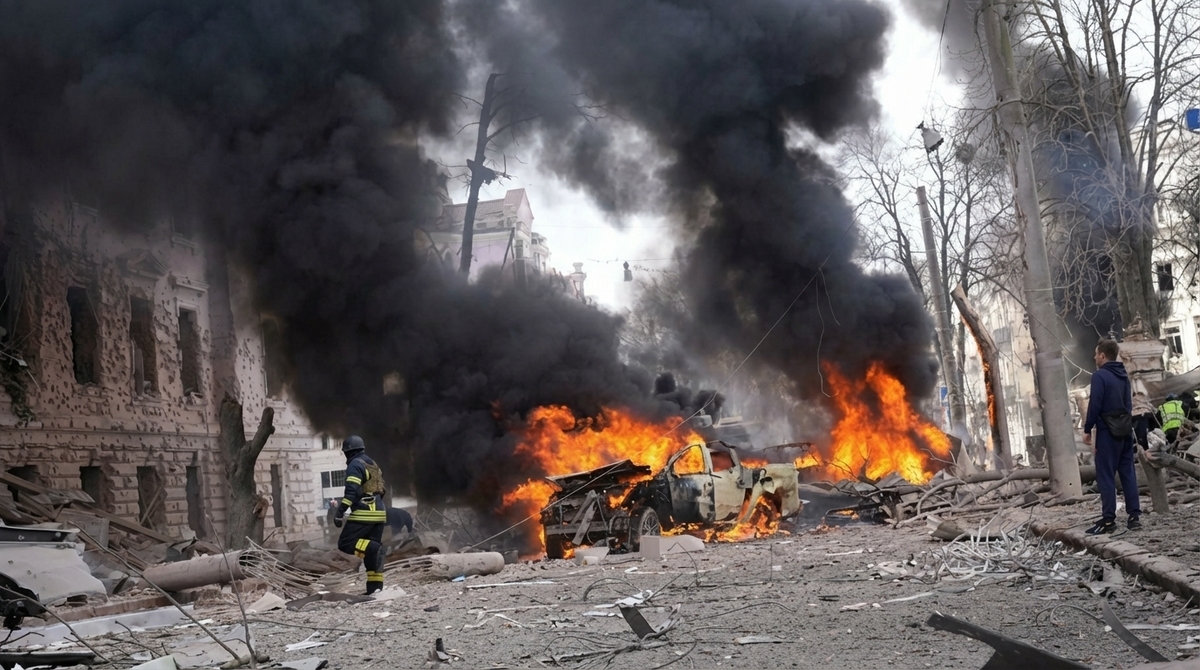
The strike on Sumy was carried out using two Iskander-M ballistic missiles, hitting the city on one of the most significant religious days of the year. Among those killed were two children. Of the 125 people wounded, 22 were children. The attack also caused widespread destruction across the city, with nearly 100 civilian infrastructure sites reported damaged or destroyed.
According to the investigation, the attack was initiated by Colonel General Aleksey Kim, Chief of Staff of the Russian Federation’s Joint Forces Group, together with Colonel Vasily Solovyov, identified as Head of Intelligence. Ukrainian authorities say the planning phase was handled by officials from the Center for Planning and Coordination of Firepower.
Those named as involved in preparing the strike include Vice Admiral Sergey Pinchuk, Colonel Aleksandr Kisedobrev, Rear Admiral Aleksey Petrushin, and Colonel Anatoliy Gorodetskyi. The launch orders for the missiles, which were fired from the territories of Russia’s Kursk and Voronezh regions, were reportedly given by missile brigade commanders Colonel Roman Polushin and Colonel Sergei Ponomarev.
In total, eight Russian military figures have been formally notified in absentia of suspicion in connection with a war crime resulting in loss of life. The case marks another effort by Ukrainian investigators to document command responsibility behind attacks on civilian areas and to build legal cases against those allegedly involved at every stage of execution, from planning to launch authorization.
The Sumy strike remains one of the deadliest attacks on Ukrainian civilians in April 2025. Its timing on Palm Sunday added to the shock, as residents were targeted during a major Christian observance. The scale of casualties, including the high number of injured children, has further intensified scrutiny of Russian missile attacks on urban centers far from the front line.
The latest disclosures also carry added political weight because Vladimir Putin earlier acknowledged that the strikes on Sumy and Kryvyi Rih in April 2025 were deliberate. That statement, combined with the identification of named officers and commanders, strengthens Ukraine’s effort to present the attack not as an accident or battlefield error, but as a planned operation approved through a military chain of command.
By publicly naming the officers allegedly tied to the attack, Ukrainian authorities are signaling that they intend to pursue accountability beyond anonymous accusations. The publication of names, ranks, and roles reflects a broader strategy: to document each strike in detail, connect individual decisions to civilian deaths, and preserve evidence for future prosecutions.