Why Poland Wants Tomahawks: Deterrence, Autonomy and the Message to Moscow
For Poland, the possible acquisition of Tomahawk cruise missiles would be far more than another arms purchase. It would be a political signal, a military capability and, above all, a tool of deterrence.
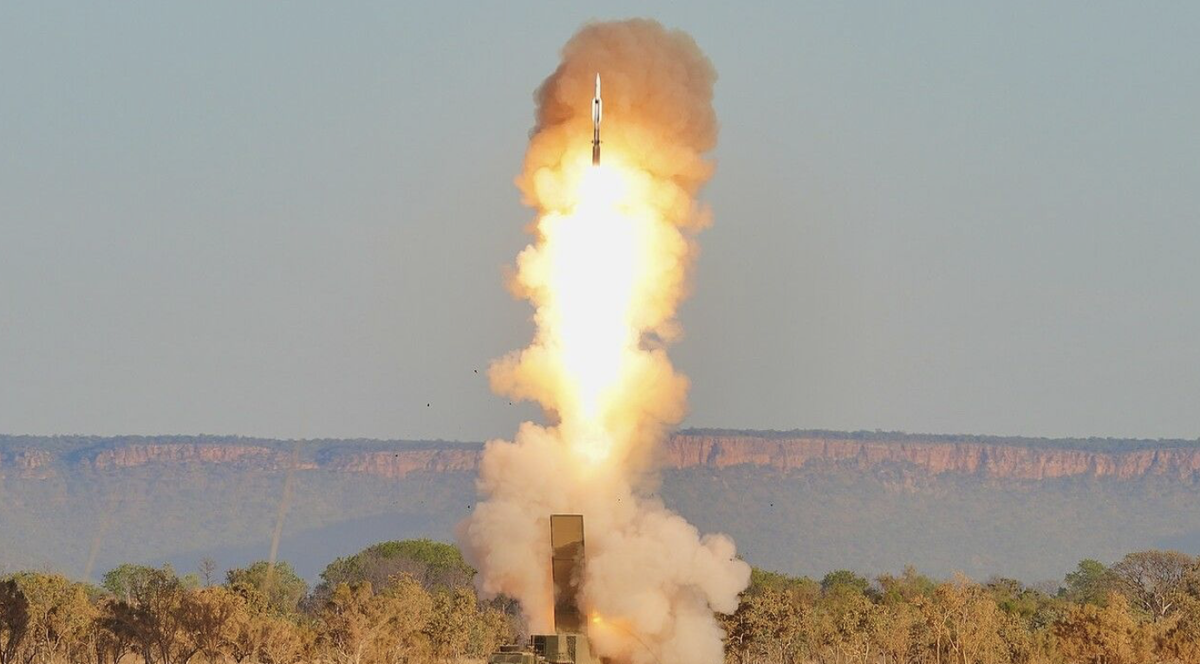
| Perla Alfaro / US Army
The argument is simple: if Russia ever considered a conventional attack against Poland or NATO’s eastern flank, it would have to calculate the risk of a precise retaliatory strike reaching deep into Russian territory. That is the real value of Tomahawks. Not because Poland would want to use them first, but because their presence could make aggression far more costly to even contemplate.
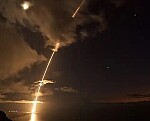
According to the logic presented by Defence24, acquiring Tomahawks with a range exceeding 1,000 kilometres — and possibly around 1,600 kilometres — should be treated as a matter of Polish national interest. Apart from NATO membership itself, such missiles could become one of Poland’s strongest conventional deterrence tools.
A weapon Poland has wanted for years
Poland’s interest in Tomahawk missiles is not new. Polish officials have been trying to gain access to this class of weapon for many years, so far without a breakthrough. Critics point out two main problems: first, that previous efforts have not succeeded; second, that American control over sensitive technologies could limit Poland’s freedom to use the missiles against certain targets.
Those concerns are real, but they do not necessarily settle the debate.
Poland has already faced similar challenges when buying advanced American systems. Access to top-tier US equipment is never simple, even for allies. Yet Warsaw has managed to obtain systems that were once considered difficult to export, including the IBCS battle management system for Patriot batteries, PAC-3 MSE interceptors and F-35 fifth-generation aircraft.
The broader trend also matters. The United States has gradually become more open to selling advanced systems to allies, especially as competing technologies from Europe and Asia become more capable and often cheaper. The case of HIMARS is instructive. Poland initially planned a very large Homar-A acquisition based on the American system, but in practice received 20 M142 HIMARS launchers in US configuration. By contrast, South Korea’s K239 Chunmoo, introduced in Poland as Homar-K, moved ahead much faster, with 290 launchers planned and local industrial work already underway.
The lesson for Washington is clear: if the US does not offer high-end capabilities on acceptable terms, allies may increasingly look elsewhere.
Tomahawks are no longer only an American-British club
For decades, Tomahawks were associated mainly with the United States and the United Kingdom, particularly as naval weapons launched from submarines or surface ships. That club has expanded. Australia, the Netherlands and Japan have moved to acquire maritime Tomahawks.
Now Germany is also seeking access to a land-based version, reportedly linked to the US Army’s MRC Typhon system. Berlin is also pushing for the production of such missiles in Europe. If Germany succeeds, Poland’s own efforts would no longer look exceptional. They would fit into a wider shift: European NATO members building long-range conventional strike capabilities to deter Russia without relying entirely on immediate US intervention.
For Poland, this could be crucial. A decision on the matter has been suggested for early 2027, and if successful, it would mark a major change in the balance of deterrence on NATO’s eastern flank.
The autonomy problem: who controls the missile?
The most sensitive question is not whether Tomahawks are powerful. They are. The real question is whether Poland would have full freedom to use them.
Modern Tomahawk Land Attack Missiles rely on more than simple GPS guidance. They use a combination of navigation and targeting systems, including inertial navigation, TERCOM terrain contour matching, DSMAC digital scene matching in the final phase of flight and, in newer versions, two-way satellite communication. That means users may need access to specific databases, mission-planning tools and communications architecture.
In theory, this creates dependence on the United States. Washington could potentially limit access to certain functions or restrict the use of missiles in politically sensitive scenarios.
But the issue is more complicated.
First, such restrictions would depend on the terms negotiated before the contract is signed. Second, mission planning for cruise missiles is generally prepared in advance, not improvised at the last second. Third, satellite communication is useful for retargeting in flight, but it is not always essential for a pre-planned strike.
Most importantly, the exact terms of any agreement would almost certainly remain classified. Moscow would not know how much autonomy Poland or Germany had negotiated. That uncertainty alone strengthens deterrence, because Russia would have to assume that the missiles could be used effectively in a crisis.
Why Tomahawks would worry Russia
The strategic effect of land-based Tomahawks in Poland would be significant. With a range of around 1,600 kilometres, such missiles could place a wide set of Russian military and strategic infrastructure within reach if Russia initiated a war.
That does not mean NATO would use them offensively. The point is deterrence: making the cost of aggression appear unacceptable.
Russia would have to account for the possibility that key command centres, fuel depots, ammunition storage sites, bridges, arms factories, refineries and other critical military-related infrastructure could be struck with precision. Tomahawks are difficult to counter because of their flight profile and design. They can fly at low altitude and are built to penetrate air defence networks.
The warhead is also significant. A Tomahawk carries a conventional warhead of roughly 450 kilograms, enough to destroy or severely damage many high-value fixed targets.
For Russian planners, the problem would not only be the range of the missile. It would also be uncertainty about where the launchers are.
The container problem
One of the most important advantages of a land-based Tomahawk system would be its potential concealment. If Poland acquired missiles fired from containerised launchers — such as those associated with the MRC Typhon concept — identifying them before launch would be extremely difficult.
A launcher hidden in what appears to be a standard container creates a major intelligence problem. Every similar container could become suspect. That complicates Russian targeting, surveillance and pre-emptive planning.
This is why land-based Tomahawks could have a different deterrent value than air-launched missiles such as Poland’s AGM-158B-2 JASSM-ER. Poland bought several hundred JASSM-ER missiles in May 2024, with a range of around 1,000 kilometres. They are highly valuable, but they are tied to aircraft and airbases that Russia can try to monitor.
Containerised land-based missiles would be harder to track, harder to neutralise in advance and therefore more valuable as a survivable retaliatory capability.
Not a replacement for NATO, but a reinforcement
Tomahawks would not replace Poland’s core security guarantee: NATO membership. Nor would they remove the need for air defence, drones, artillery, armour, cyber capabilities or allied presence on Polish territory.
But they would fill a specific gap.
Poland has invested heavily in defensive systems and battlefield firepower. What Tomahawks would add is strategic reach. They would give Warsaw a conventional means of imposing costs far beyond the immediate frontline. That matters because deterrence works best when an adversary knows that aggression will not remain local, limited or painless.
The psychological and political impact could be as important as the military one. If Russia knows that an attack on Poland could trigger precision strikes deep into its own military-industrial and logistical network, the decision to escalate becomes far more difficult.
The message behind the missile
The debate over Tomahawks is ultimately not about Poland seeking a symbolic prestige weapon. It is about whether the country can strengthen its ability to deter a larger hostile power through long-range, precise and hard-to-neutralise conventional strike capabilities.
The strongest argument in favour is not that Poland would use Tomahawks. It is that, by having them, Poland might never need to.
For Moscow, the arrival of such missiles on NATO’s eastern flank would force a new calculation. Any scenario involving aggression against Poland would carry the risk of retaliation against valuable targets far beyond the battlefield. Even if the United States were not immediately involved in every operational detail, Russia could not be sure how much freedom European allies had secured.
That uncertainty is exactly what deterrence is supposed to create.
Poland’s pursuit of Tomahawks should therefore be seen as part of a larger strategic shift in Europe. The eastern flank is no longer thinking only in terms of defence at the border. It is thinking in terms of punishment, survivability and strategic depth.
And that may be precisely the kind of message Russia understands.