
A Third European Navy Joins the FDI Family as Stockholm Rearms Its Fleet
On 31 August in Stockholm, French President Emmanuel Macron and Swedish Prime Minister Ulf Kristersson attended the signing of a contract under which Sweden will acquire four Defence and Intervention frigates from Naval Group. Valued at €4.3 billion, the deal was concluded between the Swedish Defence Materiel Administration (FMV) and the French shipbuilder. At the same ceremony, French Armed Forces Minister Catherine Vautrin and her Swedish counterpart Pål Jonson signed a framework agreement intended to deepen operational, capability and industrial cooperation between the two countries. Swedish officials have described the purchase as one of the nation’s largest defence investments since the Gripen fighter programme of the 1980s. The first ship is scheduled for delivery in 2030, with the remaining three to follow through 2034. They will enter service as the Luleå class: HMS Luleå, HMS Norrköping, HMS Trelleborg and HMS Halmstad.
The political framing is unambiguous. Stockholm presents the four ships as a means of tripling Sweden’s current air-defence capacity and as a contribution to NATO’s integrated air and missile defence. In a strategic environment defined by Russia’s rearmament and the Alliance’s reinforced northern flank, Sweden has chosen first-rank surface combatants able to provide advanced air defence from the sea. Chief of the Navy Rear Admiral Johan Norlén has argued that NATO membership has already changed the navy’s mission: no longer limited to territorial defence against invasion, it must now help secure operational control of the Baltic Sea and its approaches so that military and commercial traffic to Sweden, Finland and the Baltic states can continue. That ambition exceeds what the existing surface force was designed to do.
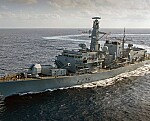
That existing force remains a specialised Baltic navy rather than a blue-water fleet. The Royal Swedish Navy’s principal surface combatants today are seven corvettes: five Visby-class stealth ships of about 640 to 650 tonnes and two modernised Gävle-class vessels derived from the older Göteborg design. The Visbys, built by Saab Kockums, are carbon-fibre ships optimised for the archipelago, with a crew of roughly forty-three, a top speed near 35 knots, RBS 15 anti-ship missiles, lightweight torpedoes and a Bofors 57 mm gun. They are formidable in confined waters but lack hangars, area air defence and the endurance of a frigate. Two Stockholm-class ships, once classed as corvettes, now serve as patrol vessels.
Beneath the surface, Sweden fields five conventional submarines, including the well-regarded Gotland class with Stirling air-independent propulsion, and is building new Blekinge-class boats. Mine-countermeasure vessels, Tapper-class patrol craft and a large inventory of Combat Boat 90 assault craft complete a force tailored to littoral denial rather than open-ocean presence. Peacetime navy personnel number only a few thousand; manning four frigates of about 125 crew each, while retaining the Visbys, is already recognised as one of the programme’s hardest constraints. In short, Sweden currently has no frigate. The Luleå class will be several times larger than the navy’s biggest warships today.
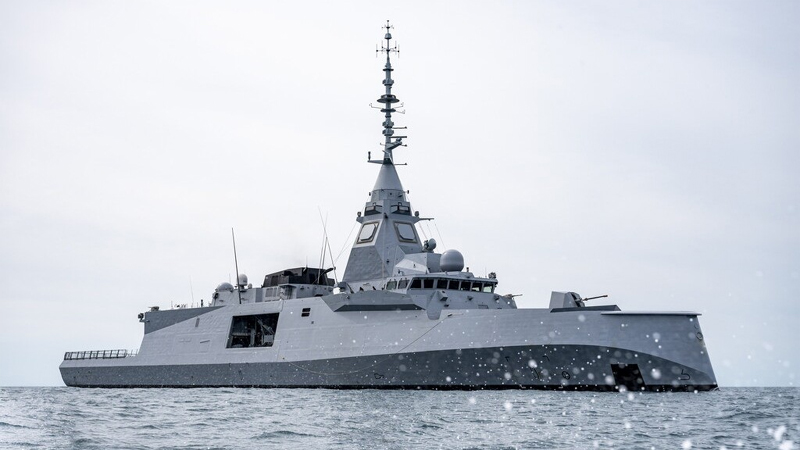
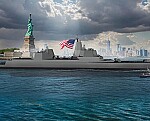
The platform chosen to close that gap is compact by frigate standards – about 4,500 tonnes and 122 metres – but is designed for high-intensity naval warfare across air defence, anti-surface and anti-submarine roles. Naval Group emphasises operations in the demanding waters of the High North, the Baltic and the North Atlantic. The Swedish configuration, clarified by FMV after the signing, will not be a carbon copy of the French or Greek ships. A Bofors 57 mm turret will replace the 76 mm gun of the baseline FDI, supplemented by a 40 mm gun. Saab Trackfire remote weapon stations will take the place of the Narwhal 20 mm mounts. RBS 15 anti-ship missiles will replace Exocet, and the Swedish Torped 47 will replace the MU90.
For air defence, Sweden will keep the Aster 30, including a ballistic-missile defence capability, but has preferred the CAMM-ER to the Aster 15 for the shorter-range layer. An additional Saab Sea Giraffe radar, an X-band AESA sensor well suited to cluttered littoral environments, will complement the Thales Sea Fire multifunction radar. Hull-mounted KingKlip and CAPTAS-4 towed sonar remain part of the ASW suite. Naval Group will integrate the mix so that the ships are delivered ready for service. Aviation facilities are intended for a helicopter and an unmanned system such as the Skeldar. Macron has left open the later possibility of naval cruise missiles, an option Sweden has not taken for now.
The industrial and alliance dimension is as important as the hulls themselves. The first French FDI, Amiral Ronarc’h, was delivered to the Marine nationale in October 2025, with four more to follow by 2032. Greece received HS Kimon in December 2025 and expects further ships in 2026. With Sweden’s four derivatives, the FDI family will equip three European navies. Sharing a common ship type and combat-system lineage is meant to ease interoperability, training and logistics among allies who now operate on the same northern and eastern flanks of NATO.
For France, the contract also confirms that a relatively compact, digitally architected frigate can be adapted quickly enough to win a competition against British and Spanish alternatives and then be signed within months. For Sweden, it is a break with a long tradition of building major surface combatants at home, even as Swedish weapons and sensors remain central to the finished ships.
The Luleå class will not replace the Visby corvettes; it will sit above them. If deliveries hold, Sweden will enter the 2030s with a mixed fleet: stealthy littoral combatants still suited to the archipelago, and four ocean-capable frigates able to contribute area air defence, anti-submarine warfare and presence far beyond the Baltic approaches. That combination is the real measure of the 31 August ceremony – not only a large export success for Naval Group, but a structural change in how a newly allied navy intends to fight.