Australia grounds its Tigers and bets on AH-64E Apache
In late September 2026 the Australian Army closed flying operations with the Armed Reconnaissance Helicopter Tiger in Darwin, ending a service career that began in 2004 and formally handing the role to the Boeing AH-64E Apache. The farewell was not a sudden cancellation. It was the visible end of a replacement programme, LAND 4503, that the government had already locked in years earlier, and it came as the first Australian Apache crews were already firing weapons on home soil. Six AH-64E airframes had arrived by May 2026. The full order is 29 aircraft, with deliveries scheduled to finish by the end of 2029. The 1st Aviation Regiment, the formation that flew the Tiger, is moving from Darwin to Townsville as the new fleet builds up.
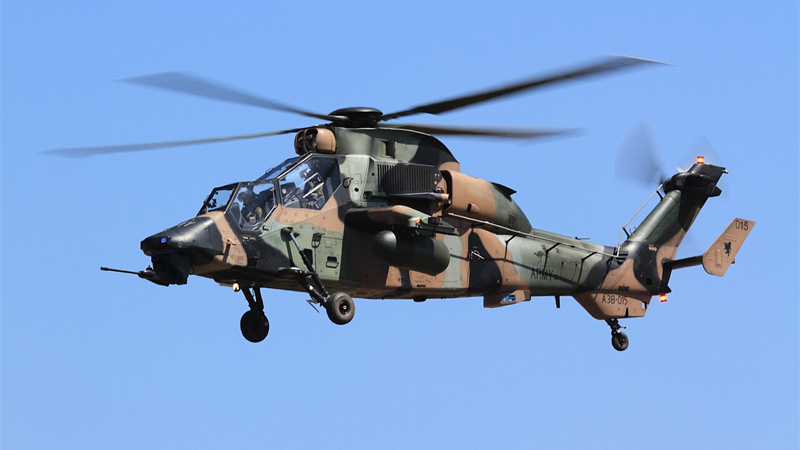
The arithmetic is simple and deliberate. Australia acquired 22 Tigers. It is buying 29 Apaches. The increase is not large in global terms, but it is the first expansion of the Army’s dedicated attack-helicopter inventory in a generation, and it comes with a platform whose support base is measured in hundreds of aircraft rather than a small national fleet. Defence has described the Apache as replacing the Tiger inside the same regiment, with the explicit aim of improving firepower, networking and interoperability for land and amphibious manoeuvre. The official framing also ties the retirement to the Tiger’s planned roughly 20-year life and to an operating environment in which advanced air defence, precision weapons and uncrewed systems are judged to favour a next-generation battlefield helicopter.
The Tiger’s Australian story was always more complicated than the brochure. Ordered as an armed reconnaissance type and adapted to local requirements, it entered service later than planned and spent years under scrutiny for availability and sustainment. Public reporting and audit material from the middle of the last decade recorded days when only a handful of the aircraft assigned to the operational fleet were serviceable against a much higher requirement, and the mature annual flying-hour target was later reduced. Those problems did not make the aircraft useless. Crews used it for reconnaissance, escort and strike training, and it appeared in regional exercises, including a final international outing on Exercise Keris Strike in Malaysia. They did, however, shape the replacement decision. Canberra chose a mature, off-the-shelf American aircraft bought through Foreign Military Sales rather than another upgrade cycle on a small, Australian-specific Tiger fleet. A seven-year initial support contract with Boeing Defence Australia, announced in February 2024, covers maintenance, engineering, logistics and training for the new force.
Boeing AH-64E Apache in the “Guardian” configuration
The Apache being delivered is the AH-64E, the current production standard, often referred to in Australian material as the Guardian configuration. It brings a mast-mounted fire-control radar, modern electro-optical sensors, digital connectivity, Hellfire missile integration and a crewed-uncrewed teaming capability intended to work with Australian and coalition uncrewed systems. The practical difference from the Tiger is less about a single weapon and more about the ecosystem: a large global fleet, an established weapons and spares pipeline, and a software and sensor path that the United States Army continues to fund. Australian officials have been open that this choice carries its own supply-chain and cost risks. Their judgement, repeated in Defence statements, is that those risks are preferable to sustaining a niche European type into the 2030s.
The transition has been compressed relative to some earlier plans. Retirement had been discussed for the later 2020s; flying in Darwin ended in September 2026, with a sundown marked by a final flyover of the city. By then only a small number of Tigers were still active. Six Apaches were already in the country, delivered in part by Royal Australian Air Force C-17 transports. In July 2026 Australian crews conducted the first live-fire activities with the type in Townsville, including gun, rocket and Hellfire engagements during Exercise Possum Guns. That sequence matters. The Army is not waiting for the last airframe before it starts building tactics, maintenance habits and instructor capacity. Initial operating capability has been discussed around the middle of the decade, with full operating capability later; the hard public milestone remains delivery of all 29 aircraft by the end of 2029.
Geography is part of the programme. The regiment’s move from Darwin to Townsville shifts the attack-helicopter base east along the northern coast and closer to the amphibious and joint facilities the Army has been concentrating in north Queensland. Infrastructure spending has been earmarked to adapt aviation facilities for the new type. The operational argument is reach and tempo: an attack helicopter that can support land forces and amphibious manoeuvre, share a picture with other sensors, and operate in company with uncrewed aircraft. Whether that argument holds will depend less on the airframe’s brochure performance than on spare parts, trained crews and the ability to generate sorties from Townsville when the fleet is still incomplete.
Cost and industrial questions sit beside the capability claim. The acquisition has been reported in the order of several billion Australian dollars once weapons, training systems, spares and support are included, with further money for facilities. Boeing Defence Australia’s support contract anchors some of the work in-country, but the aircraft themselves are American-built and the weapons and many sensors follow the Foreign Military Sales path. That is the trade the government accepted: less national uniqueness, more commonality with the United States and with other Apache operators. France, Germany and Spain remain Tiger users; Australia’s exit removes one of the smaller fleets from that club and adds another customer to the much larger Apache one.
Ukraine did not want the old Australian Tigers
There is also a footnote that says something about the Tiger’s reputation. As retirement approached, Ukraine was reported to have looked at the retiring Australian aircraft and then declined them, Australian Aviation magazine writes. The episode does not decide the merits of the original purchase, but it underlines why a second-hand Tiger fleet is a hard gift: a specialised support chain, a modest number of airframes, and a type whose availability had already been a domestic political issue.
What remains is a handover still in progress. The Tiger’s flying career in Australian markings is over. The Apache’s is not yet at full strength. Between those two facts sits the real test of LAND 4503: whether 29 AH-64Es, based at Townsville and supported under a long initial contract, can deliver the armed reconnaissance and attack effect the Army could not reliably generate from 22 Tigers. The first live-fire shoots and the sixth delivery are evidence of momentum. They are not yet evidence of a mature capability. That judgement will be made in the flying-hour rates, the missile stockpiles and the exercise results of the next several years, not in the Darwin flyover that closed the previous chapter.