

Czechoslovak Group Enters the Space Race with Strategic Stake in MDA Space
Czechoslovak Group is no longer looking at space as a distant frontier. The Czech defense and industrial giant is moving directly into the sector with a 9.5% stake in Canadian company MDA Space, one of the most experienced players in satellite systems, space robotics, and geospatial intelligence.
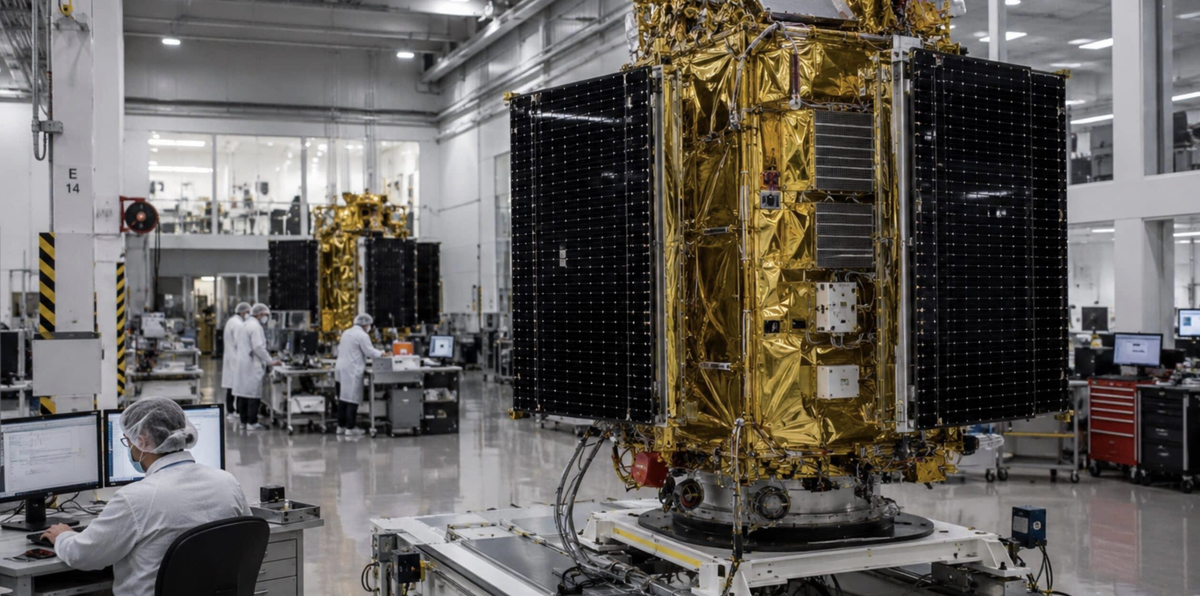
The move marks an important shift for CSG. Known for defense production, armored vehicles, trucks, ammunition, and industrial capabilities, the group is now building a dedicated space technology division with clear military and security applications in mind.
In modern defense, space is no longer a separate domain reserved for scientific missions or prestige projects. It has become part of the battlefield. Satellites guide weapons, monitor troop movements, support secure communications, detect missile launches, map infrastructure, and provide the intelligence needed for fast decision-making. For CSG, the investment in MDA Space is therefore not just financial. It is strategic.
MDA Space brings more than 55 years of industry experience, involvement in over 450 space missions, and a workforce of more than 4,000 people. Its portfolio covers satellite communications, Earth observation, space operations, robotics, and defense-related technologies. These are precisely the areas where demand is growing as governments and militaries increasingly depend on space-based infrastructure.
The potential partnership could go beyond ownership. CSG and MDA Space are considering joint investments in manufacturing and assembly facilities in Europe, as well as possible acquisitions of other companies in the space sector. That would give the Czech group a stronger industrial role in a market that is becoming more central to national security.
CSG could also help promote Canadian space technologies internationally through its established defense industry network. The group already has a significant global footprint, with production facilities in Europe, the United States, and Asia. Its portfolio includes companies such as Excalibur Army, Tatra Trucks, MSM Group, and The Kinetic Group.

The company’s scale matters. In 2025, CSG reported revenue of €6.7 billion. It is also expanding ammunition production, with plans to manufacture around 850,000 large-caliber rounds in 2026, including supplies intended for Ukraine. This combination of defense manufacturing, logistics, and international partnerships gives CSG a strong platform from which to enter the space sector.
However, the group has not yet disclosed specific production sites, investment volumes, or timelines for joint projects with MDA Space. The acquired stake will be held through a specially created subsidiary.
To support the new direction, CSG has also formed a dedicated team of space specialists. Ladislav Štal has been appointed head of space strategy and technology. His background includes work as an advisor on space intelligence and security in the intelligence division at NATO headquarters, as well as leadership of the Czech Satellite Center. His experience covers Earth observation, space threat analysis, orbital monitoring, and the development of national space capabilities.
Investment and corporate development will be handled by Philip Kocian, who previously worked at the venture capital fund Expansion Ventures. Cameron McKenzie, former vice president of the WESCAM division at L3Harris Technologies, will oversee expansion in the Canadian market. The appointment of this team shows that CSG is not treating space as a side project. It is building institutional knowledge, investment capacity, and market access at the same time.
Michal Strnad, Chairman of the Board of Directors of Czechoslovak Group, framed the move around customer demand and security needs. According to him, CSG expects its clients to gain access to a broader and more comprehensive range of products at a time when security increasingly depends on space technologies.
That statement points to the bigger picture. Defense customers are no longer buying only vehicles, artillery, radars, or ammunition. They need integrated capabilities: observation, targeting, communication, navigation, data processing, and resilience against disruption. Space systems connect many of these functions.
CSG had already taken earlier steps into space technology through the Tech Horizons VC venture capital fund. The group invested in British company SatVu, which specializes in thermal satellite observation, and German company Atmos Space Cargo, which develops space transportation systems. The MDA Space investment is different in scale and symbolism. It links CSG with a mature, established company rather than only early-stage space ventures. It gives the Czech group a direct position in a sector where industrial know-how, government trust, and long-term contracts matter.
The timing is also significant. CSG projects that the global space economy could triple by 2035 and reach $1.8 trillion. Government spending on space defense programs was estimated at around $74 billion in 2025. Those figures explain why traditional defense companies are moving aggressively into orbit-related technologies.
The war in Ukraine has made this trend impossible to ignore. Satellite imagery, communications, and geospatial intelligence have become essential tools in modern conflict. Space-based assets help identify targets, track movements, assess damage, and maintain operational awareness across vast areas. At the same time, reliance on space creates new vulnerabilities. Satellites can be jammed, spoofed, attacked, or disabled. Military forces now need not only access to space-based services, but also resilience, redundancy, and protection against hostile action.
This is where companies like MDA Space become strategically valuable. Their technologies are not just about placing hardware in orbit. They are about building the infrastructure that allows states and militaries to see, communicate, and act faster. For CSG, the acquisition of a 9.5% stake is a clear signal: the company wants to be part of that infrastructure.
The move also has a European dimension. If joint manufacturing and assembly facilities are eventually established in Europe, CSG could help strengthen the continent’s space-industrial base. That would align with a broader push among NATO and European states to reduce dependence on external supply chains and build more sovereign defense capabilities.
Still, much depends on execution. The group has announced its direction, but not yet the concrete industrial roadmap. The next questions will be where production takes place, how much capital is committed, which technologies are prioritized, and whether CSG can convert its defense-sector relationships into space-sector contracts. What is already clear is that the company is positioning itself for a defense market where space is becoming as important as land, air, sea, and cyber.
Czechoslovak Group built its reputation in traditional defense industry. With MDA Space, it is now betting that the next layer of military power will be built above the atmosphere.
And that bet looks less like speculation than preparation.