Estonia Bought a Top-Tier Air Defense System — Then Hit an Unexpected Wall
Estonia has taken a major step in strengthening its national defense with the arrival of its first IRIS-T SLM air defense system, a platform that has already built a strong reputation in Ukraine. The delivery is historic for the country, not only because it introduces a completely new capability into Estonian service, but also because it represents the largest defense procurement in Estonia’s history.
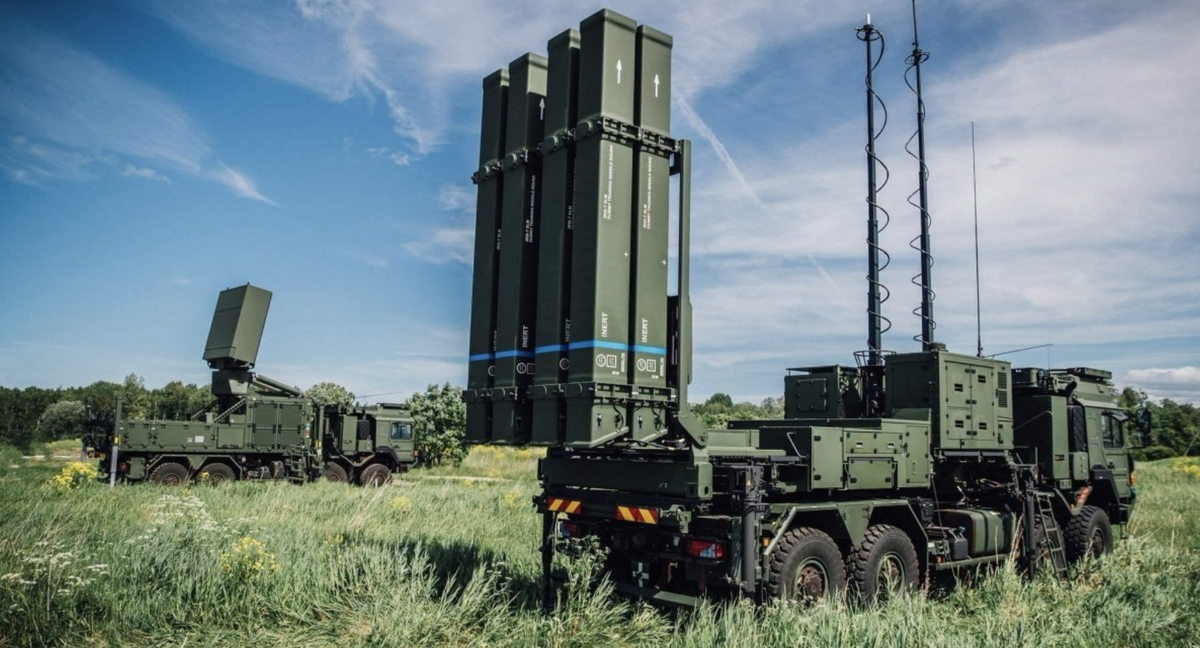
Yet there is an important catch: despite now having the system on its soil, Estonia cannot use it operationally just yet.
The reason is straightforward. The country has never operated a medium-range air defense system of this kind before, and that means it does not yet have enough trained personnel to bring the platform into combat service. Riivo Valge, commander of the Estonian Air Force, made it clear that months of work still lie ahead before operators are fully trained and the system reaches combat readiness.
That delay may sound surprising, especially since Estonia has been moving toward stronger air defense for some time. In fact, an air defense division was established within the Estonian Armed Forces on July 1, 2023. But building a structure on paper is one thing; building practical know-how for a sophisticated missile defense system is another. Estonia is now entering that learning phase in real time.
The arrival of the IRIS-T SLM also comes with a backstory that says a lot about regional security priorities. A year ago, Estonia gave up its place in the delivery queue in favor of Ukraine. Had it not done so, it could have received the system as early as the fall of 2025. Instead, the first unit has only now been delivered. That decision underscores both the urgency of Ukraine’s battlefield needs and Estonia’s willingness to prioritize broader European security over its own near-term timetable.
Even so, Tallinn has not been timid in its long-term investment. In 2023, Estonia joined Latvia in a major procurement deal and ordered three IRIS-T SLM batteries for around €400 million. The deal did not publicly specify the number or type of missiles included, but the scale alone made it a landmark purchase for the Estonian military.

This matters because Estonia’s airspace security has long depended heavily on allied support. At present, air defense responsibilities in the region are tied closely to NATO’s Air Policing mission, where the air forces of other member states help monitor and protect Baltic skies. But air policing has limits. That became especially obvious when Lithuania asked for russian aircraft violating its airspace to be shot down, only to receive the response from Spain that the mission is focused on deterrence and surveillance rather than direct engagement.
That distinction is critical. Air policing can monitor, intercept, and signal resolve, but a ground-based air defense system gives a country an entirely different level of control over its own airspace. Once Estonian crews are trained and the IRIS-T SLM becomes fully operational, Tallinn will no longer be forced to rely only on allied aircraft for immediate responses. It will gain an independent tool for deciding how to react to repeated russian airspace violations.
From a military standpoint, the IRIS-T SLM gives Estonia a meaningful new shield. With a range of up to 40 kilometers, the system is capable of covering key parts of Estonian airspace, including the area over the Gulf of Finland. For a small frontline NATO state facing persistent pressure from its eastern neighbor, that is not just a technical upgrade — it is a strategic shift.
The choice of system is also significant. The IRIS-T SLM has earned attention across Europe because of its strong performance in Ukrainian service, where it has demonstrated exceptionally high effectiveness. That battlefield record has helped turn it into one of the most sought-after air defense systems on the continent. Eight European countries have now placed orders for it: Germany, Estonia, Latvia, Slovenia, Bulgaria, Sweden, Denmark, and Switzerland.
For Estonia, then, this is about more than acquiring new hardware. It is about closing a long-standing gap in sovereign defense capacity. The first delivery may not yet be combat-ready, but it marks the start of a new era in which Estonia is no longer merely watched over from above by its allies. Soon, it will begin to build the means to defend its own skies from the ground as well.