
F-35 as Airborne Sensor Node: Lockheed Martin’s Missile Defense Vision Could Transform Air Defences
Lockheed Martin outlined in early August 2026 a compelling vision for the F-35 Lightning II that extends far beyond its established identity as a fifth-generation stealth fighter. In a presentation framed around the idea that “Speed Wins: Modern Defense,” the company described how the aircraft can serve as a mobile airborne tracking and targeting node within a broader U.S. missile-defence architecture. This network links space-based sensors, command-and-control systems and kinetic interceptors, compressing the critical interval between detection of a threat and the decision to engage it.
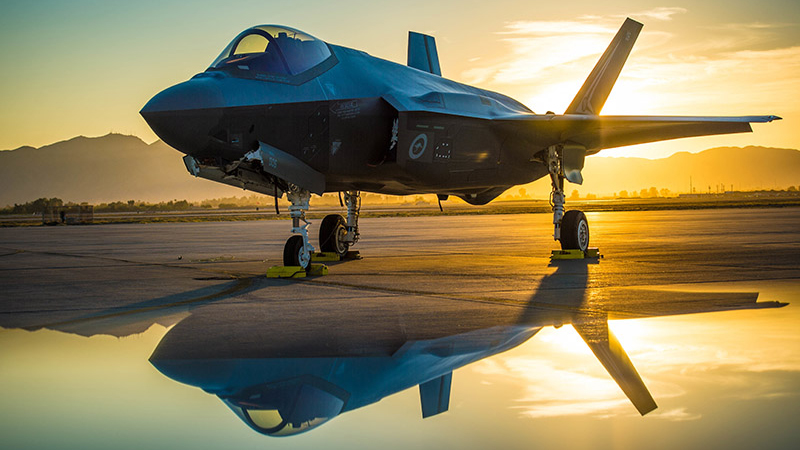
The concept begins with overhead persistent infrared satellites that detect the intense plume of a missile launch. F-35 aircraft operating in the vicinity then refine the track using their own advanced sensors, including the Distributed Aperture System that provides spherical infrared coverage, the Electro-Optical Targeting System and sophisticated onboard data-fusion capabilities. That refined information feeds into the Command and Control, Battle Management and Communications system, known as C2BMC. From there the shared operational picture is distributed to appropriate defensive layers, such as the Terminal High Altitude Area Defense system for regional threats or the future Next Generation Interceptor for homeland defence against longer-range ballistic missiles.
The value of this approach lies in overcoming the fragmentation that has historically limited missile defence. When sensors, decision nodes and shooters operate in isolation, tracks can be duplicated, threat characterisation delayed and opportunities to assign the most suitable interceptor lost. By treating the F-35 as a forward, repositionable sensing node rather than solely as a weapons platform, the architecture creates multiple overlapping sources of information. Mobility is a decisive advantage: unlike fixed ground radars, the fighter can be placed where the tactical picture demands and can adapt as the situation evolves. Earlier demonstrations, including the transmission of F-35 track data to ground-based air- and missile-defence systems, have already shown the practical feasibility of such links.
For the United States the implication is clear. Future superiority will depend less on the isolated performance of any single platform and more on the speed and reliability with which information moves across domains. The F-35’s contribution is measured not only by the weapons it carries but by the awareness and decision space it unlocks for the wider force. In an era of ballistic, cruise and emerging hypersonic threats that can arrive from multiple axes, every second gained between initial detection and engagement expands the defensive options available.
This same logic carries direct relevance for the Czech Republic once its 24 F-35A aircraft enter service. The first jets are expected to reach Czech hands for training in the late 2020s, with the initial aircraft landing at the upgraded Čáslav base around 2031 and the full fleet arriving by the mid-2030s. The acquisition replaces the leased Gripen fleet and represents a generational leap in both combat capability and connectivity. Czech military leaders have already emphasised that the F-35 will function as far more than a traditional air-policing asset. Its sensors and real-time data-sharing ability will allow it to act as the “eyes and ears” of the national air-defence system, detecting threats with high precision and distributing that information to ground units, other aircraft and NATO partners.
Czech air defence is itself undergoing modernisation. The SPYDER short- and medium-range system is being introduced as a core element, older radars have been upgraded, and new mobile air-defence radars improve low- and medium-altitude coverage. The country participates in NATO’s Integrated Air and Missile Defence System and has joined the European Sky Shield Initiative. In this context the F-35 becomes a powerful airborne node that can feed high-quality tracking data into national and alliance networks. Information collected by Czech Lightning IIs could cue SPYDER batteries, support allied interceptors or contribute to the broader NATO common operational picture. Because the aircraft will operate alongside more than 700 other F-35s expected in Europe, the Czech jets will plug into an already dense web of fifth-generation sensors and data links.
The practical strengthening of Czech air defence therefore occurs on several levels. The fighters themselves provide a highly survivable means of engaging airborne threats, including the capacity to strike launch sites at greater range. Second, their sensor fusion and networking turn them into elevated, mobile radars and targeting nodes that extend the reach and accuracy of ground-based systems. Third, full interoperability with NATO allies multiplies the value of every track: a Czech F-35 operating over Central Europe can share data that benefits Polish, German or other regional forces, just as those partners can return the favour.
Realising the full potential of the airborne-node concept requires secure, high-bandwidth data links, robust command-and-control integration and continuous training that treats the aircraft as both shooter and sensor. Infrastructure at Čáslav must be completed, pilots and maintainers trained, and national systems adapted to accept and act upon the volume of high-fidelity data the F-35 can generate. Yet the direction of travel is clear. What Lockheed Martin has described for U.S. missile defence is not an exclusively American capability. Once the Czech F-35s arrive, the same principles of rapid information flow from space through air to ground can reinforce national sovereignty and collective NATO defence in Central Europe.
In short, the Lightning II will give the Czech Air Force more than a modern fighter. It will supply a mobile information node capable of shortening decision timelines, closing seams in the defensive architecture and knitting Czech sensors and shooters more tightly into the alliance framework. Against the backdrop of evolving missile threats, that networked contribution may prove as strategically significant as the aircraft’s stealth or its internal weapons bays.