
F126 Frigate Failure: Six Super-Frigates Abandoned for Eight Proven MEKO A-200s
In a significant reversal for Germany’s naval modernization efforts, the Ministry of Defense announced on June 24, 2026, the outright cancellation of the F126 frigate program. What began as one of the most ambitious shipbuilding initiatives in post-war German history has ended amid ballooning costs, persistent delays, and mounting risks, prompting a swift shift toward a more immediate and affordable alternative. The decision underscores the challenges of complex defense procurement in an era of heightened geopolitical tensions, particularly in the Baltic and North Atlantic, where anti-submarine warfare has regained critical importance within NATO.

The roots of the F126 project trace back to the late 2000s, when the German Navy sought to address the limitations of its aging fleet. Initially conceived as the MKS 180 or Multi-Purpose Combat Ship 180, the program aimed to replace smaller fast attack craft like the Gepard-class while evolving into a successor for the F123 Brandenburg-class frigates, the Navy’s primary anti-submarine warfare assets. By the mid-2010s, under then-Defense Minister Ursula von der Leyen, Germany opted for an open European tender to foster competition and innovation. This approach reflected a desire for flexible, mission-modular vessels capable of operating globally with minimal port time.
Damen Schelde Naval Shipbuilding of the Netherlands emerged victorious in 2020 after a lengthy bidding process involving several European contenders. The contract, signed in June 2020, covered four ships initially with options for two more, valued at around €5.5 billion including training facilities and select modules, with weapons systems procured separately. The total program for six vessels was projected at approximately €10 billion. Construction was to involve German yards, notably Blohm + Voss in Hamburg and the Peene shipyard in Wolgast, ensuring substantial domestic industrial participation despite the Dutch lead contractor.
The F126, later named the Niedersachsen-class, was designed as a formidable platform. Measuring 166 meters in length with a beam of 21.7 meters and a full-load displacement exceeding 10,000 tons, these would have been the largest surface combatants in the German Navy since World War II. Powered by a combined diesel-electric and gas turbine (CODLAG) or similar hybrid system, they promised speeds over 26 knots, a range beyond 4,000 nautical miles, and exceptional endurance – up to two years at sea with crew rotations every few months. Crewed by just 114 sailors but with capacity for nearly 200 including specialists, the ships emphasized automation and modularity. Mission modules could swap in capabilities for anti-submarine warfare (ASW), surface warfare, mine countermeasures, or even detention facilities for counter-piracy operations. Armament was to include a 127mm main gun, vertical-launch systems for anti-air and anti-surface missiles, torpedoes, and support for two NH90 helicopters plus UAVs. Sensors featured advanced radars, sonars including a towed array for ASW, and a sophisticated combat management system.
Goals centered on enhancing Germany’s contribution to NATO, particularly in ASW amid renewed Russian submarine threats in the Baltic and Atlantic. The vessels were intended for prolonged deployments far from home, enforcing embargoes, escorting shipping, and commanding task groups. This aligned with broader Bundeswehr reforms following Russia’s 2022 invasion of Ukraine, which accelerated defense spending and emphasized collective deterrence. Delivery of the first ship, Niedersachsen, was originally slated for 2028, with the full class operational by the early 2030s.
Yet cracks appeared early. The project’s complexity – integrating advanced systems from multiple international partners, including Thales for radars and combat systems – led to integration challenges, particularly with data transfer and software. Construction milestones slipped; steel cutting began in 2023, but schedules eroded. By 2025–2026, Damen could no longer guarantee timelines or budgets. Efforts to transfer prime contractor responsibilities to Germany’s Naval Vessels Lürssen (later tied to Rheinmetall) were evaluated but deemed unviable, as they would trigger massive additional expenses and legal complications. A revised estimate for six ships ballooned toward €18 billion or more, factoring in already incurred costs of around €2.3 billion.
Critics pointed to over-ambition: an overly flexible “jack-of-all-trades” design that inflated scope and risk, compounded by inflation, supply chain issues, and coordination problems across borders and subcontractors. The program, once a symbol of European collaboration and German industrial revival, became emblematic of procurement pitfalls – echoing earlier issues with the F125 Baden-Württemberg-class, which also faced delays and cost growth. Parliamentary scrutiny intensified, with opposition voices arguing the timeline no longer fit a deteriorating security environment demanding rapid capability gains.
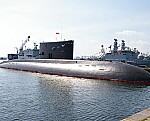
Defense Minister Boris Pistorius pulled the plug to avoid indefinite delays and unacceptable risks. Cancellation avoids further escalation but leaves sunk costs and potential claims against Damen, now under legal review. It also impacts involved firms, notably causing Rheinmetall shares to drop sharply as naval ambitions were curtailed.
In its place, Germany is pursuing up to eight MEKO A-200-DEU frigates from ThyssenKrupp Marine Systems (TKMS), a proven German design already in service with several navies. Smaller at around 3,700-4,000 tons, these vessels offer strong ASW capabilities, including compatibility with the same Atlas Elektronik towed sonar intended for the F126. The first four are estimated at €6.3 billion, with an option for four more at €5.3 billion – substantially less than the F126’s projected total. Deliveries could begin toward the end of 2029, with follow-ons every nine months, providing a quicker path to bolstering the fleet alongside upgraded F123 frigates.
Navy leadership has affirmed that the MEKO A-200, with adaptations drawing partly from existing export configurations, can fulfill core NATO ASW commitments effectively. Its standardized platform promises advantages in maintenance, training, and logistics. While not matching the F126’s size, endurance, or modular versatility, the choice prioritizes timely availability and cost control over cutting-edge scale. This pragmatic pivot supports immediate operational needs while domestic industry benefits through TKMS and subcontractors.
The F126’s demise highlights broader lessons for European defense procurement: balancing innovation with realism, ensuring robust risk management in multinational projects, and adapting swiftly to strategic realities. As Germany strengthens its navy amid great-power competition, the MEKO path offers a more certain route to enhanced maritime power. Future programs, including potential air-defense frigates like the F127, will likely draw on these hard-won experiences to deliver capability without the same pitfalls. For now, the German fleet trades grand vision for reliable presence, a necessary recalibration in uncertain times.