Four Families, One Front: Poland Is Rebuilding Its Main Battle Tank Fleet
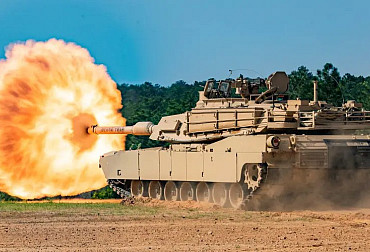
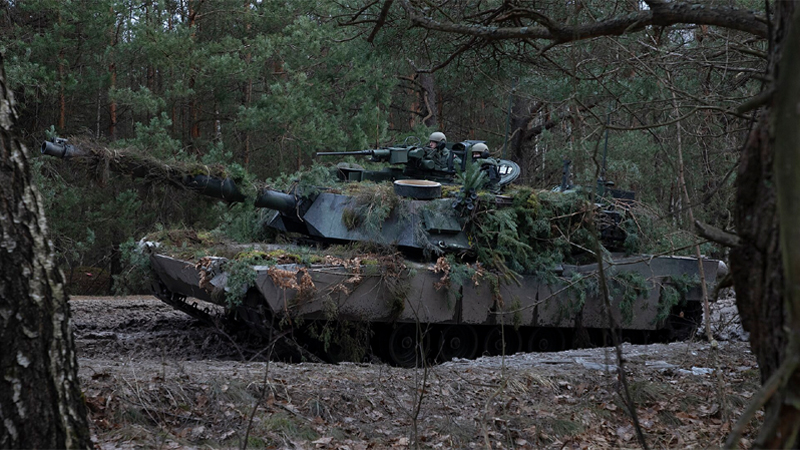
Polish Defense Minister Władysław Kosiniak-Kamysz announced the latest delivery of 35 M1A2 SEPv3 Abrams tanks. It brings deliveries under the 2022 contract for two hundred and fifty new tanks to two hundred and seventeen, leaving only thirty-three machines still to arrive before the year’s end. Added to the one hundred and sixteen used M1A1 FEP tanks already transferred from American stocks, Poland now fields three hundred and thirty-three Abrams of both generations and is weeks away from a complete fleet of three hundred and sixty-six. Those vehicles are flowing into the 18th Mechanized Division, whose six tank battalions are being built around a structure of fifty-eight tanks each, with a further training batch reserved for the Land Forces Training Centre.
That single American line of tanks does not, however, describe the Polish main battle tank force as it actually exists in the autumn of 2026. Warsaw is running four families at once. Beside the Abrams sit more than two hundred South Korean K2 Black Panthers already in country, a German Leopard 2 park that still numbers well over two hundred vehicles after donations to Ukraine, and a shrinking but not yet retired cohort of domestically rebuilt PT-91 Twardy tanks, themselves descendants of the T-72. The result is the most heterogeneous heavy armored force in NATO Europe, assembled at high speed after Russia’s full-scale invasion and after Poland itself transferred large numbers of Soviet-pattern tanks eastward.
The Abrams program is the political and logistical flagship. The April 2022 government-to-government deal, worth about 4.75 billion dollars, covers not only the two hundred and fifty SEPv3 tanks but recovery vehicles, assault bridges, ammunition and a training package. Twenty-eight older M1A2 SEPv2 tanks were loaned first so crews could begin conversion while production of the newer standard ran. The SEPv3 brings a 120 mm M256 gun, third-generation thermal sights, improved electrical generation for sensors and radios, and, in the Polish configuration, provision for active protection. Its 1,500-horsepower gas turbine and heavy logistic tail are the price of a tank designed to meet modernized T-72B3, T-80BVM and T-90M threats on NATO’s eastern flank. Poland is already investing in local spare-parts production and an authorized AGT1500 engine service centre so that the fleet does not remain wholly dependent on transatlantic pipelines.
The Korean track is moving in parallel and may eventually become the numerically dominant one. The first executive contract delivered one hundred and eighty K2GF “gap filler” tanks. A second contract signed in 2025 adds another one hundred and eighty vehicles: one hundred and sixteen more K2GF through 2027 and sixty-four K2PL tanks, the latter tailored for Polish communications, battlefield management systems and, in later batches, local assembly at Bumar-Łabędy. By late August 2026 the K2 inventory had already reached two hundred and eight. Those tanks are concentrating in the 16th Mechanized Division. A framework ambition of up to one thousand K2-family vehicles remains on the books, driven by the attrition rates observed in Ukraine and by Warsaw’s desire for mass as well as quality. That ambition, if fully funded, would make the Black Panther the backbone of Polish armor in the 2030s.
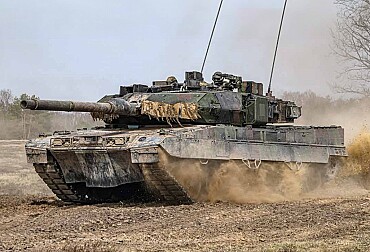
The Leopard 2 fleet is the oldest Western element and still a substantial one. Poland retains one hundred and five Leopard 2A5 tanks and a remaining pool of Leopard 2A4 hulls, of which about one hundred have already been rebuilt to the Leopard 2PL or 2PLM1 standard after fourteen A4s were given to Ukraine. The Leopards continue to serve as a proven NATO-interoperable force while the two new fleets grow. They also illustrate the cost of mixed inventories: three Western 120 mm families plus a 125 mm Soviet-derived one mean separate ammunition, optics, engines and training pipelines.
The PT-91 Twardy, a Polish modernization of the T-72 with improved armor, fire control and a 125 mm gun with autoloader, still numbers on the order of one hundred and fifty to one hundred and seventy vehicles. Together with a residual T-72 stock, these tanks fill training and second-line roles and keep units manned while Western deliveries catch up. Estimates of the total Polish tank park in 2026 therefore range from the high seven hundreds of modern or modernized Western types plus legacy vehicles, toward eight hundred and twenty-seven if older machines still on strength are counted. By the end of 2026, once the last Abrams SEPv3 and another tranche of K2GF arrive, the modern component alone should sit comfortably above eight hundred.
Looking toward 2030, signed contracts already point to roughly three hundred and sixty-six Abrams, three hundred and sixty K2 in the GF and PL mix, and about two hundred and thirty-three Leopards, a modern fleet approaching nine hundred and sixty tanks even before any further K2 orders. Army Recognition has projected a 2030 picture that still includes some one hundred and fifty PT-91s in reserve or training use. That combination would give Poland more modern main battle tanks than Germany, France, Italy and the United Kingdom combined, and would place it, in quality-adjusted terms, at the head of NATO Europe’s armored forces even if Turkey and Greece retain larger raw inventories of older types.

The strategic logic is straightforward. Poland sits on the most likely high-intensity axis of a conflict with Russia. Donations to Ukraine opened holes that had to be filled quickly; hence the used M1A1s and the first K2GF batches. Long-term planning then layered a high-end American division, a high-volume Korean industrial partnership with local workshare, and a German fleet already in the NATO ecosystem. The same modernization wave includes F-35s, Apaches, HIMARS and Patriots, so the tanks are meant to fight inside a combined-arms structure rather than as an isolated armored park.
The cost of that speed is complexity. Four families complicate training, spare parts, bridging and recovery, and the political management of three major foreign suppliers. Polish planners have accepted that burden in exchange for numbers on the ground before the end of the decade. Whether later years bring a gradual consolidation around the K2PL and a reduced Abrams-Leopard mix, or a permanent multi-type force, will depend on budgets, industrial offsets and the lessons of whatever wars intervene. For now, the September 2026 Abrams shipment is simply the latest proof that Warsaw is no longer rebuilding a Cold War tank army. It is assembling a new one, in public, at a pace no European country have matched.