
Freedom of Russia Legion Claims Over 10,000 Tons of Russian Oil Destroyed in “Barrel” Operation
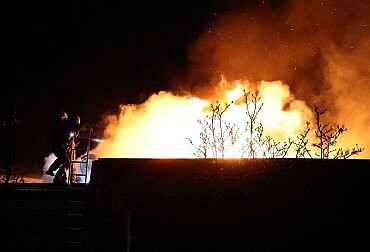
The Freedom of Russia Legion’s resistance network says it has carried out a major sabotage operation targeting Russia’s crude oil logistics, destroying more than 10,000 tons of oil and inflicting losses estimated at over $10 million.
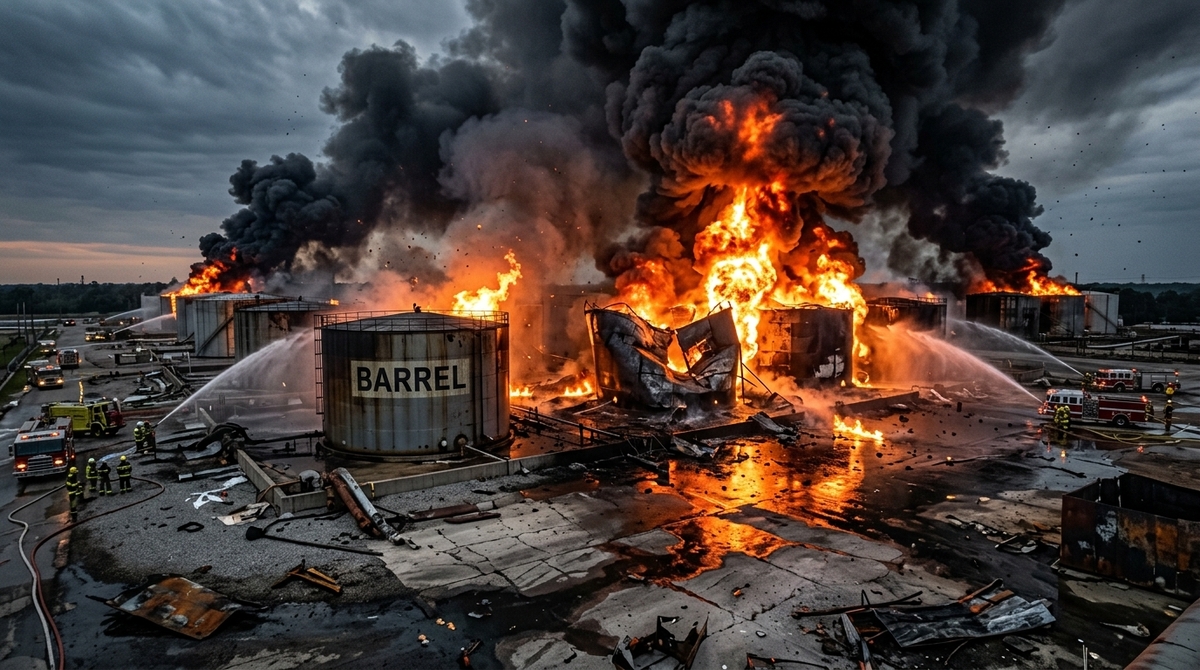
The operation, reportedly codenamed “Barrel,” focused on railway-based oil transport — a method Russia has allegedly expanded after repeated Ukrainian strikes damaged oil-refining, storage and port infrastructure. According to the Legion, Moscow has been trying to compensate for reduced storage and transfer capacity by dispersing crude oil shipments across the country in railway tank cars.
That adaptation, the group says, created a new vulnerability.
Rather than striking a single refinery or port facility, the operation reportedly targeted the transport chain itself. The Legion claims its underground members identified railway tank cars carrying crude oil, penetrated a guarded site and sabotaged dozens of them.
If accurate, the reported scale suggests the goal was not merely to destroy individual rail cars, but to disrupt a wider logistics system used to move strategic resources. Railway networks remain critical for Russia’s wartime economy, carrying not only fuel and raw materials but also military cargo across long distances.
The Freedom of Russia Legion said the attack was preceded by extensive intelligence work. This allegedly included obtaining classified information, analyzing oil transport patterns and identifying weak points in the logistics network.

The group claims the operation destroyed more than 10,000 tons of crude oil. It also said the resulting material damage exceeded $10 million, while parts of the railway logistics system used for strategic transport were disrupted.
The reported sabotage reflects a broader pattern in the war: Russia’s energy infrastructure and fuel logistics have increasingly become targets because of their direct role in sustaining the military and financing the war effort. As fixed oil facilities come under pressure, Russia appears to be relying more heavily on dispersed and mobile transport options — but those alternatives may be harder to protect across such a vast territory.
While the full impact of the “Barrel” operation cannot be independently confirmed from the available information, the Legion’s claims point to a continued effort by anti-Kremlin resistance groups to expand the battlefield beyond the front line and into Russia’s rear-area logistics.
If confirmed, the destruction of thousands of tons of crude oil would represent another blow to Russia’s attempts to shield its energy supply chain from wartime disruption.