
US Ambassador Warns Czech Defense Spending Risks Falling Behind NATO Commitments
In his speech at the conference Our Security Cannot Be Taken for Granted, held at Prague Castle, the US Ambassador to the Czech Republic, Nicholas A. Merrick, openly pointed out the risks associated with a possible decline in Czech defense spending and emphasized the need to fulfill alliance commitments in the area of defense investment.
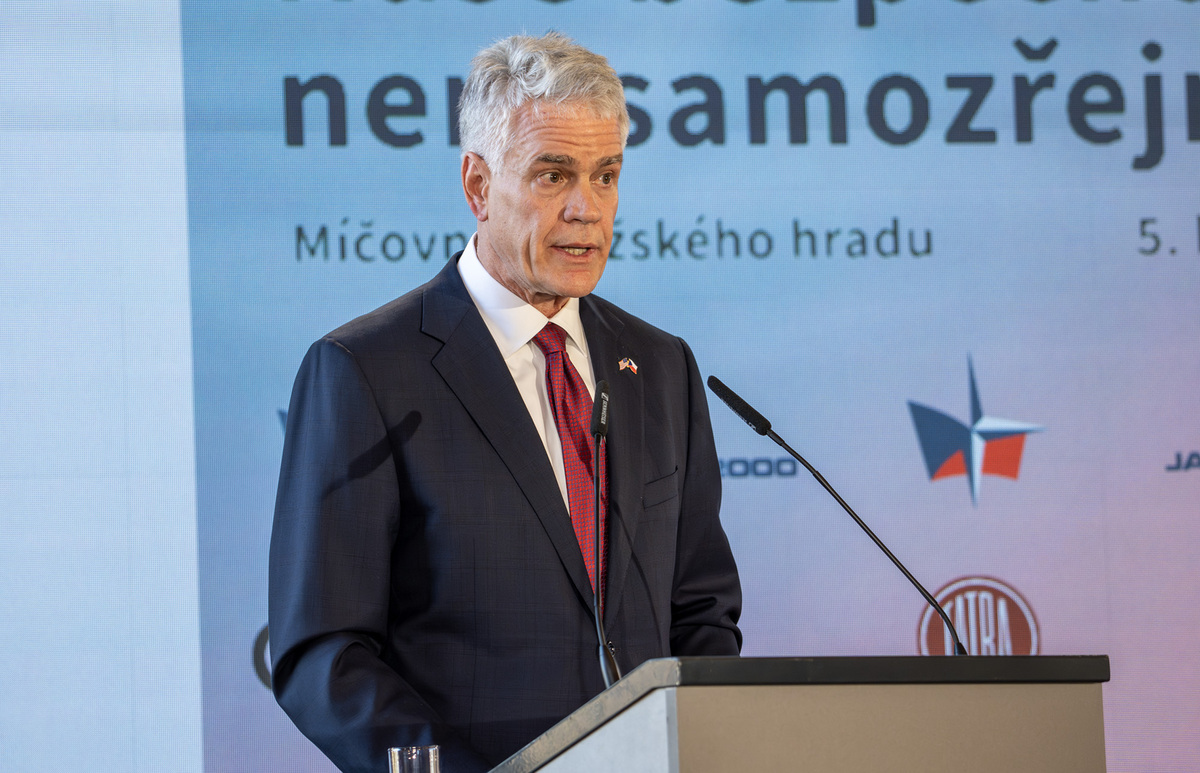
According to Merrick, NATO's new defense spending targets—3.5% of GDP for basic defense capabilities and an additional 1.5% for related investments, totaling 5% of GDP over the next ten years—are not arbitrary figures or a unilateral demand by the United States. "These numbers ... are not arbitrary. They're not an American demand," the ambassador said. He pointed out that this is an agreement between sovereign allies who are dependent on each other for security and deterrence.
At the same time, he emphasized that, according to surveys, the Czech public supports NATO membership. "Eighty percent of Czechs agree that NATO membership is essential for the defense and security of the Czech Republic," Merrick said. However, he added that trust in the alliance alone is not enough: "That belief must be matched by capability. By commitment."

In this context, the ambassador drew attention to the planned level of Czech defense spending in the draft budget for 2026. According to expert estimates, it should be around 1.8% of GDP, which, according to him, is not only below the level of new commitments discussed at the alliance summit in The Hague, but even below the previous commitment from the summit in Wales. "At around 1.8% of GDP, Czechia would risk being among the lowest spenders in the alliance," Merrick warned. According to him, such a development would represent a negative trend compared to other NATO allies.
Even more important, according to the US ambassador, is the fact that lower spending levels could jeopardize the fulfillment of the capability targets that the Czech Republic has set for itself as part of alliance planning. "This level of spending means Czechia risks not meeting its self-identified capability targets," Merrick said. He pointed out that failure by one ally to meet its commitments affects the entire alliance: "If Czechia fails to fulfill its commitments, it impacts the entire alliance."
Merrick also emphasized that defense investments are not just a matter of budget figures. According to him, it is primarily a matter of ensuring the real capabilities of the armed forces. "This commitment is about ensuring that your warfighters have the equipment, supplies, and training they need, that your airspace is secure, that your infrastructure is resilient," he said. According to him, the purpose of investment is primarily to ensure the readiness of the state and the security of its citizens.
The ambassador also recalled the basic principle of collective defense and the importance of deterrence. "Security comes from commitment. Commitment leads to capabilities. Capabilities make us stronger. And only this strength leads to deterrence. Deterrence is real security." According to him, it is therefore important that the alliance countries clearly commit to the obligations they have accepted and begin to systematically fulfill them.

At the end of his speech, Merrick emphasized that transatlantic cooperation between the United States and the Czech Republic has strong historical foundations dating back to the founding of Czechoslovakia. At the same time, he drew attention to the current intensive political contacts between the two countries. He mentioned, for example, the planned trip of First Deputy Prime Minister Karel Havlíček to Texas, where talks with representatives of the US administration are to take place. According to Merrick, this is proof that Washington considers the Czech Republic an important partner.
At the same time, however, he emphasized that the issue of defense commitments remains a key topic in the US-Czech dialogue. "Czechia needs NATO, just as NATO needs Czechia, and just as NATO needs the United States," said the ambassador. According to him, the United States will continue to fulfill its role in the alliance, but at the same time expects the same from its allies.
"At the end of the day, we are in this together," concluded US Ambassador Nicholas A. Merrick.