
From Frontline to Urals: The Explosive Rise of Ukraine’s Long-Range Drone Arsenal
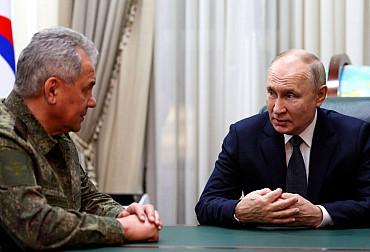
The Kremlin’s admission on March 17, 2026, by Sergei Shoigu, Secretary of the Russian Security Council and former Defense Minister, marked a pivotal acknowledgment in the ongoing Russia-Ukraine conflict: no region of Russia is immune to Ukrainian drone strikes. Speaking in Yekaterinburg, Shoigu highlighted the dramatic escalation of Ukrainian unmanned aerial vehicle (UAV) operations, noting that attacks surged from around 6,200 in 2024 to over 23,000 in 2025 – a more than fourfold increase.
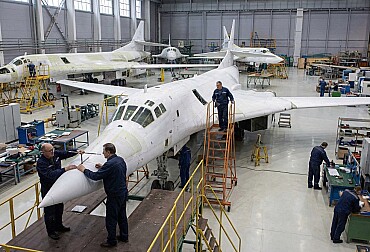
Shoigu specifically cited the strike on the Aviastar aircraft factory in Ulyanovsk, approximately 1,800 km from the Ukrainian border, as evidence that Ukrainian drones have “broken distance records.” Shoigu warned that the Urals, Russia’s industrial heartland, now lie in a “direct threat zone,” with vulnerabilities spanning the military-industrial complex, energy infrastructure, chemical sites, oil and gas fields, military supply chains, and dense rail networks. Disruptions here could trigger economic ripple effects and paralyze logistics vital to Russian military sustainment.
This statement reflects a profound shift in the war’s dynamics. Ukraine has transformed drone warfare from a tactical tool into a strategic instrument capable of imposing asymmetric costs deep inside enemy territory. By targeting refineries, airbases, factories, and logistics hubs, Ukrainian forces degrade Russia’s war economy and force resource diversion to air defense far from the front lines.

Key Types of Drones Employed by the Ukrainian Armed Forces
Ukraine’s deep-strike campaign relies on a mix of domestically developed one-way attack (OWA) drones, often launched in coordinated swarms to overwhelm defenses. Production has scaled dramatically through hundreds of companies, supported by the Unmanned Systems Forces (USF) and units like the 14th Separate Unmanned Aerial Systems (UAS) Regiment.
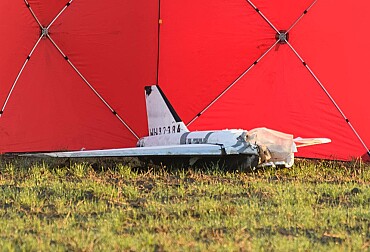
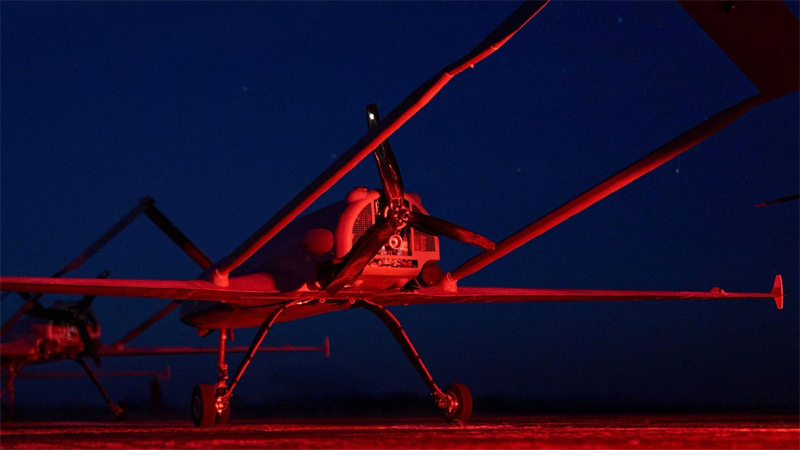
- Long-range one-way attack drones form the backbone of deep strikes. The An-196 Liutyi is a prominent example, resembling a propeller-driven cruise missile with ranges exceeding 1,000 km and payloads around 75 kg. It uses hybrid guidance (inertial navigation plus satellite communications) and machine-vision for terminal homing, enabling evasion of short-range defenses. Liutyi has been central to strikes on Moscow, oil refineries, and airbases.
- UJ-26 Beaver is another key long-range platform, employed for attacks on strategic targets like airfields and infrastructure, with demonstrated capabilities in Crimea and deeper Russian territory.
- FP-series drones, such as FP-1 and FP-2, offer mass-producible options. FP-1 prioritizes simplicity and volume for extended operations, while FP-2 carries heavier warheads (over 100 kg) at ranges up to 200 km, trading distance for payload – ideal for high-impact frontline or mid-range strikes on air defenses like Buk, Tor, S-300V, and Pantsir-S1 systems.
- Other systems include earlier models like UJ-22 Airborne for initial deep incursions and evolving hybrids blending drone and missile features for enhanced speed and payload.
These drones often fly low to exploit terrain, use decoys, and saturate air defenses. In early 2026, swarms of 100–200 drones per night became common, with mid-range strikes (50–250 km) quadrupling in frequency since late 2025.
Payload Capacities and Operational Reach
Payloads vary by design: lighter long-range models (e.g., Liutyi) carry 50–100 kg explosive warheads sufficient for precision damage to infrastructure. Heavier variants like FP-2 exceed 100 kg, enabling destruction of hardened targets. Ranges have doubled in recent years – from 500 km to over 1,000 km for top systems – allowing strikes on Siberia, the Urals, and distant refineries like those in Ukhta (approx. 1,700 km away). Costs remain low (some at $55,000), making them economical for sustained campaigns compared to Russian air defenses or missiles.
Near-Future Expectations
Ukraine’s drone ecosystem is poised for explosive growth. Plans target millions of drones annually across categories (aerial, ground, maritime) – far outpacing U.S. production (100,000 combat drones yearly). This includes scaling long-range strike capabilities, with emphasis on larger salvos and denser swarms. Advancements will feature greater autonomy via AI integration (e.g., partnerships like Shield AI’s Hivemind for swarm coordination), fiber-optic elements for jam-resistant ops, and hybrid drone-missile systems with payloads over 1,000 kg and speeds surpassing traditional drones.
Exports and co-production expand: Ukraine aims for 10 joint drone factories in Europe (e.g., Germany, UK) by 2026, internationalizing designs like Linza and boosting funding via export centers. Interceptor drones – autonomous, swarm-launched hunters for incoming threats – will counter Russian Shahed/Geran barrages. Overall, expect intensified pressure on Russian rear areas, with strikes becoming more frequent, precise, and disruptive. Ukraine’s innovations could redefine attrition warfare, forcing Russia into costly, dispersed defenses while Ukraine leverages cheap, scalable tech for strategic leverage.