
From Soviet Scrapheap to French Spearhead: Ukraine’s Air Force Bets on the Rafale
France’s announcement that Ukrainian pilots will begin training on the Dassault Rafale in November 2026 marks more than another delivery schedule. It is the latest and most ambitious step in a multi-year effort to replace a worn Soviet inheritance with a Western combat fleet. The first aircraft are not expected over Ukrainian airspace until 2028 or 2029, according to earlier statements by President Emmanuel Macron, yet the training start itself signals that Paris and Kyiv have moved beyond letters of intent toward practical preparation. In July 2026 the two countries agreed a roadmap covering an initial purchase of 16 Rafales with associated weapons; a broader letter of intent signed in November 2025 had already sketched a possible long-term total of up to 100. Parallel Swedish plans for Gripens (16 used C/D models plus newer E variants) point to the same endpoint: a force that will look little like the one that entered the war in 2022.
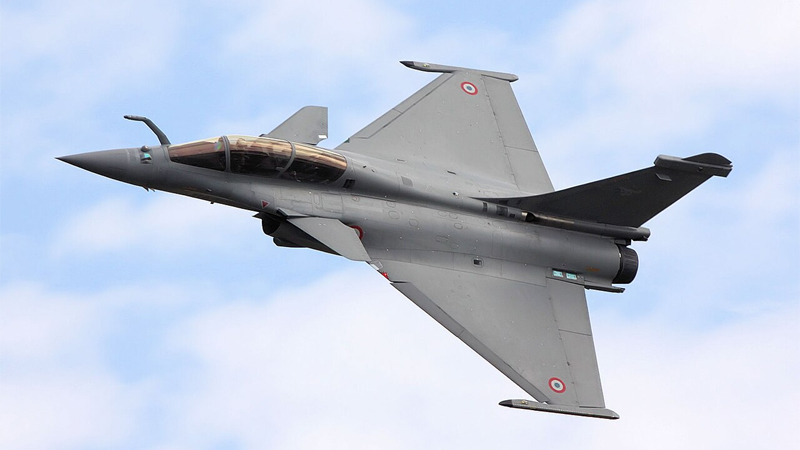
Open-source tallies compiled through early October 2026 put the Ukrainian Air Force’s combat inventory at roughly 110–140 fighters and attack jets, within a broader fleet of some 350–370 aircraft that also includes helicopters, transports and trainers. The largest remaining Soviet types are the MiG-29 (estimates range from 40 to about 50), the Su-27 (around 20), the Su-25 (around 20) and the Su-24 (around 12). These airframes were inherited from the Soviet Union or acquired in the 1990s and early 2000s; many have been sustained through cannibalization, limited local overhaul and whatever spares could be obtained after 2014.
Western additions arrived later. The first F-16s reached Ukraine in the summer of 2024 from Denmark and the Netherlands; subsequent deliveries from Norway and Belgium have brought the on-hand total into the low-to-mid 30s, with pledges that could eventually exceed 80. France’s Mirage 2000-5F fighters began arriving in February 2025; roughly six are now assessed to be in Ukrainian service, used mainly for night air-defense sorties against cruise missiles and drones. Two Swedish Saab 340 airborne-early-warning aircraft and a modest number of Western-compatible weapons (AMRAAM, HARM, Hammer glide kits, Storm Shadow/SCALP) complete the picture. Training aircraft remain dominated by the L-39 Albatros, while transport and rotary fleets still rely heavily on Antonov and Mil types of Soviet design.
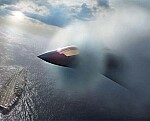
Against this mixed inventory the Rafale represents a clear generational step. It is a twin-engine, delta-canard 4.5-generation aircraft with an active electronically scanned array radar (RBE2), the SPECTRA electronic-warfare suite, and the ability to employ the Meteor beyond-visual-range missile. Payload capacity, sensor fusion and survivability exceed those of the mid-life-update F-16s and Mirage 2000-5Fs currently flying in Ukraine, and they dwarf the largely analogue or partially upgraded Soviet types. The MiG-29 and Su-27 retain respectable kinematic performance and can still launch certain Western munitions after modifications, yet their radars, electronic countermeasures and weapons integration lag well behind the Rafale’s.
The Mirage 2000-5F offers solid agility and a capable French radar, but it is single-engined, carries a lighter payload and lacks the Rafale’s integrated SPECTRA protection and multi-role flexibility. F-16s have already demonstrated high sortie rates in air defense and limited strike roles, yet their older Block variants face parts scarcity and require lengthy phase inspections. In short, the Rafale would give Ukrainian crews both longer-range air-to-air reach and a more robust ability to penetrate defended airspace with precision weapons – capabilities that current types can only approximate.
Training timelines remain the practical bottleneck. Ukrainian pilots converting to the F-16 required five to nine months, depending on prior experience and language proficiency; ground crews needed several additional months, with some courses running two-and-a-half to four months once technical English was addressed. Mirage conversion followed a comparable pattern after Macron’s June 2024 announcement. For the Rafale the closest public benchmark is Croatia, whose pilots transitioned from MiG-21s. Their full course – basic flying plus air-to-air and air-to-ground weapons employment – lasted approximately 15 months, with technical personnel trained in parallel; the first group finished in late 2023 and the first aircraft arrived in spring 2024.
Ukrainian pilots enter with far more recent combat hours and exposure to Western avionics via F-16 and Mirage work, so some observers expect a modest compression of the timeline. Still, mastering the Rafale’s sensor suite, SPECTRA, Meteor employment and carrier-capable (or at least short-field) handling will not be abbreviated to a few months. Ground crews must simultaneously learn French maintenance procedures, diagnostic software and supply-chain protocols – an effort that, in the Croatian case, ran alongside pilot training and involved dozens of technicians. France has indicated that the Ukrainian pipeline will follow the standard progression through light trainers (Grob G-120TP), advanced trainers (Alpha Jet) and finally the Rafale itself.
Sustainment has already proved more difficult than acquisition. Soviet types survive by stripping unserviceable airframes and relying on limited Ukrainian overhaul capacity; every combat loss is effectively permanent. Western jets introduce different problems. Recent reporting indicates that more than half of Ukraine’s F-16 fleet has at times been unavailable because phase inspections – required after roughly 300 flight hours – are performed in Belgium and can stretch to 40 weeks, far longer than the two-to-six weeks typical in the United States. Older airframes also require components no longer in production, forcing reliance on cannibalized donors or slow commercial sourcing.
Ukrainian officials have pushed to localize more maintenance inside the country, yet doing so exposes facilities to Russian strikes. For the Rafale, France’s willingness to license production of certain missiles and aerial bombs inside Ukraine offers a partial hedge, and the smaller initial batch of 16 aircraft may prove easier to support than a large F-16 fleet drawn from multiple donors with differing configurations. Nevertheless, establishing a reliable pipeline of spare engines, radar modules, SPECTRA components and software updates will require multi-year contracts and trained Ukrainian technicians – precisely the personnel whose training begins in November.
The broader force is already shifting. A October 2026 assessment by Defense Express noted that Western-built F-16s and Mirages together now outnumber remaining MiG-29s and Su-27s in active service, and that Western types account for the majority of recent air-defense and strike sorties. Pilot manning is estimated at about 75 percent of authorized strength, with the immediate constraint described as technological rather than purely numerical. Adding Gripens from 2027 and Rafales from 2028–29 will accelerate that transition, provided the training and sustainment pipelines keep pace. The November start of Rafale instruction is therefore less a sudden breakthrough than the visible tip of a longer conversion that began with F-16 simulators in 2023 and will continue for the rest of the decade.