
Latvia Eyes Brazilian Super Tucano as Cost-Effective Drone Hunter for Baltic Skies
Latvia is actively examining the acquisition of Embraer A-29 Super Tucano light-attack aircraft as part of a broader effort to strengthen its air defenses against the growing threat of unmanned aerial systems. The recommendation comes from the outgoing commander of the Latvian Air Force, Colonel Viesturs Masulis, who has urged his successor to treat such platforms not merely as conventional attack aircraft but as dedicated air-defense assets capable of engaging slow-moving targets and drones. With more than one billion euros already allocated to improve air defense, Latvian authorities have contacted manufacturers for detailed cost and delivery estimates. Once those figures arrive, a formal analysis and action plan will follow.
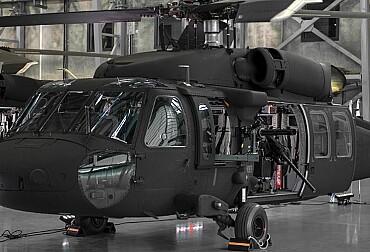
The interest arises against the backdrop of recent incidents in which Ukrainian attack drones, disrupted by Russian electronic warfare, crashed on Latvian territory, damaging infrastructure and triggering political fallout that contributed to the resignation of a previous defense minister. Latvia currently operates only a handful of fixed-wing aircraft – primarily Antonov An-2 transports, UH-60 Black Hawk helicopters, and a pair of ultralights – and depends on NATO’s Baltic Air Policing mission for fighter coverage. In this constrained environment, a relatively inexpensive, persistent turboprop capable of operating from austere fields offers an appealing complement to higher-end systems.
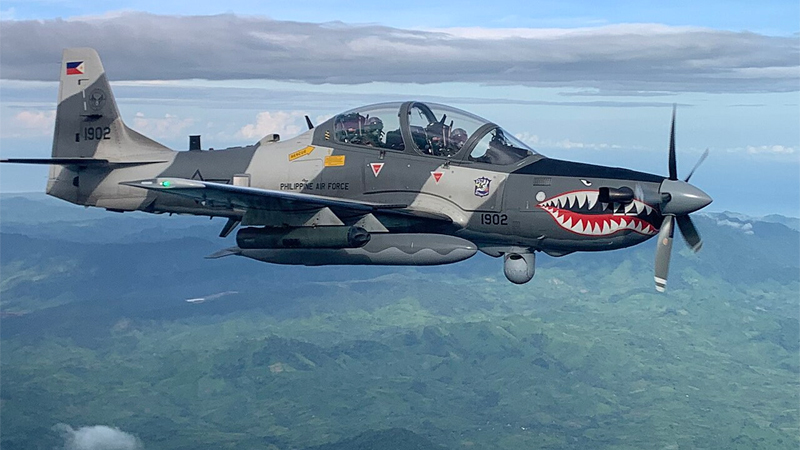
The A-29 Super Tucano is a tandem-seat, single-engine turboprop developed by the Brazilian manufacturer Embraer as an evolution of the earlier EMB-312 Tucano trainer. First flown in 1999 and entering service with the Brazilian Air Force in 2003, the aircraft was designed from the outset for light attack, armed reconnaissance, counter-insurgency, and advanced pilot training in low-to-medium threat environments. It retains the benign handling characteristics of a trainer while incorporating cockpit armor, zero-zero ejection seats, self-sealing fuel tanks, and a robust airframe able to operate from short or unprepared runways. Powered by a Pratt & Whitney Canada PT6A-68 turboprop delivering approximately 1,600 shaft horsepower, the Super Tucano reaches a maximum speed of around 590 kilometers per hour, offers endurance exceeding five to six hours with external tanks, and can carry up to roughly 1,550 kilograms of external stores across five hardpoints.
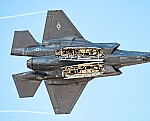
Standard armament includes two internal wing-mounted .50-caliber machine guns, with options for gun pods, unguided and laser-guided rockets (including the APKWS kit for Hydra 70 rockets), precision-guided bombs, and, in some configurations, short-range air-to-air missiles. An electro-optical/infrared sensor turret enables target detection, tracking, and laser designation. Operating costs remain a fraction of those of jet fighters, and the aircraft has accumulated more than 600,000 flight hours, including tens of thousands in combat, across more than twenty operators.
In November 2025 Embraer formally expanded the Super Tucano’s mission set to include counter-unmanned aerial system operations. The concept leverages existing sensors and weapons while adding data-link connectivity to receive initial target cues, refined software for air-to-air engagement of slow targets, and optimized tactics that exploit the aircraft’s low stall speed of approximately 80 kilometers per hour. This allows the A-29 to match the pace of one-way attack drones such as the Iranian-designed Shahed or Russian Geran systems far more efficiently than high-performance jets, which must fly faster and therefore spend less time in the engagement window.
Further enhancements, including partnerships for artificial-intelligence decision aids, are scheduled to become available for demonstration and customer delivery in the second half of 2026. The combination of persistence, relatively low speed matching, precision effectors, and austere basing makes the platform particularly relevant for nations facing saturation drone threats without the resources to dedicate expensive fighters to the role.
Operators of the Super Tucano span four continents and include Brazil as the primary user, Colombia, Chile, Ecuador, the Dominican Republic, the Philippines, Indonesia, Nigeria, Mali, Mauritania, Burkina Faso, Angola, Lebanon, Portugal (with the NATO-standard A-29N variant), Uruguay, Paraguay, Panama, and several others. The United States has employed the type for training partner-nation pilots and for special-operations advisory missions. Combat experience ranges from counter-insurgency campaigns in Colombia and the Philippines to border surveillance and light-strike operations in Africa. Portugal’s recent order of twelve A-29N aircraft marks the type’s first firm European foothold and underscores growing interest within NATO circles in affordable multi-role turboprops.
Compared with other counter-UAS approaches, the Super Tucano occupies a distinct niche. Ground-based systems – radars, electro-optical sensors, electronic-warfare jammers, directed-energy weapons, and short-range missiles or guns mounted on vehicles – offer persistent coverage of fixed areas and can engage large numbers of targets at relatively low cost per engagement. Yet they lack mobility and the ability to pursue drones that stray beyond their engagement envelopes. Fighter jets and attack helicopters can intercept drones but incur high operating costs, limited endurance, and, in the case of fast jets, difficulty matching the slow speeds of many one-way attack systems. Dedicated interceptor drones or loitering munitions provide attritable mass but require sophisticated command-and-control networks and can themselves be vulnerable to electronic attack.
Manned light-attack turboprops such as the A-29, the Beechcraft AT-6 Wolverine, or similar platforms combine the judgment of a human crew, the ability to carry a mix of kinetic and non-kinetic effectors, long loiter times, and the flexibility to redeploy rapidly across a national territory or to operate from dispersed, austere sites. Their principal limitations remain vulnerability in high-threat airspace and higher unit costs than purely unmanned solutions. For a small air force such as Latvia’s, the Super Tucano could therefore serve as a practical middle layer: cheaper and more persistent than fighters, more flexible and mobile than purely ground-based systems, and capable of both defensive counter-drone work and limited close air support or training missions.
Whether Latvia ultimately proceeds with an order will depend on detailed cost assessments, industrial participation opportunities, and integration with existing and planned layered defenses. The discussion itself, however, illustrates a wider European reassessment of how best to counter the low-cost, high-volume drone threat that has defined the war in Ukraine. An affordable, combat-proven turboprop that can loiter, match drone speeds, and deliver precise effects offers one pragmatic answer for nations seeking to fill capability gaps without the fiscal burden of additional high-performance combat aircraft.