Macron’s ‘Advanced Deterrence’ and the Reshaping of European Security in an Age of Uncertainty
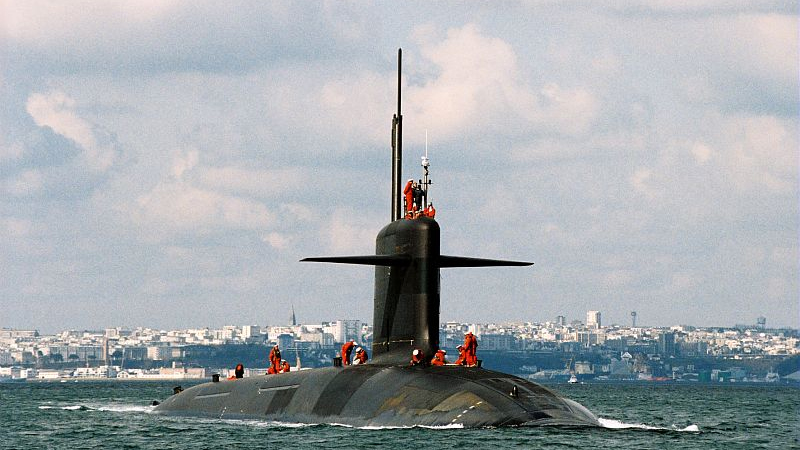
In the shadow of the Triomphant-class submarine Le Téméraire at Île Longue on March 2, 2026, President Emmanuel Macron delivered what analysts quickly termed a "watershed" address on France’s nuclear posture. Unlike previous doctrinal updates that emphasized continuity and minimalism, this speech signaled a proactive adaptation to a world where great-power competition has intensified, arms control frameworks have eroded, and Europe’s security guarantees appear increasingly fragile.
The core innovation – “dissuasion avancée” or forward/advanced deterrence – extends France’s nuclear umbrella toward select European partners without compromising the sacrosanct principle of sole presidential authority over any launch decision. Macron outlined a phased integration: allied participation in French nuclear exercises, enhanced strategic dialogue, temporary forward deployment of nuclear-capable assets (such as Rafale jets armed with ASMP-A missiles), and deepened bilateral mechanisms, starting with Germany via a dedicated steering group. Eight European nations reportedly expressed interest, reflecting anxiety over potential shifts in U.S. commitments amid domestic political changes and competing global priorities.
This openness contrasts sharply with France’s historical Gaullist insistence on autonomy. Yet Macron framed it as essential solidarity: “Our interests cannot be confused with the mere outline of our national borders.” In practice, it positions French nuclear forces as a stabilizing pillar for the continent, especially as NATO grapples with burden-sharing debates and high-intensity conflict scenarios demonstrated in Ukraine.
Equally striking was the decision to expand the warhead stockpile. For decades, France adhered to “strict sufficiency,” capping its arsenal below 300 (estimates hovered around 290 operational warheads). The last comparable increase predates the post-Cold War era. Macron justified this as necessary to preserve “assured destructive power” against evolving threats, including advanced defenses and multiple adversaries. By ending numerical transparency – “we will no longer communicate the figures” – France adopts a layer of strategic ambiguity akin to other nuclear powers, complicating adversary calculations while avoiding explicit escalation rhetoric.
This opacity serves dual purposes: deterring aggression through uncertainty and shielding industrial adjustments from scrutiny. Expanding the arsenal demands scaling production at facilities like those managed by the CEA (Commissariat à l’énergie atomique et aux énergies alternatives) and industry partners (Naval Group for submarines, ArianeGroup for missiles, Airbus for aircraft integration). It also accelerates modernization programs: the M51.3 SLBM already deployed, next-generation ocean-based warheads designed to defeat missile defenses, upgraded airborne cruise missiles, and ambitious hypersonic/maneuvering projects for the 2030s. The newly named sixth SSBN, L’Invincible (slated for 2036), symbolizes long-term commitment.
Critics warn of risks. Domestically, opposition voices decry a potential arms race or diversion from conventional priorities. In Europe, reactions vary: Eastern members welcome a stronger French-backed deterrent against Russian threats, while others fear it could undermine NATO cohesion or provoke Moscow. Internationally, the move draws parallels to U.S. and Russian modernizations, signaling France’s refusal to accept unilateral restraint in a multipolar order where China and others expand capabilities.
Yet Macron’s logic ties nuclear credibility inextricably to conventional strength. He highlighted Europe’s deficiencies in deep-strike, air/missile defense, and early warning – areas where France seeks collaborative investment. A robust non-nuclear layer, he argued, underpins the nuclear threshold’s sanctity, preventing miscalculation.
Ultimately, this pivot reflects a sobering realism: in an era of geopolitical rupture, freedom demands not just resolve but demonstrable power. “To be free, we have to be feared,” Macron stated, echoing classic deterrence theory while updating it for 21st-century complexities. Whether this fosters a more autonomous European defense or inadvertently heightens tensions remains the central question as allies deliberate participation and adversaries recalibrate.