
One Tiny Drone vs. a Grad System - Guess Who Wins (Video)
Russian forces have repeatedly relied on forests, tree lines, and other natural cover to hide valuable artillery assets from aerial surveillance. But a recent strike shows how quickly that advantage can disappear when Ukrainian drone teams combine persistent reconnaissance with rapid, precise engagement.
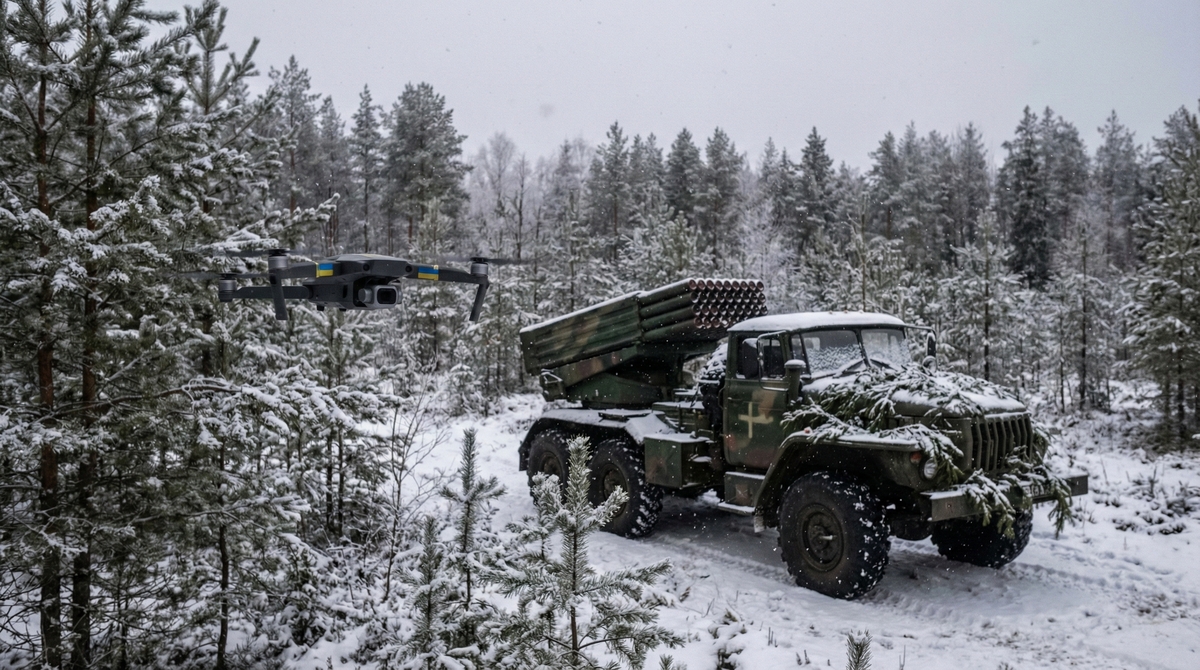
Operators from the UAV unit of the 3rd Battalion of a Ukrainian brigade successfully detected and struck a Russian BM-21 Grad multiple launch rocket system (MLRS) that had been concealed in a wooded area. Footage of the operation was released on the brigade’s channel on January 30, offering a clear example of how modern drone warfare is compressing the time between spotting a target and destroying it.
A launcher hidden deep in the rear
According to the unit, the BM-21 Grad was positioned inside a forested area, deeper in the rear than where such systems are typically expected to operate openly. The intent behind the placement was straightforward: reduce the chance of being found by Ukrainian reconnaissance and limit exposure to counter-battery fire and drone strikes.
This kind of concealment is a common battlefield tactic. Forest cover can break up the outline of vehicles, reduce visibility from above, and provide a sense of protection—especially for high-value systems that are vulnerable when stationary. For rocket artillery like the Grad, which often fires and relocates, a well-chosen hiding spot can also serve as a staging point between launches.
Detection, confirmation, and a fast strike
In this case, concealment wasn’t enough. Ukrainian aerial reconnaissance drones detected the launcher’s position despite the forest cover. Once the target was confirmed, an attack drone was dispatched quickly—showcasing what Ukrainian units increasingly emphasize: tight sensor-to-shooter coordination.
The strike drone hit the Grad system, while a separate Ukrainian UAV recorded the impact and confirmed the damage. This two-drone method—one platform for the strike and another for battle damage assessment—has become a standard approach in Ukrainian precision drone operations. It ensures the strike is documented, the result is verified, and follow-up action can be taken if needed.
Why a single Grad matters
The BM-21 Grad remains one of the most widely used Russian rocket artillery systems. Designed for area saturation fire, it can deliver rapid salvos that threaten military positions and, in many cases, civilian infrastructure as well. Even a temporary loss of a Grad launcher can reduce the intensity of rocket attacks in an area, disrupt planned fire missions, and force Russian units to spend more time relocating, hiding, and protecting their launchers.
More broadly, the strike illustrates a growing battlefield reality: hiding is no longer a guarantee of safety when reconnaissance drones can search systematically and strike drones can arrive minutes later. Forest camouflage may complicate targeting—but it doesn’t prevent it when surveillance is persistent and response is fast.