Portugal’s €82 Million Push to Keep Its Leopard 2A6s Ready for NATO’s Eastern Flank
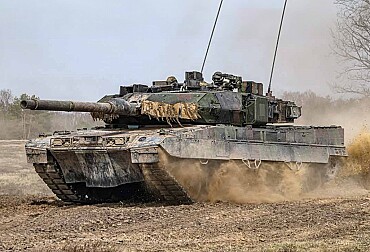
On 22 October 2026 the Portuguese Council of Ministers approved Resolution 210/2026, published days later in the Diário da República, authorising the Army to commit up to €82.35 million plus VAT for the mid-life upgrade of its Leopard 2A6 main battle tanks through 2031. The decision formalises a project long delayed by successive revisions of the Military Programming Law and now made urgent by obsolescence, spare-parts shortages and the demands of high-intensity collective defence. Portugal acquired 37 second-hand Leopard 2A6s from the Netherlands between 2008 and 2009 for roughly €70–80 million, plus a driver trainer and a hull for spares. In March 2023 it donated three of them to Ukraine; the remaining fleet stands at 34. In return, Germany has funded the industrial maintenance of 14 vehicles by KNDS Deutschland, an arrangement signed via letter of intent in late 2023. A platoon of Portuguese Leopards has also been integrated into the Spanish-led NATO enhanced Forward Presence battlegroup in Slovakia since 2024.
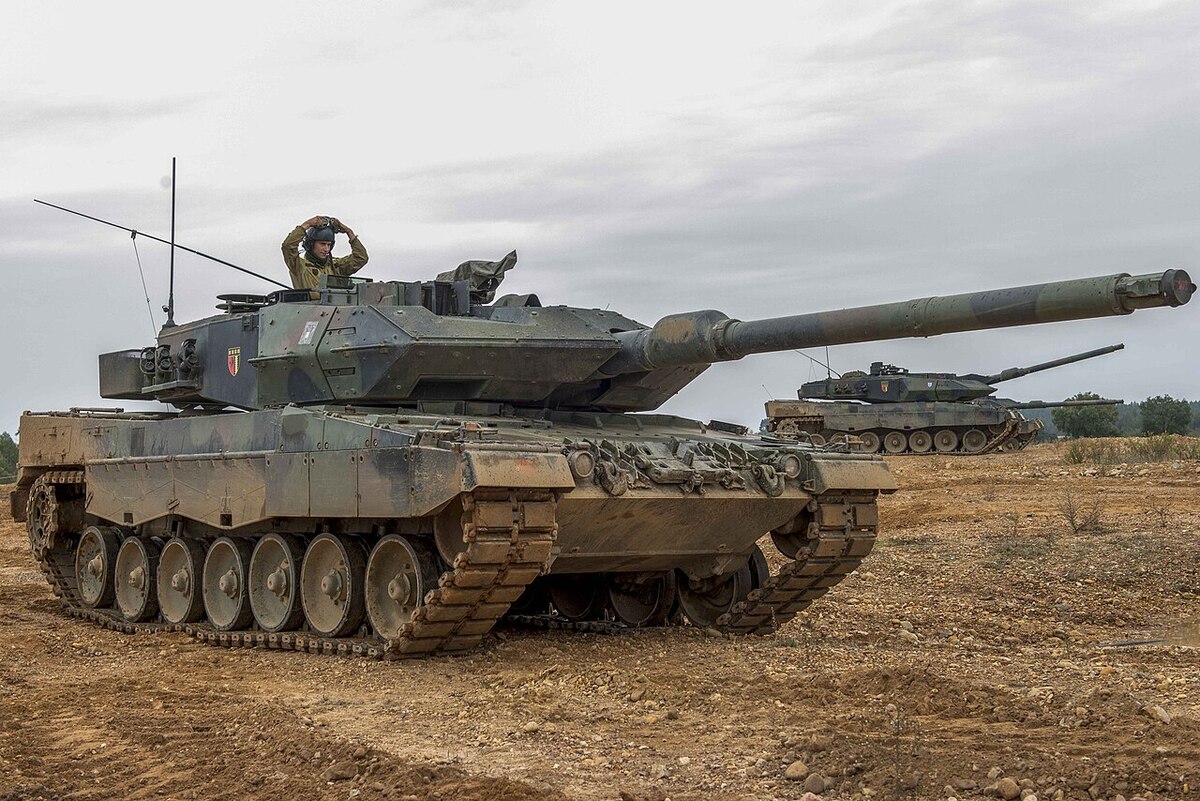
The aims of the programme are pragmatic rather than revolutionary. Official language stresses general overhaul, management of obsolescent components, restoration of operational availability and the creation of a supporting logistics package that includes diagnostic tools, special equipment, technical manuals and crew and maintainer training. The resolution explicitly contemplates an option to extend the work to the entire fleet once additional funding is authorised. Lisbon joined the NATO Support and Procurement Agency’s Leopard Project under the Land Combat Vehicles Support Partnership in January 2026 precisely to gain access to qualified industrial capacity for both maintenance and the mid-life upgrade.
Earlier planning documents had identified a prioritised set of measures: replacement of analogue electric gun-and-turret drive and fire-control components with digital equivalents, installation of a dedicated turret cooling system, ultra-capacitors to protect electronics from voltage spikes, an auxiliary power unit so that the turret can operate with the main engine shut down, an upgraded fire-suppression system extended to the crew compartment, Hensoldt Spectus thermal driver sights front and rear, and replacement of the gunner’s EMES 15 A2 and commander’s PERI R17 A2 with the more modern A3 ATTICA variants.
New communications and a battlefield-management system are also expected. Active protection, additional armour packages and the longer L/55A1 gun have been studied in the past but do not appear in the current authorised scope. The net effect is a tank whose sensors, power management and digital backbone move closer to the standard of a Spanish Leopard 2E or early German A7, while its protection and main armament remain essentially those of the original A6.
Funding combines €56.85 million already programmed in the Military Programming Law for 2026–2031 with an additional €25.5 million drawn from the Army’s 2026 budget, producing the €82.35 million ceiling. Annual authorisations are front-loaded and back-loaded: €26 million in 2026, zero in 2027 and 2028, €14.2 million in 2029, €24.9 million in 2030 and €17.25 million in 2031, with unused balances allowed to carry forward.
The schedule therefore runs in parallel with the broader 2026–2031 defence programming cycle and is designed to restore a larger number of vehicles to operational readiness as quickly as possible while the industrial work proceeds. Exact unit costs will depend on the final contract and the number of tanks actually put through the full package, but the ceiling equates to roughly €2.4 million per vehicle if the entire remaining fleet is covered – an order of magnitude below the cost of a new-build Leopard 2A8.
Capabilities gained centre on availability, situational awareness and sustained operations rather than a leap in lethality or survivability. Digital turret drives and fire control reduce failure rates that have plagued the analogue E-WNA system; improved optics and driver vision enhance target acquisition and manoeuvre in poor visibility; the auxiliary power unit and better electrical architecture allow longer silent watch and more reliable electronics; and the logistics package ensures that Portuguese maintainers can keep the fleet serviceable without constant reliance on foreign industry. In NATO terms the upgraded tanks will remain credible contributors to high-intensity collective defence and to the Alliance’s eastern deterrence posture, even if they will not match the protection levels of the newest German vehicles.

Comparison with the Bundeswehr’s parallel programmes highlights the difference in scale and ambition. Germany has been systematically elevating the bulk of its fleet toward A7V and A6A3/A6MA3 standards while simultaneously ordering 123 new-build Leopard 2A8s, the first of which rolled out in Munich in November 2025. Those A8s incorporate Trophy active protection as standard, improved armour, enhanced power generation and other incremental advances; deliveries are expected between 2027 and 2030 and will raise the German tank fleet from its post-donation low of around 310 toward 430 or more.
The A7V conversion alone of 104 vehicles carried a price tag of approximately €778 million; the A8 programme is measured in billions. Portugal, by contrast, is performing a focused mid-life intervention on a small second-hand fleet acquired nearly two decades ago. It is buying operational endurance and interoperability at a fraction of the unit cost of the German new builds, relying on NATO common logistics channels and on German industrial support already demonstrated by the KNDS refurbishment of 14 vehicles. Both armies face the same fundamental problem – the Leopard 2 must remain relevant for another twenty to thirty years – but they solve it with resources proportionate to their strategic weight and industrial base.
The Portuguese decision is therefore best understood as a necessary act of fleet preservation rather than a transformation. By authorising the expenditure now, Lisbon ensures that its modest armoured force can continue to meet Alliance commitments while longer-term European tank programmes mature. The success of the programme will be measured less by the sophistication of any single subsystem than by the number of Leopard 2A6s that return to full operational status and stay there through the 2030s.