
Russia’s Biggest Weakness Is Now on Full Display
Ukraine’s drone war is no longer just a supporting element of the conflict. It is becoming one of the defining forces shaping the battlefield, the tempo of operations, and Russia’s ability to sustain the war. Over the past week, that shift became impossible to ignore.
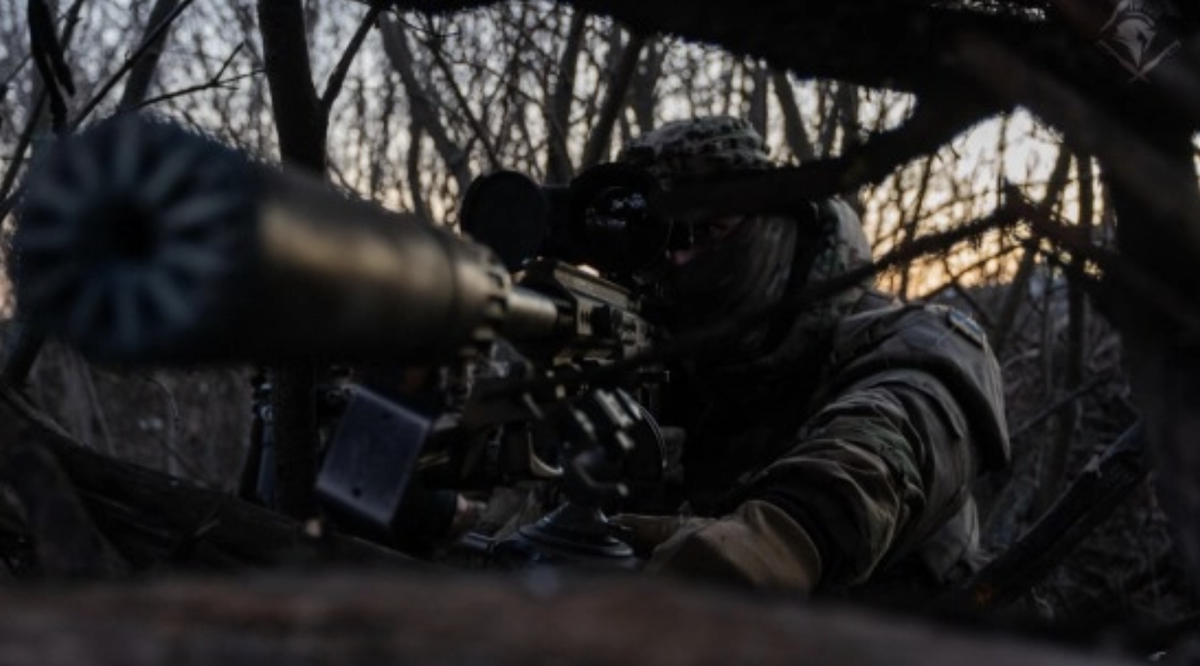
The clearest development is Ukraine’s growing drone advantage at the tactical level. Russian sources have now broadly confirmed what Ukrainian reports had been suggesting for weeks: Ukrainian drones are operating in greater numbers, with improved quality, and with deeper reach into Russian rear areas. Russian complaints point to several troubling trends for Moscow — Ukrainian drones are reportedly flying roughly twice as deep behind the line as before, their numbers have doubled, many remain silent until the moment of attack, they are often not detected by Russian electronic systems, and they appear increasingly resistant to jamming.

That combination matters. It means Ukraine is no longer simply using drones to harass or observe. It is using them to shape the battlefield, disrupt logistics, target command structures, and pressure rear-area positions that were once relatively protected. In modern terms, drone formations are being treated much like artillery brigades were in the 20th century: not as an add-on, but as a central combat arm.
Along the front, the overall picture remains relatively stable, but with signs of localized Ukrainian initiative. In the Pokrovsk sector, Ukrainian forces reportedly cleared Novopidhorodne in house-to-house combat and were later said to have entered Nikiforivka on the Kramatorsk axis. Additional Ukrainian movement was reported near Fedeivka Druha and Lipivka, along the M03 route toward Sloviansk. Russia, meanwhile, claimed the capture of Berestok in the Kostyantynivka sector. The week’s reporting suggests marginal movement on both sides, though the balance of visible activity appears to favor Ukraine.
In the Kharkiv sector, Ukrainian troops captured the village of Ambarne, with the 129th Mechanized Brigade receiving credit. At the same time, reports indicated that Russia’s 71st Motorized Rifle Division had been transferred to Vovchansk, though it remains unclear whether that move is intended to increase pressure or reinforce against further Ukrainian gains.
In the Kupyansk sector, Russian sources claimed progress into Pischane. At the same time, reports emerged that the 9th Unmanned Systems Forces Brigade had deployed there. The symbolism of a frontline visit by Commander-in-Chief Oleksandr Syrskyi accompanied by Robert Brovdi, commander of the Unmanned Systems Forces troops, is hard to miss. It reflects a doctrinal shift: drones are not being treated as niche assets, but as a decisive battlefield instrument integrated directly into command decisions about resources and future fighting.

There were also reports of further Ukrainian gains around Stepanohirsk in the Zaporizhzhia sector, while the 5th Assault Brigade was reportedly transferred near Huliaipole. Taken together, these developments lend some weight to Syrskyi’s recent claim that Ukraine has wrested the initiative away from Russia and is increasingly dictating the pace of combat, even if that remains difficult to prove conclusively across the entire front.
But the front line alone does not capture the scale of what Ukraine is now doing. The larger story is the systematic dismantling of Russian war-making capacity through sustained, complex, multidomain strike operations. This is not about one dramatic attack. It is about repeated pressure, week after week, on the infrastructure, ports, ships, fuel systems, and logistics arteries that Russia needs to keep fighting.
That pattern reached a striking peak on Sunday, when Ukraine launched at least 238 drones — and possibly more than 250 — in one of the largest combined air and sea attacks of the war.
The centerpiece of that operation appears to have been Novorossiysk, one of Russia’s most important oil-export hubs on the Black Sea. The apparent objective was to knock the Shekharsis oil loading terminal offline, and by the following morning that goal appeared to have been achieved. The effect was potentially enormous. With previous damage at Baltic export terminals still unresolved and Novorossiysk burning, roughly 70 percent of Russia’s seaborne crude export capacity was effectively out of action, leaving Pacific ports as the main remaining outlet.
That is not a symbolic strike. It is a direct hit on a strategic pillar of the Russian state. Oil exports fund the budget, the military, and the broader wartime system. Even if Russia repairs the damage, the deeper message is clear: if Ukraine can disable that much export capacity once, it can likely do it again.
The same attack also appears to have reached the Russian frigate Admiral Makarov, a vessel capable of carrying eight cruise missiles and regularly used in strikes on Ukraine. Video suggests that at least one drone reached the ship’s bridge area, though the footage stops short of definitive confirmation. Even without certainty on the extent of the damage, the incident underscores a more important reality: large Russian warships in the Black Sea are running out of safe harbors. After Ukraine made Sevastopol increasingly untenable, ships withdrew to Novorossiysk. But the Black Sea is finite, and even that fallback sanctuary is now clearly vulnerable.
At nearly the same time, another remarkable operation unfolded around the Sivash offshore oil rig, about 80 kilometers from Crimea. This platform, no longer used for drilling, has reportedly been repurposed by Russian forces for air defense systems, early warning equipment, and small patrol boats. Ukrainian sea drones attacked the rig directly, reportedly detonating against its support legs while also launching FPV drones against its upper structures. In practical terms, Ukraine appears to be operating naval drone platforms as improvised drone carriers — a striking example of wartime innovation.
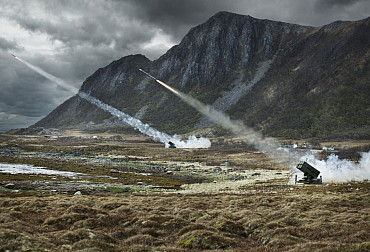
According to Ukrainian claims, the attack was coordinated with the launch of two Swedish anti-ship missiles, RBS-15 Mk.III/IV, also known as Gungnir or Odin’s Spear, from shore positions. Video showed missile launches and visible explosions on the platform, though full confirmation of the sequence remains pending. Even so, the operation illustrates a growing Ukrainian capacity to combine unmanned naval systems, airborne drones, and missile strikes in a single synchronized attack.
Sunday brought yet another blow in the Kerch Strait area, where a strike hit the Volgo-Balt 138, a 3,000-ton cargo vessel commonly used in grain transport between smaller ports and larger export hubs. Ukraine regards such shipping as a legitimate target in cases where grain from occupied Ukrainian territory is being moved through Russian-controlled channels. The strike and resulting fire killed three crew members and injured nine others. Efforts to tow the drifting vessel back to port failed, and it later sank.
Taken together, the events of that single day amounted to a sweeping demonstration of Ukrainian operational sophistication: attacks on oil infrastructure, naval assets, offshore military platforms, and shipping, all carried out in a tightly timed, multidimensional campaign.
And the pressure did not stop there.
On Tuesday, Ukrainian forces carried out further strikes on Ust-Luga in the Baltic, bringing the number of attacks against that facility to six within ten days. On Wednesday, Ukrainian military intelligence special forces used anti-ship drones to strike the Slavyanin, described as the last railcar-capable ferry in the Kerch region. Ukrainian sources said it was sunk; Russian military bloggers downplayed the incident as partial damage. Either way, the vessel is critically important. If the Kerch Bridge were put out of action, ships like the Slavyanin would be essential for transporting heavy cargo from mainland Russia into Crimea.
That point goes to the heart of the broader strategic picture. Russia’s hold on Crimea depends on fragile logistics. The overland route through occupied southern Ukraine lies well within range of Ukrainian drones and has repeatedly come under attack, especially along the rail line. Maritime transport is therefore not just useful for Russia — it is vital.
Ukraine also spent the week targeting the systems behind Russian strike capability itself. In what could be called “shooting the archer,” Ukrainian forces reportedly hit a missile frigate, a Shahed launch operation in Crimea, and another Bastion coastal missile launcher near Sofiievka. These attacks are significant because they aim not only to blunt Russia’s current attacks, but to reduce its future ability to launch them.
The larger conclusion is difficult to avoid. Ukraine is not merely defending. It is steadily eroding Russia’s capacity to wage war through pressure on logistics, exports, naval movement, missile platforms, and rear-area systems. The process is not instantaneous, and it does not produce a dramatic front-line collapse overnight. But it is cumulative, methodical, and increasingly sophisticated.
This is what modern war looks like when a smaller state finds a way to out-innovate a larger one. Drones are no longer just tools of reconnaissance or tactical harassment. In Ukrainian hands, they are becoming the backbone of a broader strategy to make Russian force projection more expensive, more fragile, and less sustainable.
If this pace holds, the real story will not be whether drones dominated one week. It will be that they helped redefine how one country dismantled another’s war machine piece by piece.