The War in Ukraine Has Changed the Rules of Modern Conflict
The war in Ukraine has shown that even in the age of cutting-edge technology, the fundamental principles of waging armed conflict have not disappeared. It is not only the quality of individual weapons systems that matters, but above all the ability of states to sustain their military efforts over the long term, to produce and replenish the necessary equipment, and to adapt to changing conditions on the battlefield.
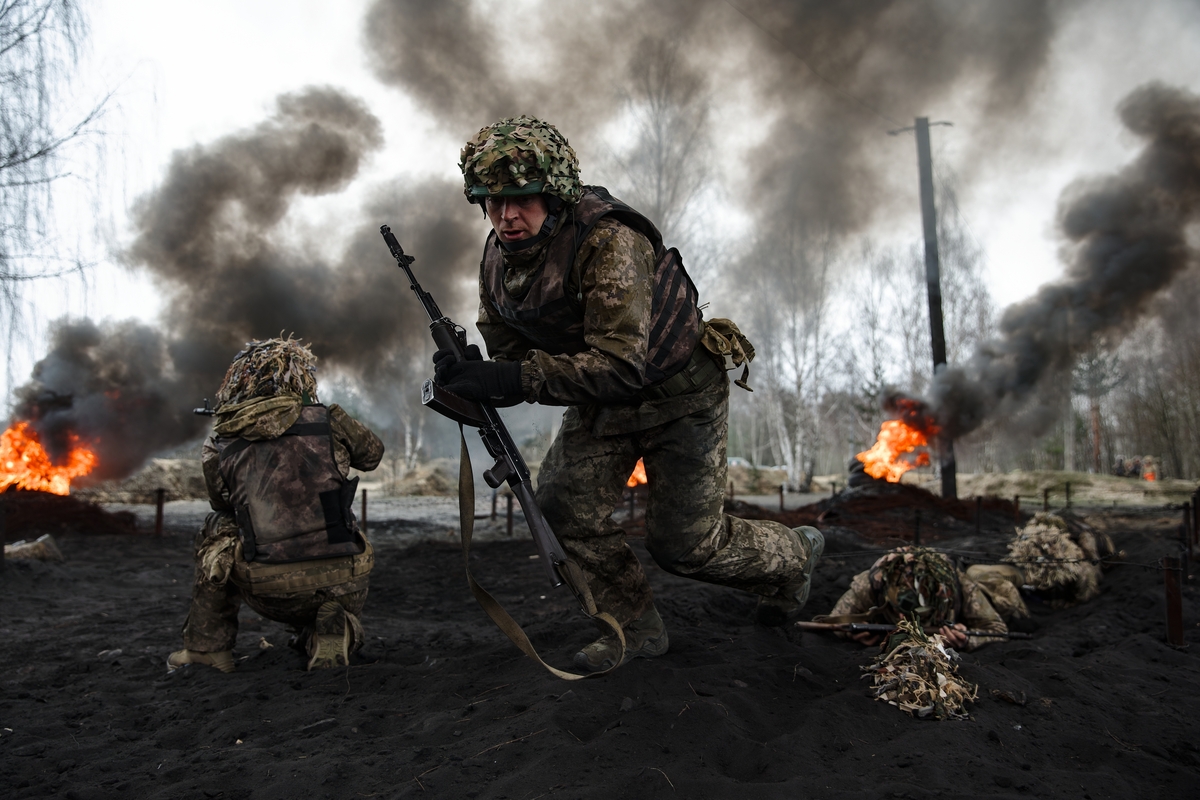
It is essential to assess the course of the conflict realistically, because war is not merely a series of battles, but above all a clash of the capabilities of entire warring states. In the fall of 2023, when Ukraine’s first counteroffensive was underway, many succumbed to the optimistic sentiment that the Ukrainians would be in Moscow before long. “Here – but this was true of the rest of Europe as well – the media primarily reported on Ukrainian successes and Russian failures. And that created a false reality. We must view the war realistically. We cannot succumb to the notion that one side is on the verge of collapse and the other will automatically prevail. War is a much more complex process,” General Šedivý, former Chief of the General Staff of the Czech Armed Forces, repeatedly pointed out.
A realistic perspective is essential today. Ukraine has demonstrated extraordinary resilience and adaptability, but at the same time faces serious problems typical of a protracted war: the depletion of human resources, high consumption of supplies, and dependence on support from allies.
From a Failed Russian Strike to a War of Attrition
The Russian invasion in February 2022 began with the goal of quickly breaking Ukraine militarily and politically. However, this plan failed. The Ukrainian Armed Forces were able to draw on the experience they had gained since 2014, their high level of motivation, and gradual reforms based on NATO principles. The defense of Kyiv demonstrated that the Russian armed forces have significant weaknesses. Problems arose in command and coordination among the various branches of the military, as well as in logistics.
Over time, however, the nature of the conflict changed. Russia adjusted its tactics and shifted to a long-term strategy of attrition. “The war has reached a stage where the ability to endure is the decisive factor. It’s not just about a single successful operation, but about the ability to replenish forces and supplies over the long term,” says General Šedivý. This shift is crucial because the battlefield is now nearly transparent. The movements of larger units are monitored using satellites, drones, and other reconnaissance assets. Thanks to technology, the defense has gained a significant advantage, and breaking through prepared positions requires comprehensive superiority.
The Ukrainian Army is now among the most experienced military forces in Europe. Its greatest advantage lies not only in Western technology, but above all in combat experience, motivation, and the ability to respond quickly to changes. The experience gained from the conflict with Russia since 2014 has played a significant role. Ukraine has gradually managed to transform its command structure and align it with the principles used in NATO armies.
One of the most striking elements of the current war is the use of unmanned aerial vehicles. Drones have transformed the methods and effectiveness of reconnaissance, fire control, and direct attacks on targets. At the same time, however, General Šedivý points out that technology cannot be considered a substitute for traditional military capabilities. “It is not enough for the Ukrainians to simply use drones against Russian soldiers. They also need to make better use of the entire range of conventional weapon systems: artillery, armored vehicles, and other military capabilities.” This idea is one of the main lessons of the conflict. Modern warfare is not a clash between old and new technologies. It is a clash between armies that are better able to integrate new technologies into their overall systems and use them effectively.
Human Resources as a Decisive Factor
Although Ukraine has demonstrated an extraordinary capacity for defense, a protracted war is causing ever-greater problems. The greatest of these concerns human resources. Most equipment can be delivered relatively quickly or replaced with other resources. However, training high-quality soldiers and developing experienced commanders takes years. “The experience of soldiers and commanders is one of the greatest assets of any army. This cannot be replaced by a simple decision or a shipment of equipment,” General Šedivý points out. This is precisely where the difference between a short military operation and a long war becomes apparent. In a protracted conflict, a country must not only fight but also rebuild its forces.
One of the biggest mistakes in assessing the war was the hasty conclusion that, following its initial setbacks, the Russian army had lost the ability to wage a large-scale conflict. While Russia did reveal a number of weaknesses in the first phase of the invasion, it gradually managed to change its tactics. It reinforced its defensive lines, increased its use of drones, and, above all, leveraged its industrial and personnel superiority. “An adversary cannot be judged solely by the start of the war. What matters is how quickly it can learn from its mistakes and change its approach,” states General Šedivý.
Lessons for Europe and NATO
The conflict in Ukraine has highlighted the renewed importance of an industrial base and long-term preparedness for a complex and intense war. After the end of the Cold War, many European countries assumed that a large-scale conventional war in Europe was unlikely. Russia’s aggression against Ukraine has shown just how wrong that assumption was. Europe must rethink its ammunition stocks, production capacities, air defense, and its ability to sustain its own defense over the long term.
It is essential, however, that individual European nations prepare their populations for the fact that war is not a thing of the past, but that there is a real possibility it could return to Europe. This also involves preparing the population for war and ensuring they understand that a potential mobilization to defend the nation will be part of enhancing the states’ defense capabilities. In some parts of Europe, however, this will undoubtedly pose a major problem, as a large portion of their population consists of people who arrived during past waves of migration. The vast majority of them lack the sense of patriotism necessary to defend their homeland – a sentiment that was crucial to Ukraine’s defense during the initial phase of Russian aggression. “Defense is not just a matter for the military. It is the ability of the entire state to respond to a crisis,” General Šedivý points out.
The war in Ukraine has no clear end in sight yet. One thing is certain, however: it has changed the way states think about security. It has shown that modern conflict is a combination of a deep sense of patriotism, a state’s ability to transition to a war economy, the development and implementation of cutting-edge technologies, and the integration of new and traditional principles of warfare. The deciding factors will not only be who has better weapons, but above all, who can learn faster, adapt better, and endure longer.