
Ukraine Just Shut Down Russia’s Zaporizhia Push - Here’s What Really Happened
Ukraine’s Defense Intelligence has released details of what it describes as a three-month defensive operation that helped halt Russian offensive plans in the Zaporizhia direction. In a statement summarizing the preparation and conduct of the campaign, the agency says the operation was designed to disrupt Russia’s ability to mount sustained assaults and to prevent further movement toward the regional center.
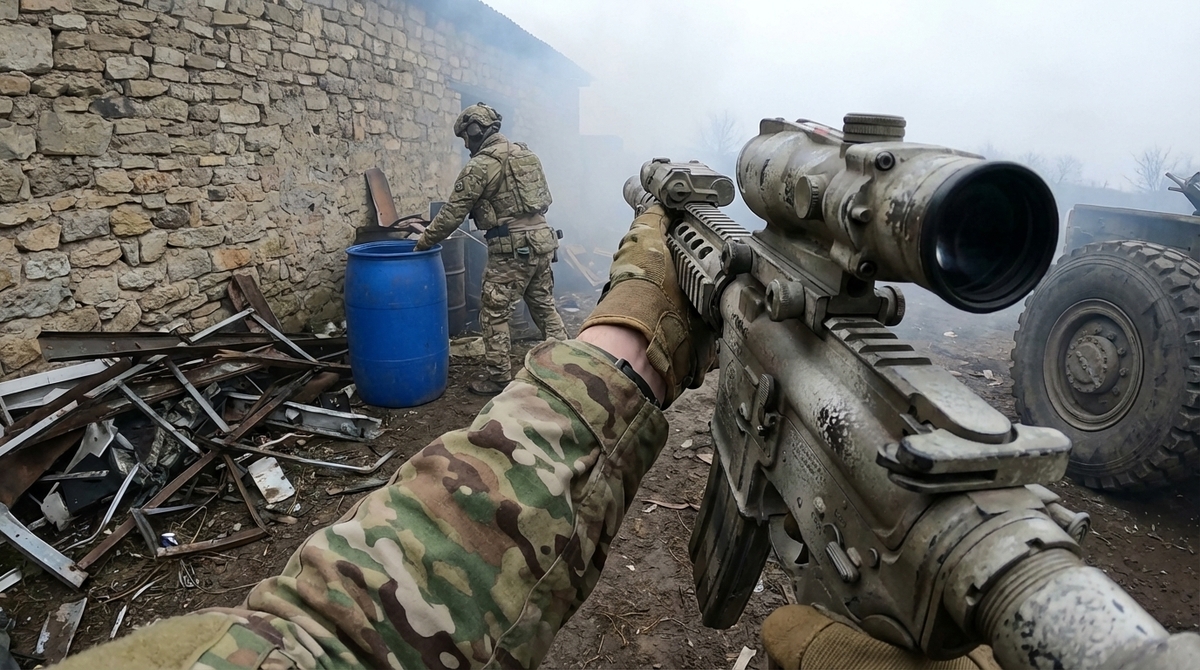
According to the Defense Intelligence of the Ministry of Defense of Ukraine, units under its command—working in cooperation with the Defense Forces of Ukraine—stopped the offensive of Russian troops in their area of responsibility. The operation was carried out over three months by fighters from the Timur Special Unit, which the agency describes as implementing a complex, multi-layered defensive effort rather than a single battle or isolated strike.
The intelligence report frames the campaign as a contest of tempo and logistics: not only resisting attacks at the line of contact, but also limiting the attacker’s ability to prepare, supply, and repeat assault actions.
Goal: Disrupt offensive plans and prevent advance
Ukraine’s Defense Intelligence says the central purpose of the operation was twofold:
- Disrupt the offensive plans of the Russian army
- Prevent Russian forces from advancing in the Zaporizhia direction toward the regional center
In the agency’s description, the operation sought to deny Russian troops the conditions they would need to convert pressure into a breakthrough—such as stable supply, reliable coordination, and the ability to move forces and ammunition along rear routes.
How the operation was conducted: drones, artillery, and “precise strikes”
During active combat operations, Ukrainian special forces used drones and artillery to conduct what the intelligence report calls precise strikes against:
- Enemy positions
- Logistical routes and rear supply lines
The report places particular emphasis on attacks against rear routes, portraying them as a lever that can reduce an opponent’s capacity even when frontline fighting remains intense. In practical terms, the logic is straightforward: if supply routes are repeatedly hit, the attacker may struggle to bring forward ammunition, evacuate wounded, rotate assault groups, or sustain repeated waves of attacks.
Ukraine’s Defense Intelligence says these strikes significantly limited the logistical capabilities of Russian forces in the area. It adds that, due to a lack of support, Russian troops were increasingly forced to abandon assault operations in this direction—suggesting that the operation aimed to make continued attacks too costly or too difficult to maintain.
Reported results: Casualties and prisoners
In its summary of outcomes, Ukraine’s Defense Intelligence reports that:
- More than 300 Russian soldiers were killed and wounded
- 39 Russian personnel were captured by Ukrainian fighters
The agency presents these figures as part of the cumulative effect of sustained combat actions over the three-month period, rather than the result of a single engagement.
Units named as participants
Ukraine’s Defense Intelligence states that the operation was carried out by units that are part of the Timur Special Unit structure, listing the following formations:
- Chimera
- Russian Volunteer Corps
- Bratstvo
- Aratta
- Siberian Battalion
- Stugna
- First Line
- 1514
- Paragon
- Belarusian Volunteer Corps
- Guardians of Darkness
- Raven group
- Art Division
- the 6th special operations detachment
By naming these groups, the statement appears intended to show the breadth of forces involved and to frame the effort as coordinated across multiple elements operating under the same operational umbrella.
Stabilizing the line: “favorable” defensive positions
Ukraine’s intelligence says the active actions of Ukrainian special forces made it possible to:
- Stabilize the defense on lines favorable to the Defense Forces
- Prevent Russian advance toward Zaporizhzhia
In military terms, “stabilizing” a line typically implies reducing the frequency or effectiveness of enemy penetrations and creating conditions where defensive positions can be held with more predictability—often by forcing the attacker to slow down, regroup, or abandon repeated attempts to push forward.
The report’s language suggests that the operation was not only about stopping immediate attacks, but also about shaping a more sustainable defensive posture—one in which Ukrainian forces could hold terrain that offered better defensive advantages.
Coordination and communications pressure: Starlink access mentioned
The statement also references prior reporting that a significant factor in Ukrainian progress was the restriction of access of Russian units to the Starlink network, which Ukraine says caused them to lose the ability to coordinate their actions effectively.
While the intelligence report does not provide additional technical detail in the facts you shared, it presents the idea as part of the broader theme of disruption: limiting an opponent’s coordination can reduce the speed and precision of assaults, complicate command and control, and make it harder to synchronize infantry movement with drones, artillery, and logistics.
Why logistics targeting matters in a “three-month operation”
One of the clearest takeaways from Ukraine’s intelligence account is that the operation was framed as a sustained campaign against the system behind assault operations, not just the assault troops themselves.
When rear routes are repeatedly struck, the effects can compound over time:
- Fewer supplies reaching forward units
- Reduced ability to mass forces for new assaults
- More pauses and interruptions in offensive planning
- Higher friction in evacuation and rotation
- Lower confidence in the reliability of support
Ukraine’s Defense Intelligence describes this as a key reason Russian troops in the area were increasingly compelled to abandon assault actions.
The bottom line in Ukraine’s account
Ukraine’s Defense Intelligence positions the three-month operation as a defensive success that combined frontline resistance with sustained pressure on logistics and coordination. In the agency’s telling, that combination helped stop Russian offensive plans in the Zaporizhia direction, stabilized the defense on more favorable lines, and prevented further advance toward Zaporizhzhia.