Ukraine Maps the Industrial Network Behind Russia’s Su-35S Fighter Jet
Ukraine’s Defense Intelligence has moved beyond tracking individual weapons on the battlefield. It is now exposing the industrial networks that keep those weapons in production.
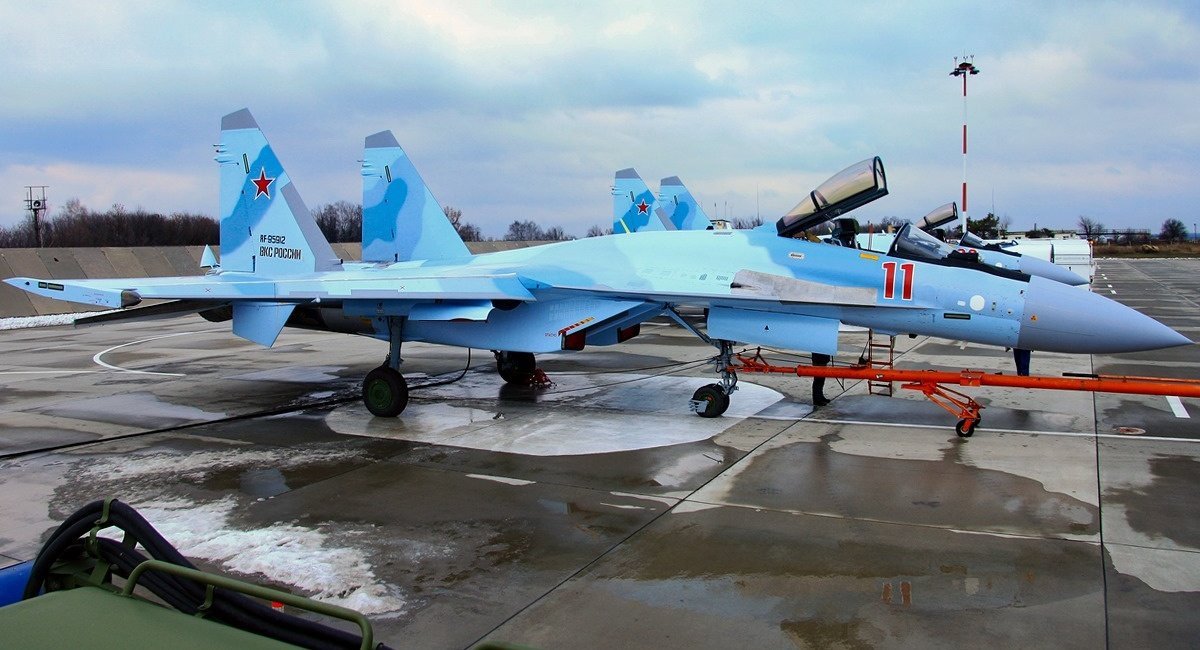
According to information published through the War&Sanctions portal and reported by Defence Express, Ukrainian intelligence has identified 79 Russian enterprises connected to the production of components for the Su-35S multirole fighter. The disclosure is accompanied by an interactive 3D model of the aircraft, allowing users to examine the fighter and the industrial chain behind its key systems.
The Su-35S is one of Russia’s most important tactical aircraft. It is used to cover Su-34 fighter-bombers, protect Russian ground forces and military facilities, intercept Ukrainian drones and cruise missiles, and challenge Ukrainian air defense systems. In other words, the aircraft is not just a symbol of Russian air power; it is an active part of Moscow’s war effort.
What Ukraine’s intelligence release makes clear is that the Su-35S is not the product of a single factory. It depends on a wide network of suppliers producing engines, fuel systems, flight-control equipment, communication and guidance systems, electronic warfare components, and aviation missiles compatible with the aircraft. This network is what allows Russia to build, maintain, repair, and modernize the fighter.
Among the companies named are PJSC Aviation Corporation Rubin, which supplies aircraft wheels, and PJSC Gidravtomatika, which produces fuel-system control units for the Su-35S. Ukrainian intelligence also listed JSC Research and Development Institute Octava, which was involved in research and development work during the aircraft’s creation.
The most politically significant part of the disclosure may be the sanctions gap. Of the 79 companies identified, 22 are reportedly not under sanctions imposed by any member of the sanctions coalition. That means parts of the industrial system supporting Russian military aviation may still have room to operate internationally, access markets, or maintain commercial links that could indirectly support defense production.
For Ukraine, publishing this information serves several purposes.
First, it increases pressure on governments to close loopholes in sanctions policy. Sanctioning one major aircraft manufacturer is not enough if dozens of suppliers remain untouched. Modern weapons are assembled from specialized components, and each supplier can become a weak point if targeted effectively.
Second, it gives policymakers a clearer map of Russia’s defense-industrial base. Sanctions are more effective when they are precise. A broad political statement against Russia’s military industry matters less than identifying the exact companies responsible for wheels, control units, electronics, fuel systems, or research work.
Third, the release turns intelligence into a public accountability tool. By publishing company names and linking them to a specific combat aircraft, Ukraine is making it harder for these enterprises to present themselves as ordinary civilian industrial firms. Their role in sustaining Russia’s military capability becomes visible.
The Su-35S case also shows why defense production is difficult to disrupt with simple measures. A fighter jet is a system of systems. It depends on metallurgy, avionics, hydraulics, electronics, software, engines, weapons integration, sensors, and maintenance infrastructure. Even if final assembly is concentrated in one place, the production chain stretches across many companies.
That complexity creates resilience for Russia, but it also creates vulnerability. Every supplier represents a possible pressure point. If sanctions, export controls, financial restrictions, and enforcement actions are synchronized across countries, they can make production slower, more expensive, and harder to sustain.
Ukraine’s message is therefore straightforward: the war is not fought only at the front line. It is also fought in factories, supply chains, procurement networks, and international compliance systems.
The publication of the Su-35S supplier network does not by itself stop Russian aircraft from flying. But it gives Ukraine’s partners a more detailed target list. If acted upon, the data could help reduce Russia’s ability to replenish and maintain advanced combat aircraft over time.
For Kyiv, closing the remaining sanctions gaps is not only about punishment. It is about limiting the industrial capacity behind Russia’s attacks and creating better conditions for long-term security.
The Su-35S is a powerful aircraft, but it is also a product of dependency. Ukraine’s latest intelligence release aims to show exactly where those dependencies are — and where international pressure can still be applied.