
Ukrainian Drone Strike Hits Fuel Infrastructure in Sochi Despite Protective Measures
Ukrainian drones struck fuel infrastructure in the Russian resort city of Sochi overnight on September 4, reportedly hitting two oil-related facilities, including Rosneft’s Adler oil depot and a Lukoil site. The attack triggered fires and renewed attention on the vulnerability of Russian fuel storage facilities, even those equipped with special protective structures.
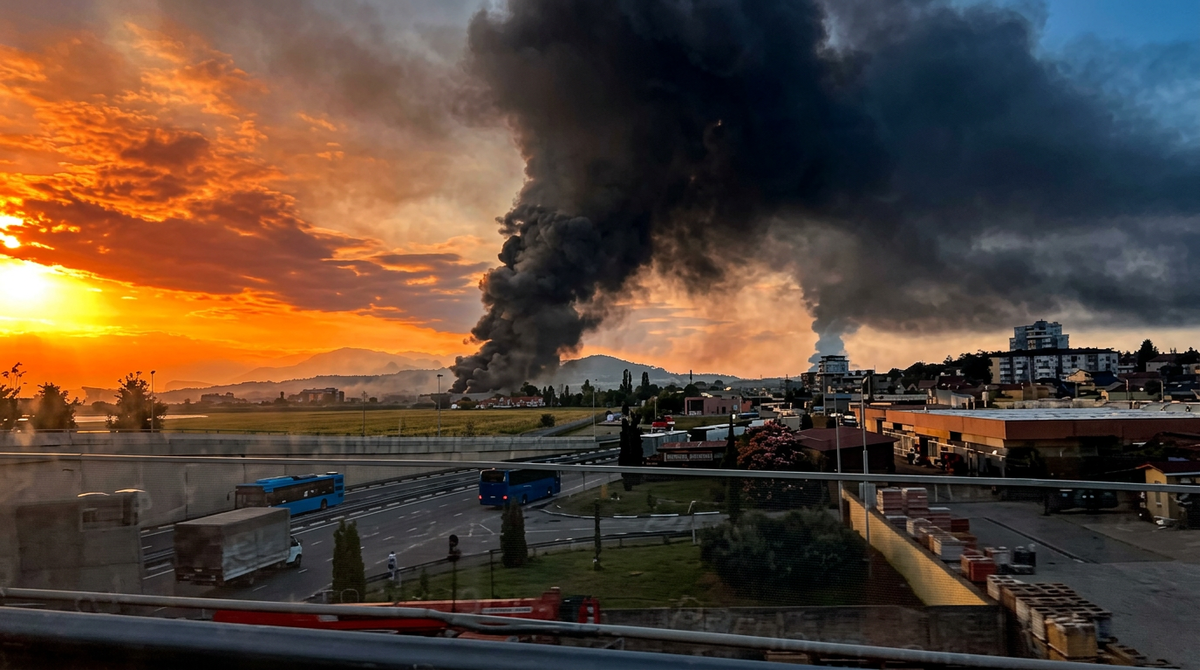
According to reports cited by ASTRA and confirmed in part by Russian regional authorities, a fire broke out at Rosneft’s Adler oil depot after the drone strike. Preliminary information indicated that there were no casualties.
The incident appears to have affected more than one site. In addition to the Adler oil depot, reports also pointed to damage at a Lukoil oil depot in Sochi. Together, the two facilities are involved in the storage and supply of petroleum products, making them part of the region’s critical fuel infrastructure.
The Lukoil facility reportedly contains 12 storage tanks with a combined capacity of around 8,400 cubic meters. Its role is connected to the storage of petroleum products, a function that makes such sites strategically important during wartime, particularly when fuel logistics are under pressure.
OSINT analysts from CyberBoroshno also identified one of the affected locations as LLC Basic Aviation Fuel Operator. This facility is located near Sochi’s Adler Airport and is responsible for receiving, storing, checking the quality of, and refueling aircraft with aviation fuel at airports across Krasnodar Krai.
The location is significant because Sochi Airport is one of Russia’s major aviation hubs. In 2024, it ranked fifth in the country by passenger traffic. Any disruption to aviation fuel infrastructure near such an airport could create logistical complications, although the full operational impact of the strike has not been publicly confirmed.
One of the most notable details of the attack is that the storage tanks at the BATO Fuel and Lubricants Complex had reportedly been protected by special structures. Images shared by analysts showed defensive coverings or shielding around the tanks. However, these measures did not prevent the facility from being damaged.
The strike highlights a broader pattern in the war: fixed fuel infrastructure remains difficult to fully protect against long-range drone attacks. Even when tanks are reinforced or covered, surrounding equipment, pipelines, loading areas, pumps, and auxiliary systems may remain exposed. As a result, a facility can still suffer disruption without every tank being directly destroyed.
The reported strike in Sochi also came alongside claims from OSINT analysts that a Russian air defense position in the Sirius area had been hit. That site may have hosted S-300 or S-400 surface-to-air missile systems, though the exact equipment present has not been independently confirmed.
Sochi has been targeted by drones several times during the war. While the city is internationally known as a resort destination and host of the 2014 Winter Olympics, the wider area also contains fuel, transport, aviation, and military infrastructure. This combination makes it more than just a symbolic target.
For Ukraine, attacks on oil depots and fuel logistics sites are part of a wider campaign aimed at weakening Russia’s ability to move, supply, and sustain military operations. Fuel is essential not only for aircraft and military vehicles, but also for rail logistics, industrial transport, and emergency reserves.
For Russia, the repeated targeting of such facilities creates a defensive dilemma. Protecting every refinery, depot, airport fuel station, and military logistics node across a vast territory is extremely difficult. The Sochi strike suggests that even facilities considered important enough to receive additional protection may remain vulnerable.
The overnight fires in Sochi are therefore more than isolated damage at two depots. They point to an ongoing contest between Ukrainian long-range strike capabilities and Russia’s attempts to harden its critical infrastructure. As drone warfare continues to evolve, the effectiveness of static protective structures will remain under scrutiny.
For now, Russian authorities have acknowledged the fire at the Adler facility, while reports continue to describe damage at multiple fuel-related sites. No casualties have been reported in the preliminary information available.
The incident underscores how energy and fuel infrastructure have become central targets in the broader war, with both military and economic consequences extending far beyond the immediate blast zone.