
Ukrainian Drones Hit Key Processing Unit at Bashneft-UNPZ Refinery in Russia’s Ufa
Ukrainian drones struck a critical processing unit at Russia’s Bashneft-UNPZ oil refinery in Ufa on the morning of August 19, damaging equipment at one of the country’s important refining sites more than 1,400 kilometers from the front line. According to Militarnyi, GEOINT analysis of footage published by the monitoring outlet Exilenova+ indicates that the strike affected the AVT-6 unit at the Bashneft-UNPZ refinery. The facility is located in the industrial zone of Ufa, the capital of Russia’s Bashkortostan region.
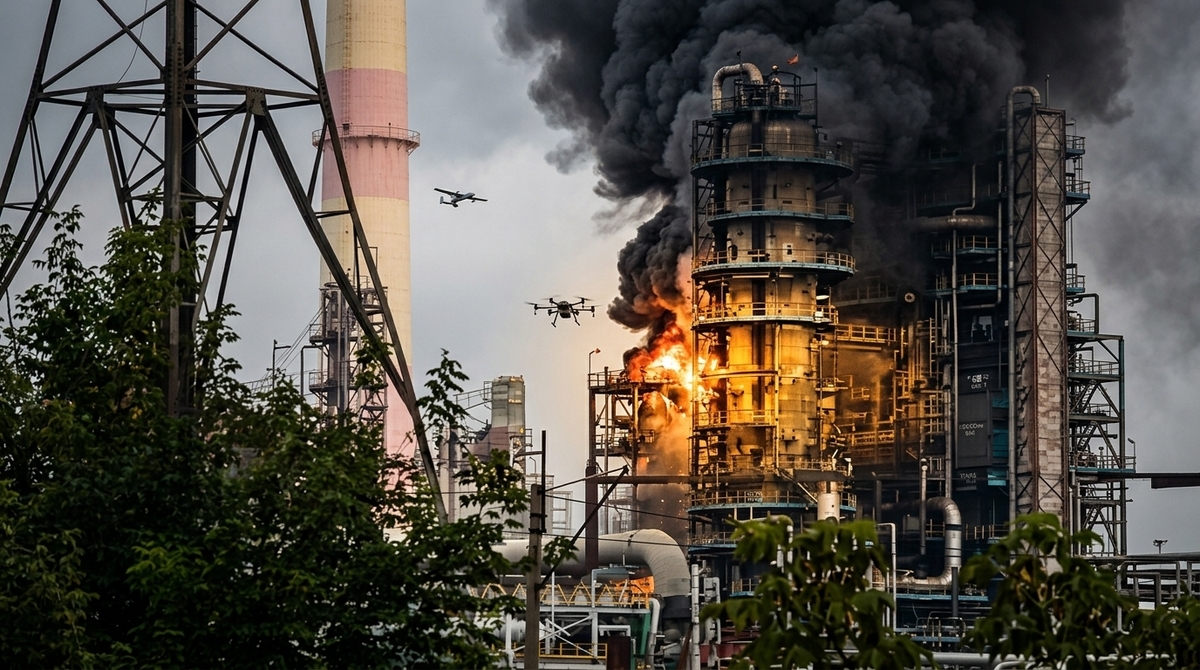
The head of Bashkortostan, Radiy Khabirov, confirmed that a fire broke out at the site after a Ukrainian drone attack. He said the affected unit had been undergoing maintenance at the time of the incident.A drone threat alert was declared in Bashkortostan shortly after 4:30 a.m. and remained in effect until 7:40 a.m. Local residents reported explosions and the activity of Russian air defense systems on social media.

The reported target, the ELOU-AVT-6 unit, is one of the refinery’s key crude-oil primary processing installations. It is used for desalting crude oil and separating it into initial fractions during the first stage of refining. These fractions include gasoline, kerosene, diesel fuel and fuel oil, which are then sent for further processing to produce finished petroleum products.
The unit’s annual capacity exceeds 6 million tons of crude oil, making it a major component of the Bashneft-UNPZ refining process. Damage to such infrastructure can disrupt not only immediate operations but also downstream production, since secondary processing units depend on the output of primary refining. This was not the first reported drone-related incident at the same refinery. On August 2, a fire was also reported in the area of the same unit following a Ukrainian drone attack.
Bashneft-UNPZ is the oldest of three oil refineries in Ufa. The other two are Bashneft-Novoil and Bashneft-Ufaneftekhim. All three facilities belong to Rosneft and together form one of Russia’s largest oil-refining hubs, with a combined crude-processing capacity of 23.5 million tons per year. The Bashneft-UNPZ refinery produces Euro-4 and Euro-5 automotive fuels, jet fuel, bitumen and petrochemical feedstocks. Its output serves both Russia’s domestic market and military needs, including fuel and lubricants.
The attack fits into a broader Ukrainian campaign targeting Russian energy and logistics infrastructure deep inside the country. By striking refineries, storage sites and fuel-related facilities far from the battlefield, Ukraine aims to increase pressure on Russia’s war-supporting economy and complicate the supply of fuel to military and industrial consumers. The distance of the Ufa refinery from the front line highlights the expanding operational reach of Ukrainian long-range drones. Bashkortostan lies deep inside Russian territory, and a successful strike there demonstrates the vulnerability of critical infrastructure even in regions previously considered far removed from the direct effects of the war.
While the full extent of the damage remains unclear, the reported impact on the AVT-6 unit is significant because primary refining installations are central to refinery operations. If repairs take time, the incident could temporarily reduce the refinery’s ability to process crude oil and affect production of key fuel products. For Russia, repeated attacks on oil-refining infrastructure create a growing defensive challenge. Protecting refineries spread across vast territory requires air defense coverage, detection systems and rapid response capabilities far beyond the front-line zone. For Ukraine, such strikes offer a way to target Russia’s fuel supply chain without directly engaging heavily defended military formations.
The August 19 strike on Bashneft-UNPZ therefore carries both practical and symbolic weight. Practically, it damaged a major refining unit with multi-million-ton annual capacity. Symbolically, it showed that Russia’s energy infrastructure remains exposed even deep in the interior, as Ukraine continues to develop and employ long-range unmanned systems.