
Germany Rethinks Its Drone Wingman Plan as Europe’s Race for Uncrewed Airpower Heats Up
Germany’s plan to become Europe’s early leader in uncrewed “loyal wingman” aircraft has taken a sharp turn. According to Breaking Defense, the German Ministry of Defence has formally informed Boeing that Berlin will not directly procure the company’s MQ-28 Ghost Bat drone wingman. The decision marks a significant change in Germany’s approach to acquiring Collaborative Combat Aircraft, or CCA — advanced uncrewed aircraft designed to fly alongside crewed fighter jets and carry out missions such as strikes, surveillance, electronic warfare or riskier operations where sending a pilot would be more dangerous.
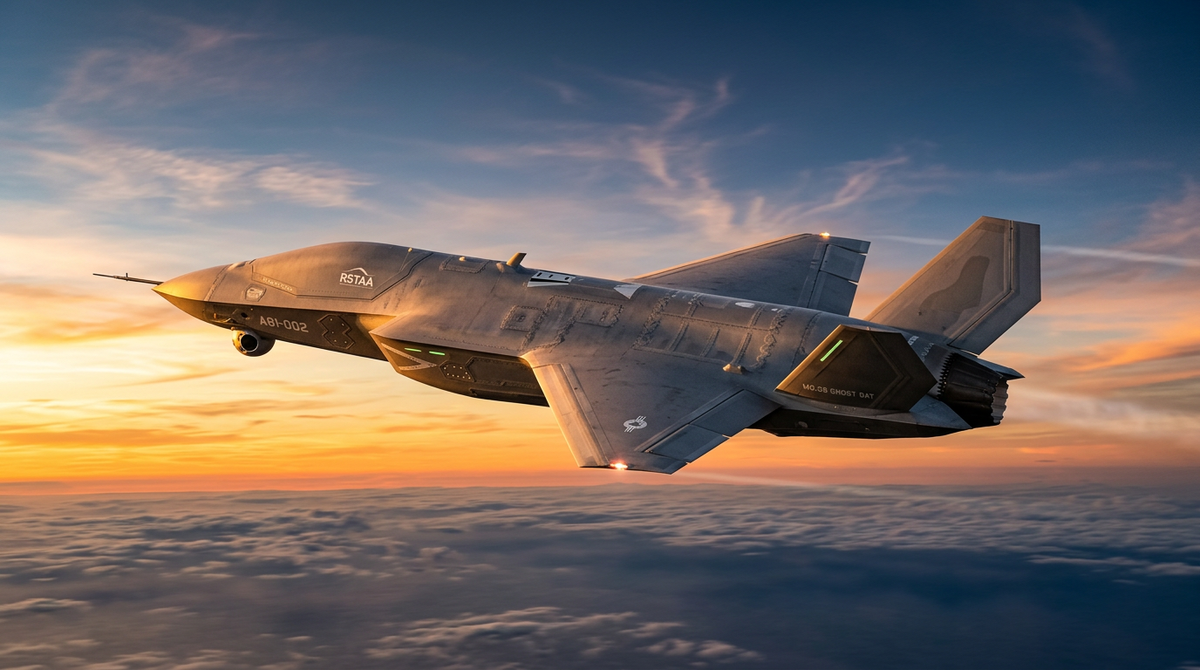
For Boeing, the decision is a setback. For Germany, it suggests something larger: Berlin may be moving away from a fast-track purchase and toward a wider competition for the future of its combat airpower.
Germany had previously set an ambitious target to field a CCA capability by 2029. If achieved, that would likely make it the first European country to reach such a milestone. But that timeline now appears uncertain. According to Politico, Germany may wait until the early 2030s before the capability enters service, with aircraft testing expected to begin in 2027.
That delay opens the door for other manufacturers — and changes the shape of the race.
Boeing’s Ghost Bat loses its inside track
The MQ-28 Ghost Bat has been one of the most visible drone wingman concepts in the Western defense market. Developed by Boeing in Australia, the aircraft is designed to operate with crewed platforms and extend the reach, survivability and flexibility of air forces.
But Germany’s latest move means the Ghost Bat will not simply be bought directly by Berlin. A Boeing spokesperson told Breaking Defense that the German Ministry of Defence had informed the company of the decision, while adding that Boeing “stands ready to support” Germany on next steps.
The German Ministry of Defence did not explain the specific reason for ending the direct acquisition plan. In a statement to Breaking Defense, a spokesperson said that, as a matter of principle, the ministry cannot provide information on potential procurement projects because of public contracting rules and the requirement that such matters first be addressed by parliament.
In other words, Germany is keeping the official explanation tightly controlled. But the practical meaning is clear: the race is no longer Boeing’s to lose.
A bigger competition is forming
By stepping back from a direct Ghost Bat purchase, Germany is effectively giving other contenders more room to compete.
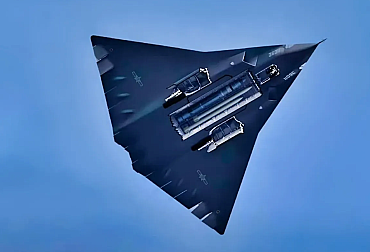
One of the most notable is Helsing, the German defense technology company pitching the CA-1 Europa. Helsing says the aircraft is expected to be ready for operations by 2029, directly matching Germany’s original target.
Another major contender is the U740-Valkyrie, developed under a partnership between Airbus and US manufacturer Kratos. Airbus announced the first flight of the wingman drone this week and said the milestone shows the team is on track to deliver a combat-ready CCA by 2029 for Germany and other European armed forces.
General Atomics Aeronautical Systems could also enter the contest with a system from its Gambit family. The company has previously said it has spoken with Germany many times about what it can offer in the CCA space.
This means Germany’s decision is not necessarily a rejection of drone wingmen as a concept. It looks more like a reset — one that could allow Berlin to compare American, European and hybrid industrial options before committing to a long-term program.
Why Germany’s decision matters
The CCA question is not just about buying another aircraft. It is about how Germany expects to fight in the future.
Modern air forces are under growing pressure from advanced air defenses, long-range missiles, electronic warfare and increasingly contested airspace. In that environment, crewed fighters alone may not be enough. Uncrewed wingmen can act as force multipliers: they can fly ahead, absorb risk, carry sensors or weapons, and complicate an enemy’s defensive planning.
For Germany, this matters especially because its future combat aviation plans are already tied to major programs, alliance obligations and European industrial politics. A CCA capability could help bridge the gap between today’s fighter fleets and next-generation systems.
But choosing the right path is difficult. A direct purchase of Boeing’s MQ-28 might have offered speed and access to a mature concept. A broader competition may offer more industrial benefits, more European participation and potentially better alignment with Germany’s long-term defense strategy — but it also risks delay.
That is the trade-off now facing Berlin: move quickly with an existing solution, or take more time to shape a capability around German and European requirements.
Europe wants autonomy, but procurement is still complicated
Germany’s shift also reflects a wider European defense dilemma.
European militaries increasingly agree that uncrewed systems, artificial intelligence and autonomous teaming will be central to future warfare. The war in Ukraine has made that point impossible to ignore. Drones are no longer niche tools; they are now central to reconnaissance, targeting, strike missions and battlefield survival.
But turning that lesson into major procurement programs is far more complicated. Governments must balance military urgency, domestic industry, alliance interoperability, budget pressure and parliamentary oversight.
That is why Germany’s CCA decision is being watched closely. If Berlin moves too slowly, it risks falling behind at a time when autonomy is advancing quickly. If it moves too fast, it may lock itself into a system that does not fully match its future needs.
The 2027 test phase could therefore become decisive. It may give Boeing another chance to compete, while also giving Helsing, Airbus-Kratos and potentially General Atomics a path into one of Europe’s most important future air combat programs.
Boeing is not out — but the field has changed
Although Germany has stepped away from a direct MQ-28 procurement, Boeing is not necessarily out of the picture. The company’s statement that it remains ready to support Germany suggests it may still compete if Berlin moves into a formal selection process.
But the optics have changed. Instead of being the apparent frontrunner in a direct acquisition, Boeing now faces a more open and politically sensitive contest.
That matters because CCA programs are not just about aircraft performance. They are also about production location, technology sharing, software control, sustainment, sovereignty and the ability to adapt systems over time. European governments increasingly want more than imported platforms; they want industrial participation and strategic control.
For a country like Germany, those questions may be just as important as range, payload or speed.
A pause that could reshape Europe’s drone wingman market
Germany’s decision may look like a procurement adjustment, but it could have wider consequences. The country’s original 2029 target positioned it as a potential European leader in operational drone wingmen. If that target slips into the early 2030s, the entire competitive landscape could shift.
Helsing will try to prove that a European software-driven defense company can deliver a serious combat aircraft on schedule. Airbus and Kratos will use the U740-Valkyrie’s first flight as evidence that their partnership is already moving. General Atomics may see an opening for its Gambit family. Boeing will have to show why the Ghost Bat remains the right answer despite Germany’s change of course.
The result is a more crowded, more uncertain and potentially more innovative race.
For now, Germany has not abandoned the future of uncrewed combat aviation. It has simply decided not to take the most direct route toward it.
That choice may delay the arrival of its first CCA capability. But it could also shape one of the most important defense competitions in Europe — a contest over who builds the aircraft that will fly beside the fighters of the future.