
Kaliningrad Is Not a Local Problem - It Is a European Security Test
For years, Kaliningrad has been discussed mainly through one narrow lens: the Suwałki Gap. This strip of territory, roughly 100 kilometers wide, links Poland and Lithuania while separating Russia’s Kaliningrad exclave from Belarus. In NATO planning, it has long been treated as one of Europe’s most vulnerable corridors. If Russia ever tried to cut it, the Baltic states could be isolated from the rest of the alliance.
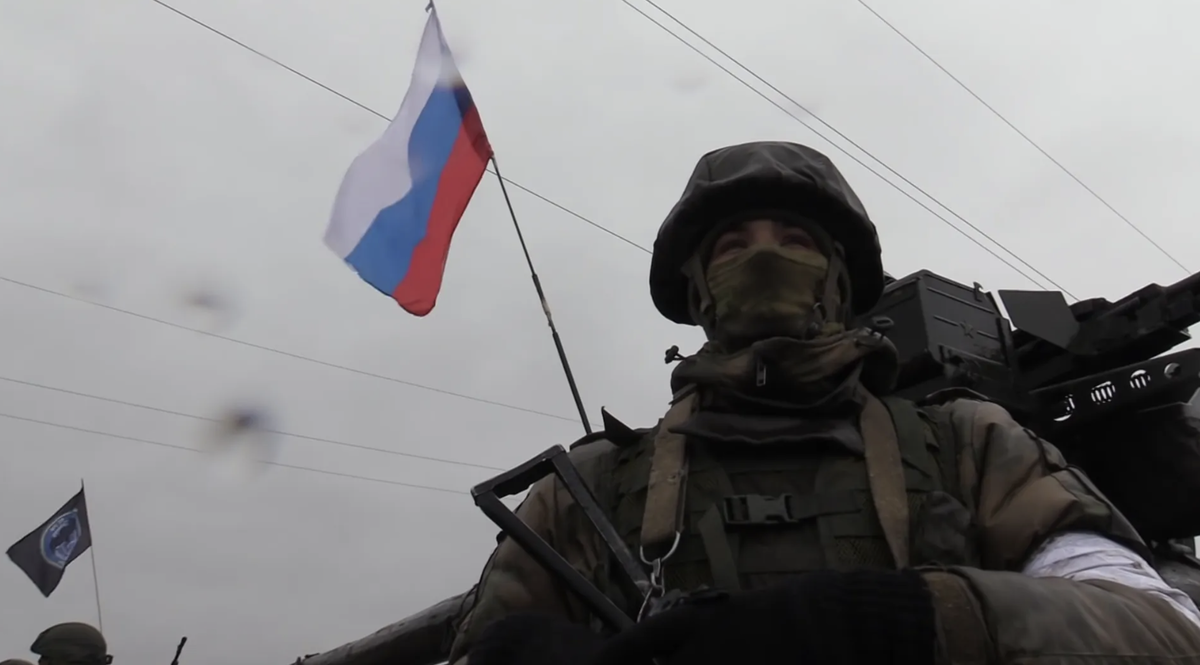
That risk remains serious. But focusing only on the Suwałki Gap misses the larger point. Kaliningrad is not just a dagger pointed at Poland and the Baltics. It is a forward military platform from which Russia can threaten a much wider part of Europe.

Modern war has changed the geography of danger. The war in Ukraine has shown that front lines no longer define where destruction happens. Drones, ballistic missiles and long-range precision weapons can strike cities, power stations, ports, rail hubs and communication networks far from the battlefield. Kyiv has endured repeated missile and drone attacks despite being hundreds of kilometers from many Russian launch areas. The lesson for NATO is obvious: distance is no longer the protection it once was.
That makes Kaliningrad strategically important far beyond the Baltic region.
The exclave sits between Poland and Lithuania, separated from mainland Russia but heavily militarized. It hosts missile systems, air-defense batteries, coastal defense assets and Russia’s Baltic Fleet. In military terms, it functions like an armed outpost inside NATO’s northeastern neighborhood. Its location allows Moscow to project pressure into the Baltic Sea, across Central Europe and toward parts of Western Europe.
This is why Kaliningrad should not be treated as a regional issue for countries on NATO’s eastern flank alone. It is an alliance-wide concern.

Russia has deployed systems in Kaliningrad that complicate NATO’s defense planning. Iskander missile systems, which can carry conventional or nuclear warheads, are among the most concerning. The presence of S-400 air-defense systems and coastal missile platforms adds another layer of risk, giving Russia the ability to contest air and maritime access in the region. These systems do not simply threaten nearby territory. Their range and mobility mean that Germany, Baltic Sea infrastructure and key European logistics routes can come under pressure.
The problem is not only what Russia has deployed. It is also the uncertainty those deployments create.
Many Russian systems are dual-capable, meaning they can potentially be used with either conventional or nuclear payloads. NATO cannot always know in advance what a particular launcher is carrying. That uncertainty forces the alliance to plan for worst-case scenarios. Every exercise, movement or reinforcement in Kaliningrad can become a signal of possible escalation.
Military exercises add to that problem. Large Russian and Belarusian drills, such as the Zapad series, can blur the line between training and preparation. Troop movements, missile deployments and naval activity may be presented as routine, while forcing NATO to assume they could become operational with little warning.
Kaliningrad also matters at sea. Russia’s Baltic Fleet gives Moscow a tool for pressure across the Baltic region. In peacetime, that pressure may come through surveillance, intimidation, hybrid activity or covert operations. In wartime, it could involve missile strikes, naval disruption or attacks against critical maritime infrastructure.
This matters because Europe’s vulnerability is not limited to military bases. Undersea cables, energy pipelines, ports and shipping lanes have become central to national security. Disruption of data links or energy infrastructure can damage civilian life, economic stability and military readiness at the same time. The Baltic Sea is not just a body of water between NATO members and Russia. It is a dense network of infrastructure that European economies depend on.
Russia’s wider use of ambiguous tools makes the challenge even harder. The so-called shadow fleet, used to evade sanctions and move Russian oil, shows how commercial vessels can become part of a broader strategic contest. Reports that drones could be launched from commercial ships highlight a further risk: civilian-looking platforms may be used to threaten military or civilian targets far from traditional conflict zones.
In this environment, NATO cannot afford to think of Kaliningrad as a static military base. It is part of a larger Russian playbook that combines missiles, drones, naval assets, nuclear ambiguity, cyber pressure, infrastructure sabotage and political intimidation.
The first step for NATO is clarity.
European leaders need to explain the Kaliningrad problem more directly to their publics. Too often, security discussions divide Europe into “frontline” and “rear-area” countries. That distinction is becoming outdated. A missile, drone or maritime attack launched from or supported by Kaliningrad would not respect political categories. Warsaw, Vilnius and Riga are not the only cities that need to care. Berlin, Copenhagen, Stockholm, Prague and other European capitals also have a stake in how this region is managed.
Clear public messaging matters because deterrence depends not only on military capability, but also on political understanding. If citizens in Western Europe see Kaliningrad as someone else’s problem, governments will struggle to sustain the investments needed to counter it. Air defense, missile defense, maritime surveillance, drone detection, hardened infrastructure and rapid reinforcement routes all require long-term funding and political will.
NATO also needs to send a message to Moscow: Kaliningrad’s military value comes with a severe liability.
In any major conflict with NATO, the exclave would not be a safe fortress. Its missile brigades, air defenses, naval facilities and command nodes would likely become priority targets. The more Russia militarizes Kaliningrad, the more it turns the region into an exposed asset that would be struck early in a war.
That point should be central to future diplomacy. Kaliningrad should not be ignored in any broader European security negotiation. If talks linked to Ukraine or wider Russia-NATO stability ever take place, the militarization of the exclave must be on the agenda.
The goal should not be naïve trust. Russia’s record gives NATO every reason to be cautious. But arms control and transparency measures can still serve a practical purpose. Caps on certain missile systems, restrictions on ground-launched missiles above specific ranges, limits on snap exercises near Polish and Lithuanian borders, and greater visibility over deployments could reduce the risk of miscalculation.
A return to stronger inspection and observation mechanisms would also help. The end of the Open Skies Treaty removed one tool that allowed participating states to monitor military activity from the air. Rebuilding some form of transparency regime would not eliminate the threat, but it could make sudden escalation harder to conceal.
The best outcome would be a less militarized and more transparent Kaliningrad. That would serve NATO by reducing immediate risk. It could also serve Russia by lowering the chance that the exclave becomes one of the first targets in a conflict neither side claims to want.
But NATO should not build its policy on hope. It must prepare for the possibility that Russia will keep using Kaliningrad as a platform for coercion.
That means strengthening air and missile defenses across Europe, not only in the Baltic states. It means investing in counter-drone systems, maritime domain awareness, undersea infrastructure protection and resilient logistics corridors. It also means improving the alliance’s ability to respond quickly and collectively to hybrid incidents that fall below the threshold of open war.
Kaliningrad is a reminder that European security is indivisible. A threat launched from the Baltic region can affect Central and Western Europe. A cable cut under the Baltic Sea can disrupt economies far from the shoreline. A missile deployment in one small exclave can reshape planning across an entire continent.
The Suwałki Gap still matters. But it is only one piece of a much larger puzzle.
Kaliningrad’s real significance lies in what it reveals about modern deterrence: geography still matters, but not in the old way. In the age of long-range fires, drones and hybrid operations, there is no comfortable rear area. NATO’s answer must be equally broad — military readiness, political clarity, infrastructure resilience and a diplomatic strategy that treats Kaliningrad not as a local anomaly, but as a central test of European security.