
Ukraine’s Wartime Procurement Should Be Judged by Delivery, Not Institutional Symbolism
Ukraine’s wartime procurement system should be judged by one standard above all others: whether it converts scarce time, scarce money, and narrow market opportunities into actual deliveries to the front. By that standard, the late-2024 decision to reallocate roughly UAH 23 billion from the Ministry of Defence’s Defence Procurement Agency to the State Border Guard Service of Ukraine deserves a calmer and more practical assessment than it initially received.
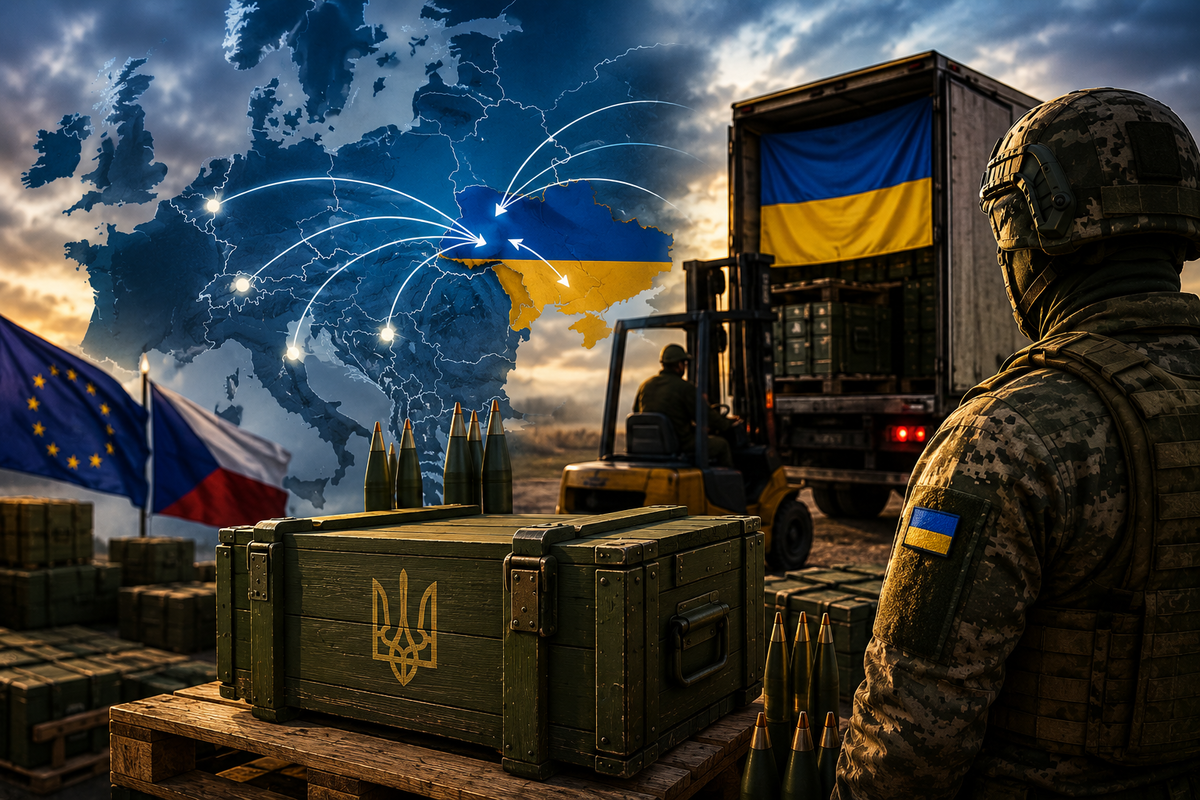
This debate is especially relevant now because Ukraine is once again discussing which institutions should be responsible for organising defence procurement from international partners, and under what model. In that conversation, the experience of late 2024 should be treated not as an isolated controversy, but as a serious case study. It shows how procurement decisions are made under wartime pressure, what trade-offs arise between speed and institutional purity, and why practical delivery capacity across multiple state channels can matter as much as formal architecture. The move was controversial from the beginning. It involved a large sum, a sensitive institutional shift, and a procurement environment already under intense public scrutiny. In such conditions, criticism was inevitable.
But the central question is not whether the arrangement looked politically awkward. The real question is whether Ukraine, under acute wartime pressure, used the instruments available to sustain urgently needed deliveries of ammunition and weapons. That is how this episode should be understood: not as a story of institutional breakdown, and not as a zero-sum contest between agencies, but as an example of a state using parallel channels to solve an urgent operational problem.
Ukraine’s procurement debate is often framed as though there is always a clear choice between a clean, centralised model and a flawed, improvised one. In reality, throughout 2024 and into 2025, Ukraine was operating in a defence market shaped by shortages, export-licensing bottlenecks, fragmented supply chains, political sensitivities, and rapidly shifting battlefield demand. Under such conditions, no single institution could reliably serve as the only viable route for every contract and every delivery timeline.
The late-2024 reallocation reflected that reality. The Ministry of Defence initiated the transfer, the Cabinet approved it, and the issue was handled at the highest level of wartime state coordination. The intent was not to replace the Defence Procurement Agency as a matter of principle. It was to preserve speed and continuity at a moment when ammunition demand was acute and procurement opportunities had to be seized quickly.
The State Border Guard Service was not an arbitrary choice. It already held the legal status of a second-level budget holder. It had experience administering major procurement tranches. It had working relationships with foreign suppliers and functioning channels for contracting and delivery. Crucially, the determination of military need remained with the Ministry of Defence and the General Staff. This was therefore a redistribution of operational function, not of strategic authority.
That distinction matters. Ukraine’s wartime procurement architecture has never functioned as a single pipeline. It has worked as a broader ecosystem linking ministries, specialised agencies, military customers, foreign governments, manufacturers, intermediaries, export-control authorities, logistics operators, and diplomatic networks. Ammunition and weapons do not move simply because funds are allocated. They move only when the full chain works: a product is identified, a supplier is found, a contract is signed, an export licence is issued, transport is arranged, customs and end-user requirements are met, and delivery reaches a Ukrainian state recipient in time.

At every stage, there are reasons for delay. On the European side, licensing procedures, production queues, stock limitations, compliance obligations, and political approvals can slow timelines. On the Ukrainian side, there are urgent and evolving battlefield requirements, compressed timelines, institutional workload, and coordination challenges across the security and defence sector. In that environment, procurement through more than one state channel is not evidence of chaos. It is often evidence of a state trying to reduce risk by avoiding reliance on a single bottleneck.
This is where the Czech experience is particularly instructive. One of the important lessons of the past two years is that successful delivery to Ukraine has often depended not on rigid institutional purity, but on the ability to supply multiple Ukrainian recipients through practical and trusted channels. Czech-linked procurement and delivery mechanisms showed that weapons and ammunition could be transferred effectively to different branches of Ukraine’s security sector, including the Armed Forces of Ukraine, the State Border Guard Service, and other authorised recipients, depending on the legal and logistical design of the transaction.
For European policymakers, that matters for two reasons. First, it demonstrates that international partners were capable of working with more than one Ukrainian institutional counterpart when doing so accelerated delivery. Second, it shows that the Border Guard Service’s procurement role should not be treated as inherently suspect or institutionally anomalous. In practice, foreign suppliers and partner-country intermediaries tend to care less about domestic bureaucratic symbolism than about whether the Ukrainian recipient has the authority, documentation, reliability, and capacity to execute a contract properly.
The Czech track is especially relevant because it became associated with practical results. It illustrated a broader wartime truth: when the market is tight and delivery windows are short, the state that can mobilise several trusted procurement routes has an advantage over the state that insists on administrative neatness at the expense of speed. Ukraine benefited from exactly that flexibility.
None of this means scrutiny of the UAH 23 billion transfer was misplaced. On the contrary, scrutiny is essential. Wartime procurement carries elevated risks by definition. Intermediaries can raise pricing concerns. Advance payments increase exposure. Public transparency is necessarily limited in sensitive defence acquisitions, which means trust must be earned through both performance and accountability.
But these issues need to be discussed with precision. The existence of an intermediary is not, in itself, evidence of abuse. In many segments of the wartime arms market, intermediaries are part of how access is obtained at all, especially where direct manufacturer channels are limited or too slow for operational timelines. Nor is the use of advance payment automatically evidence of recklessness. In a seller’s market, suppliers often demand stronger financial commitments, particularly when production slots and available stocks are contested. For that reason, institutional structure alone cannot be the final test. Outcomes matter.
Here, the public record became more complex than the initial wave of criticism suggested. Reporting in early 2025 indicated that at least part of the procurement managed through the Border Guard Service was moving forward: goods had been inspected, shipments were being prepared, and some deliveries had already taken place, including ammunition, vehicles, and self-propelled artillery systems. Later allegations concerning overdue obligations were challenged by reporting that distinguished between earlier contracts and the specific UAH 23 billion tranche. This does not resolve every legitimate question about contracting strategy, pricing discipline, or risk allocation. But it does matter for any fair assessment. It suggests that this was not a straightforward story of collapse, fake procurement, or a failed scheme.
There is a broader lesson here for Ukraine’s partners as well as for Ukrainian policymakers. Reforming defence procurement remains essential. Ukraine still needs stronger contract management, better interagency coordination, clearer allocation of responsibilities, and as much transparency as wartime conditions permit. Over time, greater professionalisation and centralisation through specialised institutions remain the right direction.
But wartime reform is never linear. There are periods when more than one institution must carry part of the load. There are moments when a functional workaround is more valuable than an elegant model. That should not be mistaken for instability. It is a feature of resilience.
The most useful framing, therefore, is not Defence Procurement Agency versus Border Guard Service, nor centre versus periphery, nor reform versus improvisation. The more accurate framing is that, at a particular stage of the war, the Ukrainian state redistributed roles to preserve speed and flexibility while keeping the determination of military need at the centre. Different institutions were used in parallel to meet urgent demand. That is how systems under real pressure survive.
This is also the message Ukraine should communicate more clearly to international partners. A trustworthy defence partner is not one that never adjusts its internal machinery. It is one that can absorb funds, identify procurement opportunities, contract under pressure, and convert contracts into deliveries across several institutional channels when necessary. Ukraine has demonstrated precisely that kind of adaptive capacity. The Czech delivery experience reinforces the point: effective cooperation is possible when partner governments, intermediaries, and Ukrainian state institutions work pragmatically across institutional lines.

As Ukraine’s procurement system continues to mature, the task now is to preserve that wartime adaptability while strengthening oversight and procedural discipline. The lesson of 2024–2025 is not that flexibility should be abandoned in favour of rigid uniformity. It is that flexibility should be institutionalised more intelligently: with clearer coordination, better monitoring, and stronger public confidence.
The late-2024 reallocation of UAH 23 billion should therefore be remembered not as evidence that Ukraine’s procurement system failed, but as evidence that it was capable of adjusting under fire. The State Border Guard Service played a constructive role within a broader procurement ecosystem. The Defence Procurement Agency remained part of the same national effort. And Ukraine, as it has done repeatedly during this war, chose function over form when the situation demanded it. In wartime, that is not a weakness. It is state capacity.